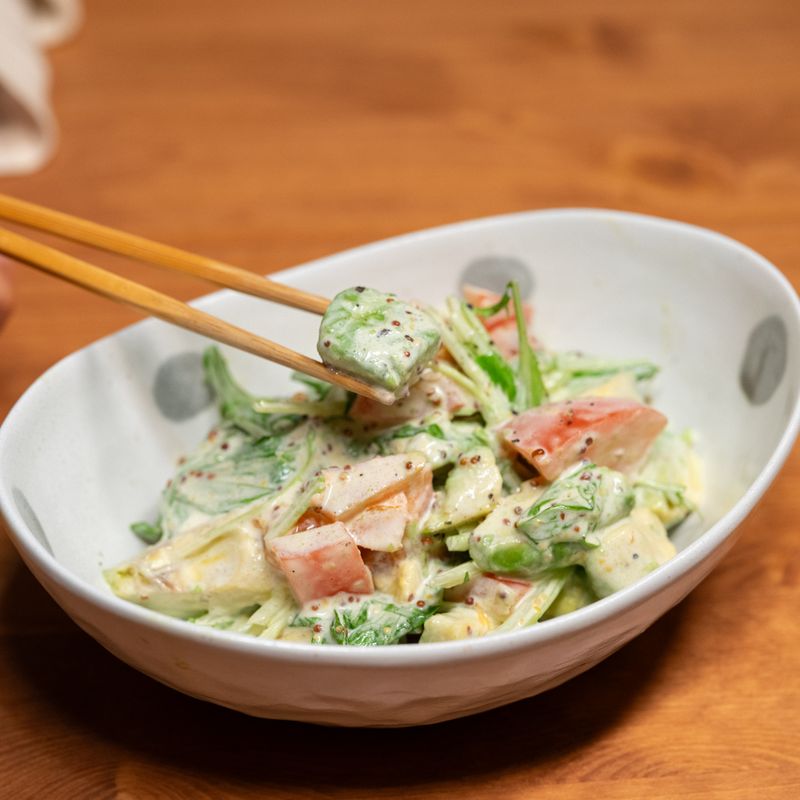
Harissa Tahini Dressing
A creamy, peppery dressing with warm spice from harissa paste and deep nuttiness from tahini. Perfect for drizzling over grain bowls, roasted vegetables, grilled meats, or using as a dip for flatbread and crudités. The dressing is smooth, balanced, and easy to customize to your heat preference.
Steps
Before you start
- Read the harissa label—heat varies widely by brand; start conservatively
- Have all ingredients at room temperature for smooth blending
- Use a blender or food processor for the smoothest texture
Prepare tahini
- Stir the tahini well with a spoon or small whisk for 30 seconds.
- The natural oils separate during storage, and settling creates clumps; stirring thoroughly ensures an even, creamy base.
- Measure out 0.5 cup (120 ml) and set aside.
+ Show details− Hide details
Ready when: Tahini appears uniform with no visible streaks of separated oil
Tip: Don't skip this step—unstirred tahini will yield a lumpy, separated dressing.
Combine wet ingredients
- Place the tahini, harissa paste, lemon juice, water, minced garlic, and salt in a blender or food processor.
- If using a bowl, whisk them together first.
- Ensure the harissa is fully distributed before blending.
+ Show details− Hide details
Tip: If whisking by hand, start with the harissa and water to create a loose paste, then add tahini gradually to avoid lumps.
Blend until smooth and creamy
- Blend on medium speed for 30–45 seconds, scraping down the sides halfway through, until the dressing is completely smooth and silky with no visible streaks.
- If whisking by hand, whisk vigorously for 1–2 minutes in a medium bowl, breaking up any lumps, until the mixture is uniform and creamy.
+ Show details− Hide details
Ready when: Dressing is uniform, silky, and no visible streaks of harissa remain
Tip: Blend just enough to combine; over-blending can make tahini bitter. Stop as soon as smooth.
Adjust seasoning and consistency
- Taste the dressing.
- Stir in the optional cumin and olive oil if desired—cumin adds earthiness and olive oil adds richness.
- Adjust salt and lemon juice to your preference; harissa's saltiness varies by brand.
- If the dressing is too thick, thin with water 1 tablespoon at a time until it reaches your desired consistency.
- It should coat a spoon lightly and taste balanced between spice, tang, and nuttiness.
+ Show details− Hide details
Ready when: Dressing coats a spoon lightly and tastes balanced between spice, tang, and nuttiness
Tip: Add water gradually—it's easier to thin than to thicken. Start with 1 tablespoon water and add more as needed.
Good to know
Tips
- For extra creaminess without additional fat, add 2–3 tablespoons of Greek yogurt or crème fraîche after blending—this also softens the harissa heat slightly.
- This dressing is delicious drizzled over roasted chickpeas and vegetables, spooned onto grilled chicken or fish, served alongside warm flatbread, or thinned further and used as a salad dressing.
- Harissa brands vary greatly in heat and smokiness; taste conservatively and add more if you like extra spice. You can always adjust heat but not remove it.
- For a less spicy dressing, reduce harissa to 2 tablespoons and add ½ teaspoon smoked paprika for flavor without as much heat.
Make ahead
Store in an airtight container in the refrigerator for up to 10 days. The dressing may thicken as it sits; whisk in a little water to loosen before serving. Not suitable for freezing.
Storage & reheating
Room temperature: up to 2 hours (best served fresh). Refrigerator: up to 10 days in an airtight jar or container. Freezer: not recommended—the tahini separates upon thawing. Reheat by whisking or blending with a touch of water.
Substitutions
- harissa paste → Sriracha or hot sauce. Use the same amount but reduce to 2–3 tablespoons if the sauce is very spicy. The flavor will be fresher and less smoky than harissa.
- fresh lemon juice → Fresh lime juice or white wine vinegar. Lime will give a brighter, more tropical note; vinegar will add more body and slightly less brightness. Use the same amount.
- tahini, well-stirred → Peanut or sunflower seed butter. The dressing will be slightly less traditional but equally creamy. Use the same amount and adjust water if needed for desired consistency.
- water → Low-sodium vegetable or chicken broth. Adds savory depth and works well for drizzling over roasted vegetables or grains.
More dressings
See all →



Find more like this
- Meal
- Lunch
- Cuisine
- Middle Eastern
- Method
- No-Cook