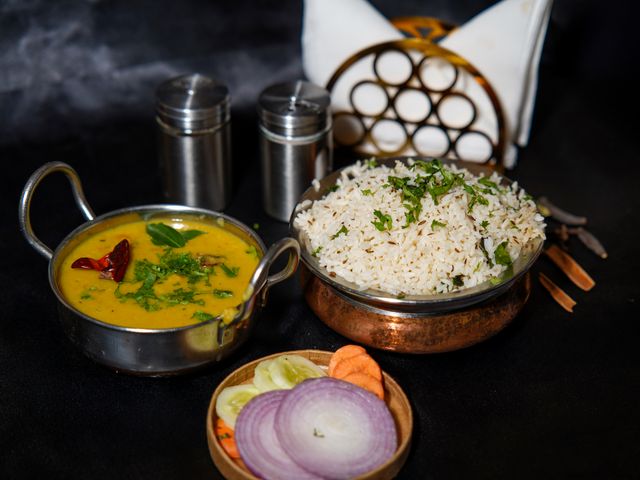
Harissa Carrot Rice
A vibrant, spiced North African rice pilaf featuring tender carrots and chickpeas bound together with harissa paste, cumin, and a touch of warm spices. The rice absorbs bold flavors from the harissa while the carrots add natural sweetness and texture. Serve alongside roasted meats, grilled fish, or as a hearty vegetarian main with a dollop of yogurt.
- Prep
- 12 min
- Cook
- 25 min
- Wait
- 10 min
- Total
- 47 min
- Makes
- 4 servings (about 3½ cups)
Steps
Before you start
- Measure out the rice and set aside
- Check that your harissa paste is fresh and not separated
- Have all other ingredients prepped and within reach before you start cooking
Rinse and prepare rice
- Place the rice in a fine-mesh strainer and rinse under cold running water for about 30 seconds, stirring gently with your fingers, until the water runs mostly clear.
- This removes excess starch and helps achieve separate grains.
- Set the rinsed rice aside on a plate.
+ Show details− Hide details
Ready when: Water runs mostly clear
Tip: Rinsing prevents the rice from becoming mushy and clumpy.
Sauté aromatics and harissa
- Heat the olive oil in a medium 3-quart (2.8-liter) saucepan over medium heat.
- Add the diced onion and sauté for 3–4 minutes, stirring occasionally, until softened and lightly golden.
- Add the minced garlic and cook for another 30 seconds until fragrant, then stir in the harissa paste.
- Cook the mixture for 1 minute, stirring constantly, so the harissa blooms and loses any raw edge.
+ Show details− Hide details
Ready when: Harissa smells warm and aromatic, no raw paste odor
Tip: Cooking the harissa for at least 1 minute mellows the heat and builds deeper flavor.
Add cumin and toast
- Stir in the ground cumin and cook for 30 seconds, stirring constantly, until the cumin's aroma blooms.
- The spice oils will release into the oil and coat the bottom of the pan slightly.
+ Show details− Hide details
Ready when: Cumin is fragrant and slightly darker
Tip: Toasting the cumin in fat brings out its warm, nutty notes.
Add carrots and rice
- Add the diced carrots to the pan and stir to coat with the oil and spice mixture.
- Cook for 2 minutes, stirring, so the carrots begin to soften slightly and absorb the harissa flavor.
- Add the rinsed rice and stir continuously for 1–2 minutes to coat each grain evenly with the oil and spices.
+ Show details− Hide details
Ready when: Every grain is glossy and coated; carrots are slightly softened
Tip: Toasting the rice for 1–2 minutes helps it cook up with more individual grains and better flavor.
Pour in broth and bring to boil
- Pour the broth into the pan and stir well to distribute the harissa evenly and dislodge any spices stuck to the bottom.
- Increase the heat to medium-high and bring the mixture to a boil, stirring occasionally (about 2–3 minutes).
- Once boiling, taste and adjust salt and black pepper as needed—remember the chickpeas will add a little salt.
+ Show details− Hide details
Ready when: Liquid is at a rolling boil
Tip: Adjust seasoning now before the rice absorbs all the liquid, so flavors are distributed throughout.
Add chickpeas and cover
- Stir in the drained and rinsed chickpeas to distribute them evenly.
- Reduce the heat to low (just enough to maintain a very gentle, barely visible simmer), cover the pan with a tight-fitting lid, and cook undisturbed for 18–20 minutes.
- The rice should absorb all the liquid and the carrots will become tender.
+ Show details− Hide details
Ready when: Liquid is completely absorbed; rice is tender but not mushy; no sound of bubbling
Tip: Do not lift the lid during cooking—steam needs to stay inside to cook the rice evenly. If you smell burning or hear vigorous boiling, reduce heat further.
Rest and fluff
- Remove the pan from heat and keep it covered for 5 minutes.
- This resting period allows the rice to firm up slightly and any remaining moisture to distribute evenly.
- Then remove the lid, fluff the rice gently with a fork, breaking up any clumps, and stir once or twice to incorporate the chickpeas and carrots evenly.
+ Show details− Hide details
Ready when: Rice is fluffy and grains are separate; no steam rising
Tip: Resting the rice off the heat is key to preventing mushiness and keeping grains intact.
Finish and serve
- Taste and adjust salt and pepper one more time.
- Drizzle with lemon juice if using, and garnish with fresh cilantro if desired.
- Serve warm, optionally with a dollop of yogurt on the side for cooling contrast.
+ Show details− Hide details
Tip: A squeeze of fresh lemon brightens the spiced rice and adds acidity that balances the harissa heat.
Good to know
Tips
- For more heat, increase the harissa paste by ½ teaspoon at a time; for less heat, reduce by ½ teaspoon or mix the harissa with a tablespoon of yogurt before adding to mellow the spice.
- If your broth is particularly salty, use unsalted broth or water with 1 bouillon cube, and taste carefully before adding extra salt in step 5.
- Pair this pilaf with a dollop of labneh (strained yogurt) or plain Greek yogurt, fresh lemon wedges, and warm flatbread for a complete meal.
- The recipe doubles easily: use a 4-quart (3.8-liter) saucepan, double all ingredient quantities, and extend the simmering time in step 6 by 2–3 minutes if needed.
Make ahead
Prepare the carrots and aromatics (onion and garlic) 1 day ahead, storing them separately in airtight containers in the refrigerator. The rice itself must be cooked fresh, as it does not reheat well.
Storage & reheating
Store leftover harissa carrot rice in an airtight container in the refrigerator for up to 3 days. To reheat, place in a saucepan with 2–3 tablespoons of water or broth, cover, and warm over medium-low heat for 3–4 minutes, stirring gently. Do not microwave, as the rice may become rubbery. Freezer storage is not recommended, as the texture of rice deteriorates upon thawing.
Substitutions
- canned chickpeas, drained and rinsed → cooked lentils (green or brown) or cannellini beans. Use about 1½ cups (250 g) cooked legumes. They add protein and fiber similarly, though lentils will be softer and beans creamier. Rinse canned beans to reduce sodium.
- harissa paste → 1 tablespoon smoked paprika + ½ teaspoon cayenne pepper + ½ teaspoon caraway seeds. This mixture approximates harissa's warmth and heat. Use a mortar and pestle to crush the caraway slightly before cooking, and add with the paprika and cayenne for better distribution.
- vegetable or chicken broth → chicken or beef broth, or water with 1 vegetable bouillon cube dissolved in it. The rice absorbs the liquid and flavor, so the choice of broth will affect the final taste. Chicken broth adds subtle depth; water with bouillon is lighter.
- carrots → diced sweet potato or butternut squash (same amount). Sweet potato and squash add similar texture and natural sweetness. They cook at roughly the same pace and won't require timing adjustments.