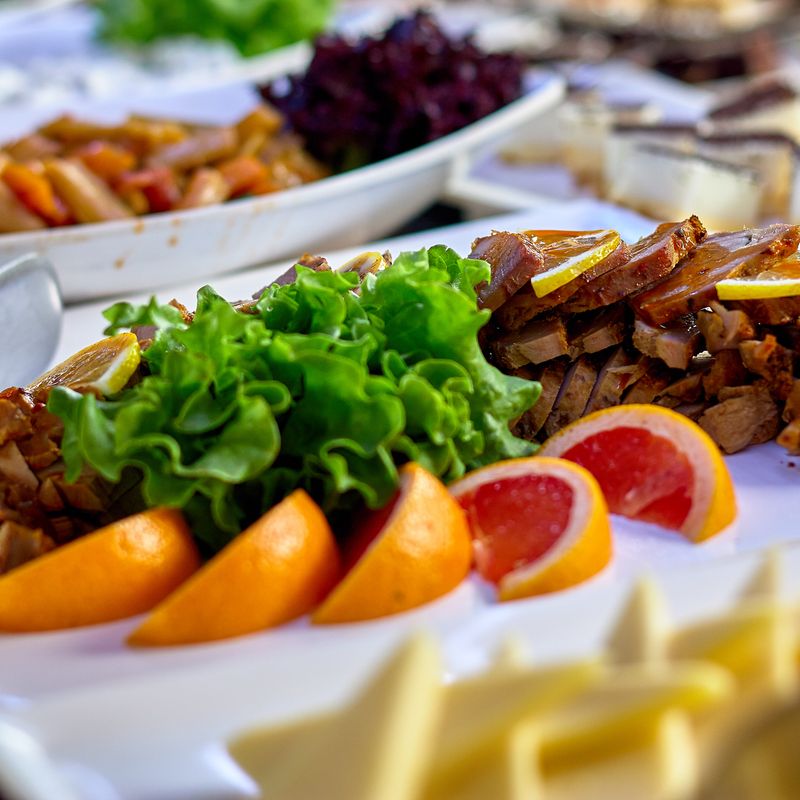
Haitian Griot Pork Shawarma with Citrus Slaw
A vibrant fusion of Haitian griot and Middle Eastern shawarma traditions: tender pork shoulder marinated in sour orange, lime, garlic, and scotch bonnet, then pan-fried until caramelized and served in warm pita with a bright, crunchy citrus slaw. The marinade is punchy and acidic; the meat stays juicy and deeply flavored. Serve with hot sauce, avocado, and pickled onions for the full experience.
- Prep
- 20 min
- Cook
- 25 min
- Wait
- 8 hr
- Total
- 9 hr 5 min
- Makes
- 4 shawarma wraps (about 1 lb / 450 g pork per serving)
Steps
Before you start
- Remove pork shoulder from the fridge 30 minutes before cooking so it cooks evenly
- Make the marinade the night before and marinate pork overnight (8–12 hours minimum, up to 24 hours) for best flavor
- Have all wraps, slaw, and toppings ready before you start frying so the hot meat doesn't sit and cool
- If using sour orange, cut it and lime together; if unavailable, use fresh lime juice plus a splash of white vinegar or orange juice to approximate the tartness
Make the marinade
- In a large bowl, combine the sour orange juice (or orange/lime mixture), lime juice, minced garlic, minced scotch bonnet, thyme leaves, bay leaves, allspice, black pepper, and sea salt.
- Whisk in 3 tablespoons (45 ml) of olive oil until emulsified.
- Taste and adjust seasoning—the marinade should be vibrant, slightly hot, and tart.
+ Show details− Hide details
Ready when: Marinade is well blended and fragrant
Tip: If the scotch bonnet is very hot, remove the seeds and white pith first to reduce heat; otherwise the dish will be fiercely spicy.
Marinate the pork
- Add the cubed pork shoulder to the marinade, stirring well to coat every piece.
- Cover the bowl with plastic wrap and refrigerate for at least 8 hours, preferably overnight (up to 24 hours).
- The acidity will begin to cure and tenderize the meat.
- Turn the pork once or twice during marinating if you remember, but it is not essential.
+ Show details− Hide details
Ready when: Pork is fragrant, slightly firmer, and deeply colored
Tip: Overnight marinating is essential for authentic griot flavor; rushing this step will result in less tender, less flavorful meat.
Prepare the citrus slaw
- In a separate bowl, combine the sliced cabbage and julienned carrot.
- Drizzle with lime juice (3 tablespoons / 45 ml), orange zest, sea salt (1/4 teaspoon / 1.5 g), and 1 tablespoon (15 ml) of olive oil.
- Toss well and let sit at room temperature for 10–15 minutes while the pork cooks, so the slaw softens slightly and the flavors marry.
- It should taste bright and slightly tangy.
+ Show details− Hide details
Ready when: Slaw is slightly wilted but still crunchy, and tastes bright
Tip: Don't make the slaw too far ahead, or it will become mushy and lose its crunch.
Remove pork from fridge
- Take the marinated pork out of the refrigerator and let it sit at room temperature for 15–20 minutes before cooking.
- This ensures even cooking throughout and helps the meat develop a better crust.
+ Show details− Hide details
Ready when: Pork is no longer cold to the touch
Tip: Skipping this step will result in a cold center; take the time to let it warm up.
Prepare to fry the pork
- Remove the pork from the marinade using a slotted spoon, shaking off excess liquid but allowing some marinade to cling to each piece.
- Discard the remaining marinade.
- Pat the pork dry with paper towels—this is crucial for browning and crisping.
- Let the pork sit on the towels for 2–3 minutes.
+ Show details− Hide details
Ready when: Pork is surface-dry and no longer slick
Tip: Don't skip drying the pork; wet meat will steam rather than fry and won't develop the caramelized crust that makes griot delicious.
Heat the oil and fry the pork
- Pour 1/2 cup (120 ml) of vegetable or peanut oil into a large heavy-bottomed skillet (12 inches / 30 cm) and place over medium-high heat.
- When the oil shimmers and a piece of pork sizzles immediately upon contact (about 2–3 minutes), carefully add the pork in a single layer, working in batches if needed to avoid crowding.
- Do not stir for the first 2–3 minutes; let each side develop a deep golden-brown crust before turning.
+ Show details− Hide details
Ready when: Pork cubes are golden brown on all sides and crispy at the edges
Tip: Keep the oil hot but not smoking; a thermometer should read 350–375°F (175–190°C). If the oil is too cool, the pork will absorb oil and become greasy.
Cook the pork throughOven 160°F / 70°C
- Continue frying, turning the pork every 2–3 minutes so all sides brown evenly and the interior cooks through, for 12–15 minutes total.
- The pork should be golden and caramelized on the outside; check the thickest piece by inserting an instant-read thermometer into the center.
- It should read 160°F (71°C) when done.
+ Show details− Hide details
Ready when: Pork is deeply browned on all sides and registers 160°F (71°C) at the center
Tip: If the pork is browning too fast, reduce the heat to medium; if it's cooking too slowly, raise it slightly. The goal is a deep crust and moist interior.
Rest and drain the pork
- Transfer the cooked pork to a paper-towel-lined plate or colander to drain excess oil.
- Let it rest for 2–3 minutes before serving, which allows the juices to redistribute throughout the meat.
+ Show details− Hide details
Ready when: Excess oil has dripped away and the pork is warm but not actively steaming
Tip: This brief rest is essential; if you serve the pork immediately, it will be less juicy.
Assemble the shawarma wraps
- Warm the pita bread briefly over a flame or in a dry skillet (about 30 seconds per side) so it is pliable.
- Lay each pita on a clean surface.
- Divide the fried pork equally among the four pitas, piling it in the center.
- Top each with a generous handful of citrus slaw.
- Add sliced avocado, a dollop of hot sauce, and a scatter of pickled red onions if using.
+ Show details− Hide details
Ready when: Pita is warm and flexible
Tip: Warm the pita just before wrapping; if it cools, it will crack when folded. Have all toppings prepped and ready so the hot pork doesn't cool while you're assembling.
Wrap and serve
- Fold each pita around the filling, enclosing the bottom half first, then folding the sides inward, or roll it tightly and wrap the bottom edge in a piece of foil or parchment to contain the juices.
- Serve immediately while the pork is hot and the slaw is crisp.
+ Show details− Hide details
Ready when: Wraps are intact and stuffed securely
Tip: Don't over-wrap or pack too tightly, or the pita will tear. If using foil, warn your guests it is there.
Serve with lime and hot sauce
- Transfer the wrapped shawarma to a serving platter and set out extra lime wedges and hot sauce on the side so guests can add more heat and acidity to taste.
- The bright, spicy, savory flavors should sing.
+ Show details− Hide details
Ready when: Platter is ready for the table
Tip: This dish is best served and eaten immediately; don't let it sit before eating.
Optional: Make pickled onions ahead
- If making your own pickled onions, thinly slice 1 medium red onion (about 200 g) and place it in a small bowl.
- Heat 1/2 cup (120 ml) of white vinegar with 1 tablespoon (15 g) of sugar and 1/2 teaspoon (3 g) of salt until the sugar dissolves, then pour over the onions.
- Let cool, cover, and refrigerate for at least 2 hours or up to 5 days.
- The onions will turn bright pink and develop a tangy flavor.
+ Show details− Hide details
Ready when: Onions are bright pink and tangy
Tip: Pickled onions can be made 3–5 days ahead and stored in the fridge, so make them when you prepare the pork.
Make-ahead option: Prepare marinade the night before
- You may prepare the entire marinade up to 2 days ahead.
- Store it in an airtight container in the refrigerator.
- When ready to cook, cut the pork, add it to the marinade, and refrigerate as directed.
- This speeds up the prep on cooking day.
+ Show details− Hide details
Tip: Preparing the marinade ahead is a great time-saver if you're cooking for guests.
Reheat any leftover pork (optional)
- If you have leftover cooked pork, reheat it gently in a skillet over medium heat with a splash of water or stock, stirring occasionally for 3–4 minutes until warm through.
- Do not overcook or the meat will dry out.
- Serve with fresh pita and slaw just as you would fresh pork.
+ Show details− Hide details
Ready when: Pork is heated through but still moist
Tip: Reheated pork will not have the same crispness as freshly fried, but it will still be flavorful and tender.
Make-ahead note: marinate pork overnight
- The entire recipe benefits from an overnight marinate.
- Start the pork in the morning (or even 2 days ahead), then fry and assemble at dinner.
- The pork can also be cooked up to 2 hours ahead and reheated gently just before wrapping if you are serving a crowd.
+ Show details− Hide details
Tip: Over-marinating (more than 24 hours) can make the pork mushy; stick to 8–24 hours for best results.
Storage note: keep components separate
- Store cooked pork and slaw in separate airtight containers: pork in the fridge up to 3 days, slaw up to 2 days.
- Pita bread keeps in the pantry or freezer.
- Assemble wraps fresh when serving for the best texture and temperature contrast.
+ Show details− Hide details
Tip: If slaw sits too long, it becomes mushy and soggy; always make it fresh or store it separately from the pork and dressing.
Temperature note for food safetyOven 160°F / 70°C
- Pork should always be cooked to a minimum internal temperature of 160°F (71°C) to be safe.
- Check the thickest piece with an instant-read thermometer.
- Properly cooked pork will be opaque, pale pink at the very center, and moist, not dry.
+ Show details− Hide details
Tip: If the pork looks pale or white inside and registers below 160°F, continue frying for another minute or two and check again.
For extra flavor: toast the spices first
- Optional: Before adding spices to the marinade, lightly toast the thyme and bay leaves in a dry skillet over low heat for 1–2 minutes until fragrant.
- Add to the marinade off heat.
- This intensifies their flavor.
- Toast the allspice in the same way for 30 seconds, then crush slightly before adding.
- Both moves deepen the complexity of the final dish.
+ Show details− Hide details
Ready when: Spices are fragrant but not darkened
Tip: Toast spices in a dry skillet, never in oil, to prevent burning and bitterness.
Alternative cooking method: braised version
- If you prefer a more braised texture (less crispy), after the pork has browned in steps 6–7, reduce the heat to medium-low and add 1 cup (240 ml) of pork or chicken stock to the skillet, scraping up any browned bits.
- Simmer covered for 15–20 minutes until the pork is very tender and the braising liquid has reduced slightly.
- Transfer to wraps with some of the reduced liquid drizzled over for a juicier, less fried result.
+ Show details− Hide details
Ready when: Pork is very tender and liquid is reduced by half
Tip: This method is less traditional but ideal if you are cooking for people who dislike fried food.
Flavor tip: adjust heat to your preference
- The scotch bonnet makes this dish moderately to quite spicy.
- If you or your guests prefer less heat, remove the seeds and white pith from the chili before mincing, or substitute a milder chili such as a jalapeño (use 2 or 3, seeded and minced).
- If you like even more heat, add a pinch of cayenne pepper to the marinade or serve with a fiercer hot sauce on the side.
+ Show details− Hide details
Tip: Taste the marinade before adding the pork so you can adjust heat early; once it's in, you can't take it out.
Final plating presentation
- For a restaurant-style presentation, arrange the wrapped shawarma at an angle on the serving platter, and scatter any extra citrus slaw, pickled onions, and avocado slices around them.
- Drizzle with a tiny bit of the best olive oil and a squeeze of fresh lime juice just before serving.
- Garnish with fresh cilantro or a few fresh thyme leaves if desired (not in the original recipe, but a nice garnish).
+ Show details− Hide details
Ready when: Platter is visually appealing and appetizing
Tip: The contrast of colors (golden pork, white pita, pink onions, green slaw) makes this dish inherently beautiful.
Good to know
Tips
- Marinating overnight is not optional—it is the foundation of authentic griot flavor and tenderness. Plan ahead.
- Do not skip drying the pork after removing it from the marinade. Excess moisture will steam the meat instead of frying it and prevent proper crust development.
- Keep the oil temperature between 350–375°F (175–190°C) by using a thermometer or watching for a steady sizzle. Too cool and the pork will be greasy; too hot and it will burn outside before cooking inside.
- Warm the pita just before wrapping so it is pliable and flexible. Cold or stale pita will crack when folded. A brief pass over a flame or in a dry skillet is all you need.
- The slaw must be assembled fresh and eaten within 15 minutes of dressing, or it will become soggy and lose its crisp, bright texture. Store the components separately until the last moment.
- If you are serving a crowd, cook the pork up to 2 hours ahead and store it in a warm place (in a 200°F / 93°C oven, loosely covered). Reheat gently in a skillet just before wrapping so it is hot and moist for the final assembly.
Make ahead
Prepare the marinade up to 2 days ahead and refrigerate. Marinate the pork overnight (8–24 hours minimum). Cook and drain the pork up to 2 hours before serving; reheat gently in a skillet. Make the slaw no more than 20 minutes before serving so it stays crisp. Make pickled onions up to 5 days ahead. Assemble wraps fresh just before eating for the best texture and temperature.
Storage & reheating
Store cooked pork in an airtight container in the fridge for up to 3 days; reheat gently in a skillet over medium heat with a splash of water or stock for 3–4 minutes. Store citrus slaw in a separate airtight container for up to 2 days (it will soften over time). Pita keeps in a sealed bag at room temperature for 1–2 days or in the freezer for up to 3 months; warm before serving. Pickled onions keep, covered, in the fridge for up to 5 days. Do not assemble wraps ahead, as the pita will soften and the slaw will become mushy. Do not freeze cooked pork with the slaw or pita; freeze only the plain cooked pork, defrosted in the fridge and reheated before use.
Substitutions
- sour orange juice (or fresh orange juice mixed with lime) → 3 tablespoons (45 ml) fresh orange juice plus 1 tablespoon (15 ml) white vinegar or lime juice. Sour orange is a staple of Caribbean cooking, but fresh orange juice mixed with vinegar or extra lime approximates its tartness and tropical flavor. Taste as you go.
- scotch bonnet chili → 1 habanero chili, seeded and minced, or 2–3 jalapeños, seeded and minced. Scotch bonnets are intensely hot and floral; habaneros are slightly milder but still fruity and hot, while jalapeños are much milder. Use habaneros for a closer flavor match, or jalapeños if you want to reduce the heat significantly.
- pork shoulder, boneless → chicken breast or thighs, cut into 1-inch cubes, or beef chuck, cut into 1-inch cubes. Chicken will cook faster (8–10 minutes of frying) and be drier; beef will be equally tender and rich. Both work well with this acidic, spiced marinade. Check chicken at 165°F (74°C) and beef at 160°F (71°C) for food safety.
- fresh thyme sprigs → 2 teaspoons (2 g) of dried thyme, or 1 teaspoon (1 g) of dried oregano. Fresh thyme has more delicate flavor; dried thyme is more concentrated, so use half the amount. Oregano is earthier and works in a pinch, but the dish will taste less Haitian.
More shawarma & gyros
See all →
Find more like this
- Meal
- Dinner
- Cuisine
- Middle EasternCaribbean
- Main ingredient
- Pork Shoulder
- Method
- Stovetop
- Quick & Easy
- Make Ahead