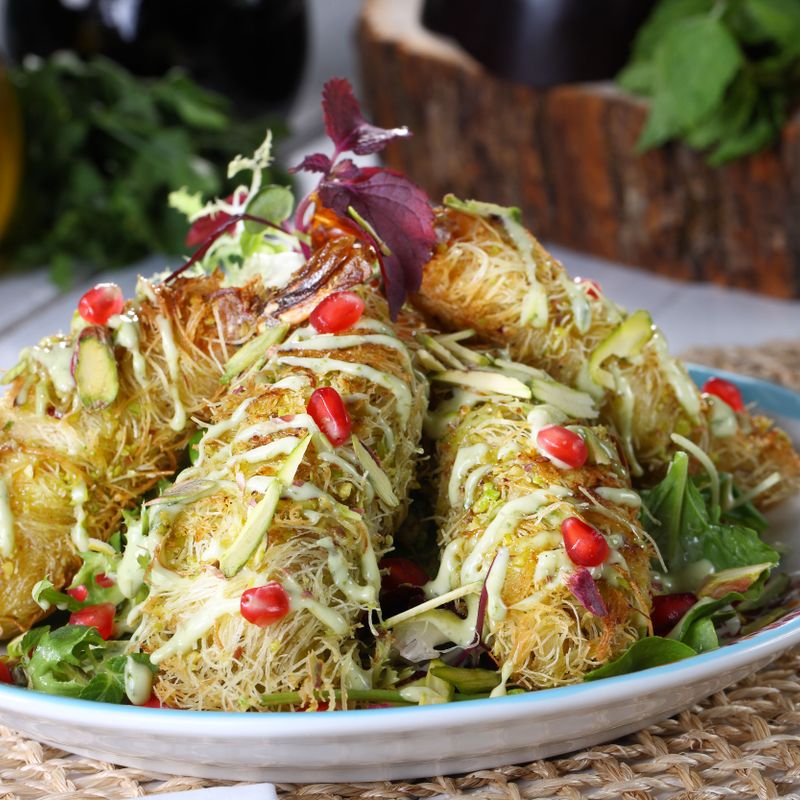
Lebanese Pomegranate-Glazed Pork Gyro
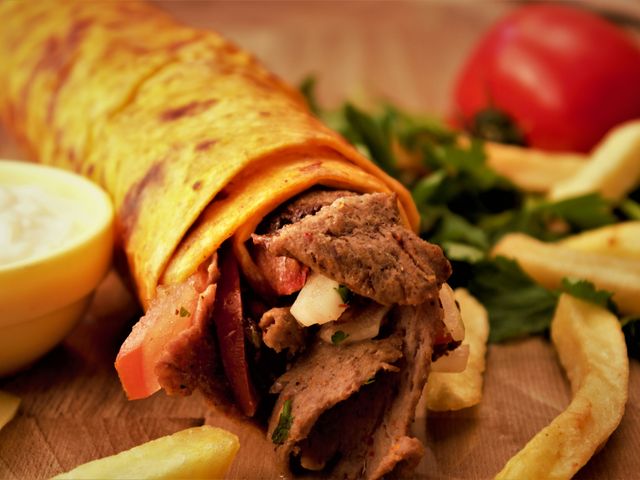
A vibrant, Middle Eastern-inspired pork gyro with warm spices, tangy pomegranate molasses, and caramelized edges. Marinated pork shoulder is roasted until deeply browned, then sliced thin and served in pita with crisp vegetables and creamy tahini sauce. This home-kitchen version captures the concentrated flavor of rotisserie meat without special equipment.
- Prep
- 25 min
- Cook
- 1 hr 15 min
- Wait
- 8 hr
- Total
- 9 hr 40 min
- Makes
- 4 gyros (1 lb sliced pork, 1 pita each)
Steps
Before you start
- Remove pork from refrigerator 45 minutes before roasting to let it come close to room temperature
- Read through the marinating and roasting timeline—the bulk of time is passive marinating
- Preheat oven to 425°F (220°C) about 15 minutes before roasting
- Have all your gyro toppings prepped and ready (tomatoes sliced, cucumbers cut, tahini sauce made)
Prepare the marinade
- In a large bowl, whisk together pomegranate molasses, olive oil, minced garlic, allspice, cinnamon, cumin, black pepper, kosher salt, and lemon juice.
- Stir until the spices are fully dissolved and the mixture is smooth.
- The marinade should smell intensely spiced and tangy.
+ Show details− Hide details
Ready when: Marinade is smooth and well combined, spices fully incorporated
Tip: Whisk well to break up any clumps of spices, especially the cinnamon and allspice—they should distribute evenly for balanced flavor.
Marinate the pork
- Pat the pork shoulder dry with paper towels.
- Place it in the bowl with the marinade and turn to coat all sides thoroughly.
- Rub the marinade into the meat, ensuring the spice mixture covers the entire surface.
- Cover the bowl tightly with plastic wrap and refrigerate for at least 8 hours, or up to 24 hours.
- The longer it sits, the deeper the flavor.
- You can marinate overnight.
+ Show details− Hide details
Ready when: Pork is fully coated and has been chilled
Tip: Turn the pork halfway through marinating (after 4 hours) if marinating for longer than 12 hours to ensure even seasoning.
Prepare for roastingOven 425°F / 220°C
- Remove the pork from the refrigerator 45 minutes before roasting to allow it to come closer to room temperature—this ensures more even cooking.
- Preheat the oven to 425°F (220°C).
- Arrange the quartered onion pieces in the bottom of a 9×13-inch (23×33 cm) roasting pan to create a bed that will help brown the meat's underside and add flavor to pan juices.
+ Show details− Hide details
Ready when: Oven is preheated and pork is no longer cold to the touch
Tip: Don't skip the resting step—cold meat will roast unevenly and may not develop a proper crust.
Sear and roast the porkOven 425°F / 220°C
- Place the marinated pork on the bed of onions in the roasting pan.
- Roast at 425°F (220°C) for 20 minutes until the exterior is deeply browned and caramelized.
- Then reduce the oven temperature to 350°F (175°C) and continue roasting for 50–60 minutes, until the internal temperature reaches 160°F (71°C) when measured with a meat thermometer inserted into the thickest part of the meat, away from bone or fat.
+ Show details− Hide details
Ready when: Internal temperature is 160°F (71°C); exterior is deep mahogany brown with caramelized edges
Tip: Tent with foil if the exterior browns too quickly before the meat is cooked through; this prevents the spices from burning while the interior cooks.
Rest the pork
- Remove the pork from the oven and transfer it to a cutting board.
- Let it rest for 15 minutes before slicing.
- This allows the juices to redistribute throughout the meat, making it more tender and juicy when carved.
+ Show details− Hide details
Ready when: Pork is resting and no longer steaming actively
Tip: Don't skip this step; cutting into the meat immediately will cause juices to run out onto the board, leaving the pork dry.
Slice the pork thin
- Using a sharp carving knife (or an electric knife if you have one), slice the rested pork into thin slices, about ⅛ inch (3 mm) thick.
- Angle your knife slightly and cut across the grain to maximize tenderness.
- You should get roughly 1 pound (455 g) of sliced meat.
- The slices should bend slightly without falling apart.
+ Show details− Hide details
Ready when: Pork is sliced thinly and uniformly; slices bend without tearing
Tip: Slightly undercooked edges (still pink near the surface) are desirable in this style—they mirror the texture of rotisserie meat. Partial cooling helps with slicing; if the meat gets too cold, it's harder to slice thinly.
Make the tahini sauce
- While the pork is roasting or resting, prepare the tahini sauce.
- In a small bowl, whisk together tahini paste, minced garlic, lemon juice, and kosher salt.
- Slowly add warm water, 1 tablespoon at a time, whisking constantly until the sauce becomes creamy and pourable—about the consistency of yogurt.
- It should not be thick like peanut butter or thin like milk.
- Taste and adjust salt and lemon juice as needed.
+ Show details− Hide details
Ready when: Sauce is smooth, creamy, and pourable; no lumps of tahini remain
Tip: Add water slowly; tahini seizes and becomes thick at first before loosening into a creamy consistency. Whisk constantly to prevent lumps.
Warm the pita breadOven 350°F / 175°C
- Just before assembling, warm the pita bread.
- You can wrap the stack in a damp paper towel and microwave for 30 seconds, wrap them in foil and warm in a 350°F (175°C) oven for 3–4 minutes, or char them briefly over a gas flame or in a hot skillet.
- Warm pita is more pliable and enhances the eating experience.
+ Show details− Hide details
Ready when: Pita is soft, warm, and pliable
Tip: Don't overheat—pita can become crispy or tough if warmed too long. A brief warm-through is all that's needed.
Assemble the gyros
- Lay a warm pita bread on a plate or in your hand.
- Spread a line of tahini sauce down the center.
- Layer a generous portion of sliced pork on top of the sauce, then add sliced tomato and cucumber slices.
- Scatter fresh parsley and mint (if using) over the filling.
- Wrap the pita around the filling, turning it so that the seam is on the bottom.
- Serve immediately while the pork is still warm.
+ Show details− Hide details
Ready when: Gyros are fully assembled with all components inside the pita
Tip: Don't overstuff—a generous handful of pork per gyro is plenty. If the pita tears, use a second one to reinforce it.
Good to know
Tips
- The key to restaurant-quality gyros at home is slow, even cooking followed by thin slicing—don't rush the resting period or slice too thick, or the meat will be dry and tough.
- For extra caramelization and a crispier exterior edge (mimicking rotisserie meat), try broiling the pork for 2–3 minutes at the end of roasting, watching carefully so it doesn't char.
- Make the marinade the night before so it's ready to use the next morning—this makes meal prep easier and gives you maximum flexibility.
- If your gyros are very messy and the filling falls out, warm and char the pita in a hot skillet until it's slightly crispy, which makes it more structurally sound.
Make ahead
Marinate the pork up to 24 hours ahead. The tahini sauce can be made up to 4 hours ahead and stored in the refrigerator; whisk again before serving and add a splash of water if it has thickened. Roasted pork can be sliced and stored in an airtight container in the refrigerator for up to 3 days and reheated gently in a low oven (300°F / 150°C) for 10–12 minutes before assembling gyros.
Storage & reheating
Store leftover sliced pork in an airtight container in the refrigerator for up to 3 days. Reheat gently in a 300°F (150°C) oven for 10–12 minutes, or in a skillet over medium-low heat for 3–4 minutes, to avoid drying it out. Tahini sauce keeps, refrigerated, for up to 5 days. Pita bread stays fresh at room temperature for 1–2 days in a sealed bag or wrapped in foil. Freeze cooked, sliced pork in an airtight container or freezer bag for up to 2 months; thaw overnight in the refrigerator before reheating.
Substitutions
- pomegranate molasses (or pomegranate concentrate) → equal parts pomegranate juice reduced by half in a small saucepan over medium heat (about 5 minutes to concentrate), or 2 tablespoons balsamic vinegar mixed with 2 tablespoons maple syrup. Pomegranate molasses is essential for the authentic tangy-sweet flavor; if you must substitute, the reduced juice is closer to the original but slightly less intense.
- boneless pork shoulder, trimmed of excess fat → lamb shoulder or beef chuck roast. Both are traditional proteins for Middle Eastern shawarma and gyros. Use the same weight and internal temperature (160°F / 71°C for beef, 160°F / 71°C for lamb), though lamb may need an extra 10–15 minutes of roasting time due to its density.
- tahini paste → Greek yogurt (full-fat), mixed with a pinch of salt and extra lemon juice to taste. Tahini is traditional, but yogurt-based sauce is lighter and still delicious. Use equal amounts but add yogurt gradually to reach the desired consistency.
- fresh mint leaves → additional fresh parsley or a small handful of fresh dill. Mint is optional; if unavailable, parsley alone provides freshness, or dill adds a subtle herbal note in its place.
More shawarma & gyros
See all →
Find more like this
- Meal
- Dinner
- Cuisine
- Lebanese
- Main ingredient
- Pork Shoulder
- Diet
- Dairy-Free
- Quick & Easy
- Make Ahead