Ground Beef and Vegetable Manakish
Crispy-bottomed, soft Levantine flatbread topped with a spiced ground beef and vegetable mixture. The topping—seasoned beef, tomatoes, bell peppers, onions, and aromatic spices—bakes until golden while the dough develops a tender crumb and golden crust. Perfect for breakfast, lunch, or a casual dinner.
- Prep
- 45 min
- Cook
- 30 min
- Wait
- 1 hr 30 min
- Total
- 2 hr 45 min
- Makes
- 6 manakish (9–10 inches each)
Steps
Before you start
- Preheat your oven to 475°F (245°C) 15 minutes before baking
- Use a stand mixer or mix by hand; the dough is workable but benefits from proper kneading
- Have all ingredients and equipment ready; manakish work best when dough and filling are prepared in sequence
Make the dough
- In a stand mixer bowl, combine flour, yeast, salt, and sugar.
- Pour in warm water and olive oil.
- Mix on low speed with the dough hook for 1 minute until shaggy, then increase to medium speed and knead for 8 minutes until the dough is smooth, elastic, and slightly tacky (it should pull away from the bowl sides but stick lightly to the bottom).
- If hand-mixing, combine dry ingredients in a large bowl, make a well, add wet ingredients, and stir until a shaggy mass forms; then knead by hand on a lightly floured surface for 10 minutes.
+ Show details− Hide details
Ready when: Dough is smooth, elastic, and slightly tacky
Tip: Water temperature is critical—too hot kills yeast, too cool slows rising. Use an instant-read thermometer for accuracy.
First rise
- Shape the dough into a ball, place in a lightly oiled bowl, and cover with a damp cloth or plastic wrap.
- Let it rise at room temperature (68–72°F / 20–22°C) for 60 minutes until puffy and nearly doubled in volume.
- If your kitchen is cool, place the bowl in a warm spot (like an oven with the light on).
+ Show details− Hide details
Ready when: Dough is puffy and increased in volume by about 75–90%
Tip: Don't let it rise longer than 75 minutes or the gluten network may weaken; avoid over-proofing in a warm kitchen.
Make the topping
- While dough rises, heat olive oil in a large skillet over medium-high heat.
- Add minced garlic and cook for 30 seconds until fragrant.
- Add diced onion and bell pepper, sauté for 4–5 minutes until softened and lightly golden.
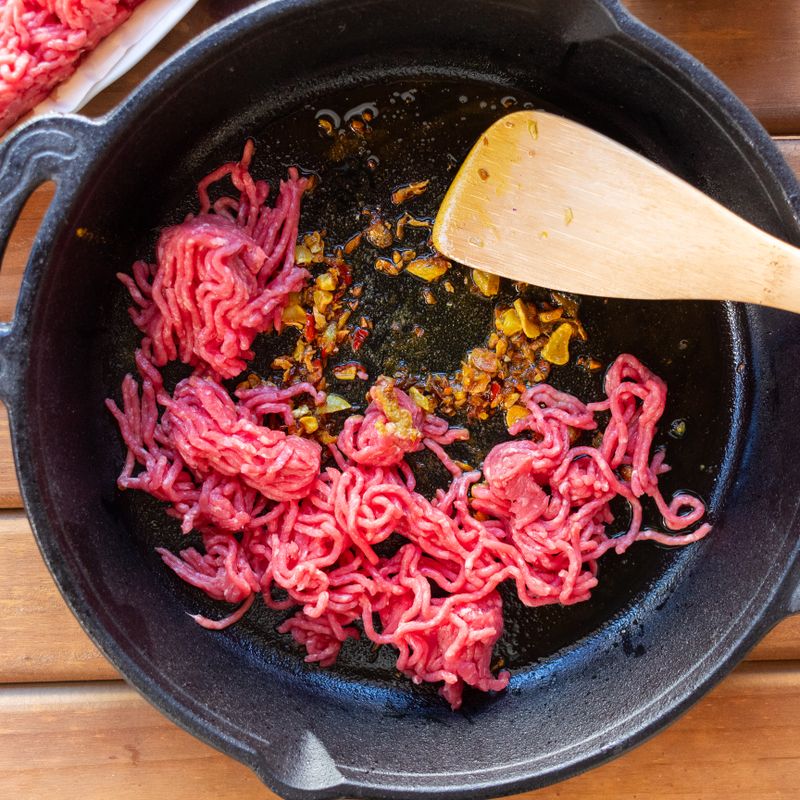
- Add ground beef, breaking it into small pieces with a wooden spoon, and cook for 5–6 minutes, stirring occasionally, until the meat is browned (no pink remains).
- Stir in tomato paste, cook for 1 minute, then add crushed tomatoes, cumin, coriander, salt, and black pepper.
- Simmer uncovered over medium heat for 8 minutes, stirring occasionally, until the mixture is thick, fragrant, and most of the liquid has evaporated (it should hold together on a spoon without running).
- Taste and adjust seasoning.
- Let cool slightly.
+ Show details− Hide details
Ready when: Topping is thick, fragrant, and most liquid has evaporated; mixture holds together on a spoon
Tip: Don't skip the evaporation step—excess moisture will make the manakish soggy. If it's still watery after 8 minutes, increase heat slightly and cook for another 2–3 minutes.
Shape the doughOven 475°F / 245°C
- Preheat oven to 475°F (245°C).
- Turn risen dough onto a lightly floured surface, gently press out gas with your fingertips, and divide into 6 equal pieces (about 100 g / 3.5 oz each).
- Shape each piece into a ball by pulling the edges underneath; let rest for 5 minutes uncovered.
+ Show details− Hide details
Ready when: Dough pieces are round and feel slightly relaxed
Tip: Resting the dough makes it easier to stretch without tearing. If dough springs back too much, let it rest another 2 minutes.
Stretch and top the manakish
- Working with one ball at a time, gently stretch the dough into a 9–10 inch oval or round on a parchment-lined baking sheet (stretch from the center outward, using your fingertips; if it resists, let it rest for 1 minute and try again).
- Spread 3–4 tablespoons of the beef and vegetable mixture onto each dough round, leaving a ½-inch border.
- Repeat with remaining dough and topping.
- Lightly brush the exposed dough edges with olive oil to encourage browning.
+ Show details− Hide details
Ready when: Dough is stretched into ovals, topped, and edges are oiled
Tip: Work quickly but gently—rough handling can deflate the dough. If the dough is too elastic, let stretched pieces rest for 2–3 minutes before topping.
Bake the manakishOven 475°F / 245°C
- Bake on two large baking sheets on the upper and lower oven racks at 475°F (245°C) for 14–16 minutes, rotating the sheets halfway through (swap upper and lower) so they bake evenly.
- The manakish are done when the crust is deep golden brown, the dough edges are puffed and pale golden, and the topping is bubbling slightly at the edges.
+ Show details− Hide details
Ready when: Crust is deep golden brown, dough edges are puffed and pale golden, topping is bubbling slightly
Tip: If the bottoms aren't browning enough by minute 12, move one sheet to a lower rack position. Oven temperatures vary—watch at 13 minutes and remove when deep golden to avoid burning.
Finish and rest
- Remove baking sheets from the oven and transfer manakish to a wire rack.
- If desired, sprinkle a small pinch of sumac over each while still warm (sumac adds a tangy flavor and a traditional appearance).
- Let cool for 2–3 minutes; the manakish can be eaten warm or at room temperature.
+ Show details− Hide details
Ready when: Manakish have cooled slightly and sumac (if using) adheres to the surface
Tip: Sumac is optional but adds authentic flavor and color. If you don't have it, fresh chopped parsley is a nice substitute.
Good to know
Tips
- The dough should be tacky but not sticky; if it's too wet after kneading, dust with a tablespoon of flour and knead for another minute. If too dry, add water 1 teaspoon at a time.
- Don't skip stretching the dough—gently working from the center outward prevents tears and ensures even thickness. If the dough keeps shrinking, let it rest for a minute between stretches.
- For a crispier bottom crust, place the baking sheets directly on the oven rack (no positioning between racks); this allows hot air to circulate underneath.
- Serve warm manakish with labneh (strained yogurt), fresh tomato and cucumber slices, or a crisp salad. A squeeze of lemon enhances the savory topping.
Make ahead
The dough can be prepared up to 8 hours ahead: after kneading, refrigerate in an oiled, covered bowl. Bring to room temperature (about 1 hour) before shaping. The beef topping can be made up to 1 day ahead, covered, and refrigerated; reheat gently over medium-low heat before assembling. Assemble and bake just before serving for the best texture.
Storage & reheating
Store cooled manakish in an airtight container at room temperature for up to 2 days. Reheat wrapped in foil in a 350°F (175°C) oven for 8–10 minutes until warm. Freeze baked manakish (wrapped individually in plastic wrap, then foil) for up to 1 month; thaw at room temperature and reheat as above. Do not refrigerate baked manakish as the crust will become soggy.
Substitutions
- ground beef (85/15 lean-to-fat ratio) → Ground lamb or ground turkey. Lamb is traditional in the Levant and adds deeper flavor; turkey makes a leaner option. Use equal weights and adjust cumin slightly upward with lamb (adds to 2 teaspoons).
- red bell pepper, medium → Green bell pepper or a mix of red and yellow peppers. Green pepper adds a sharper bite; yellow is sweeter. Red is mild and slightly sweet. Use the same weight.
- canned crushed tomatoes (14.5 oz / 411 g can) → Fresh tomatoes, peeled and chopped (about 1.5 cups / 360 g). Best in summer when tomatoes are ripe. Simmer the filling for an extra 3–4 minutes to reduce excess moisture.
- sumac (optional but traditional) → Fresh lemon zest or a squeeze of fresh lemon juice. Sumac provides tanginess and color; lemon achieves tartness but without the burgundy hue. Sprinkle zest or squeeze juice over warm manakish just before serving.
More manakish
See all →
Find more like this
- Meal
- Lunch
- Cuisine
- Lebanese
- Main ingredient
- Ground BeefTomatoesBell Peppers
- Diet
- Dairy-FreeHalal
- Method
- Oven