Greek Myrtle Berry Lamb Marinade
A traditional Greek marinade featuring tart-sweet dried myrtle berries, fresh oregano, garlic, and bright lemon juice to infuse lamb with authentic Mediterranean flavors while tenderizing the meat. Perfect for grilling, roasting, or pan-searing lamb chops, steaks, or shoulder cuts.
- Prep
- 10 min
- Cook
- —
- Wait
- 8 hr
- Total
- 8 hr 10 min
- Makes
- 3/4 cup (180 ml) marinade (enough for 4 lamb chops or a 2–3 lb lamb piece)
Steps
Before you start
- Gather all herbs, spices, and fresh citrus before beginning
- Use a non-reactive mixing bowl and container (glass, ceramic, or stainless steel—not aluminum or unglazed clay)
- Plan ahead: lamb should marinate at least 4 hours, ideally 8–12 hours or overnight
- Remove marinated lamb from the refrigerator 20–30 minutes before cooking to bring closer to room temperature
Prepare the ingredients
- Zest both lemons using a microplane or fine grater, collecting about 2 teaspoons of zest.
- Juice the lemons into a small bowl, yielding about 1/4 cup fresh juice.
- Mince the 4 garlic cloves finely.
- If using fresh oregano, finely chop the leaves; if using dried oregano instead (1 tablespoon), crush it slightly between your fingers to release oils.
+ Show details− Hide details
Ready when: All ingredients prepared and ready to combine
Tip: Use a microplane for the finest, most evenly distributed lemon zest, which integrates better into the marinade than chunky zest
Combine oil with citrus
- In a medium glass or ceramic bowl (do not use aluminum or unglazed clay, which can react with acidic lemon juice), whisk together the 1/2 cup (120 ml) olive oil with the lemon juice and zest.
- Whisk for about 30 seconds until well combined and bright yellow with no visible separation.
+ Show details− Hide details
Ready when: Oil and citrus are fully incorporated with no visible separation or pooling
Tip: A non-reactive bowl is essential; lemon juice's acidity can impart off-flavors and metallic notes if combined in a metal or reactive ceramic bowl
Incorporate herbs and myrtle
- Add the minced garlic, chopped fresh oregano, and 2 tablespoons (15 g) dried myrtle berries to the oil-citrus mixture.
- Stir thoroughly with a whisk or fork for about 1 minute until all ingredients are evenly distributed throughout the marinade with no clumps of garlic visible.
+ Show details− Hide details
Ready when: Garlic, herbs, and myrtle berries are evenly dispersed throughout the oil with a fragrant, herbaceous aroma
Tip: Gently crush a few myrtle berries between your fingers before adding them to help release their tart, slightly juniper-like flavor into the oil
Season to taste
- Add 1 teaspoon (5 g) salt and 1/2 teaspoon (1 g) freshly ground black pepper.
- Whisk thoroughly for about 1 minute.
- To taste the marinade without consuming raw garlic, dip a small piece of bread into the mixture and taste it.
- The marinade should be bold and noticeably salty, with prominent herbaceous oregano aroma and bright lemon tang.
- Add more salt or pepper if needed—lamb's rich, fatty flavor pairs well with aggressive seasoning.
+ Show details− Hide details
Ready when: Marinade is well-seasoned, balanced between acidity and saltiness, with a strong herb and garlic aroma
Tip: Taste the marinade itself to ensure proper seasoning; the flavors must be pronounced enough to penetrate and flavor the lamb effectively
Apply to lamb and marinate
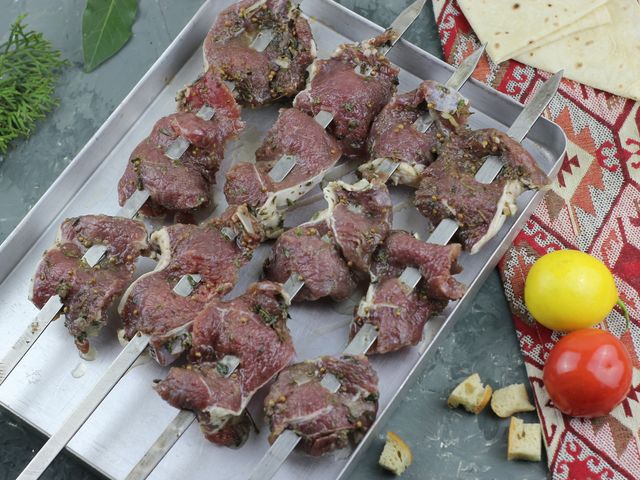
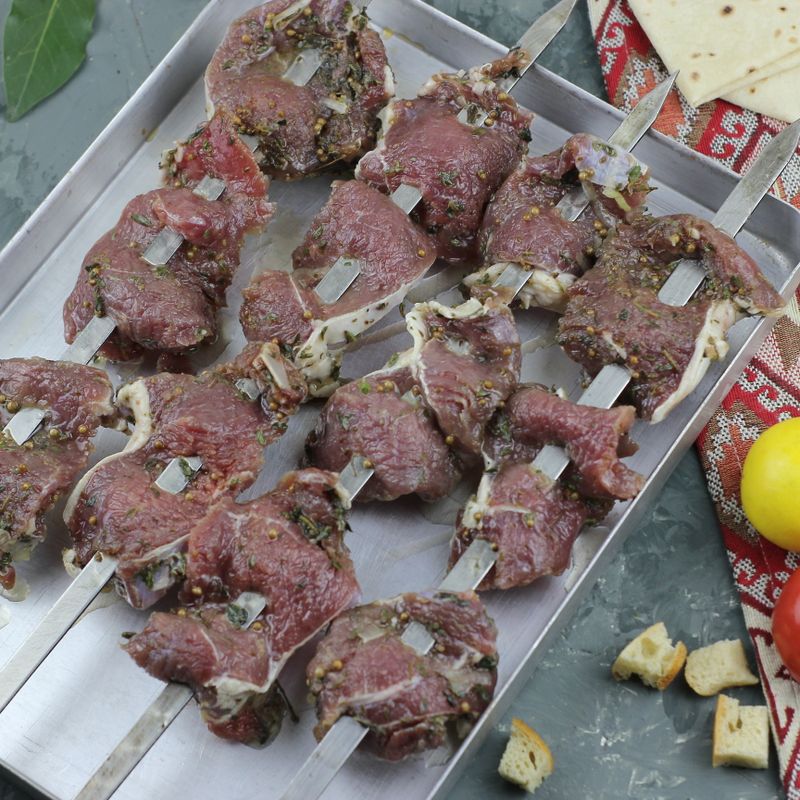
- Place your lamb (4 thick-cut chops about 1.5 inches / 4 cm thick, 4 steaks, or a 2–3 pound / 900 g–1.4 kg boneless shoulder or leg piece) in a large resealable plastic bag or non-reactive container.
- Pour all of the marinade over the lamb, turning and coating thoroughly so all surfaces are covered.
- Seal the bag or cover the container.
- Refrigerate for at least 4 hours, preferably 8–12 hours for balanced tenderness and flavor.
- Maximum safe marinating time is 24 hours.
- If time permits, turn the lamb over or massage the bag halfway through marinating to ensure even flavor distribution.
+ Show details− Hide details
Ready when: After 4+ hours, lamb will have darkened slightly and smell strongly of oregano, garlic, and lemon; surface should be glistening and fully coated
Tip: Do not marinate longer than 24 hours or the citric acid will over-break the meat proteins, resulting in mushy, stringy texture instead of tender, flavorful meat
Good to know
Tips
- Myrtle berries are available in specialty spice shops, Mediterranean markets, Greek delis, or online retailers selling Greek ingredients. They are worth seeking out for authentic flavor, but juniper berries are a reliable substitute if unavailable.
- For deeper flavor release, lightly crush the myrtle berries between your fingers or in a mortar and pestle as you add them to the marinade. This breaks cell walls and releases essential oils into the liquid.
- Never marinate lamb in this acidic mixture for more than 24 hours or the citric acid will over-break the meat proteins, creating mushy, stringy texture; 8–12 hours is the ideal window for balanced tenderness and flavor.
- After removing marinated lamb from the refrigerator, let it rest at room temperature for 20–30 minutes before cooking for more even heat distribution, faster cooking, and better browning and crust development.
Make ahead
This marinade can be prepared up to 3 days in advance and stored in an airtight glass container in the refrigerator. Add cold lamb to the prepared marinade when ready to proceed with marinating. Do not freeze the marinade with lamb in it; acidic marinades can continue to break down proteins during freezing.
Storage & reheating
Prepared marinade (without lamb): Keep in an airtight glass container in the refrigerator for up to 1 week, or freeze in a freezer-safe jar for up to 3 months. Thaw at room temperature or in the refrigerator before using. Marinated lamb: Keep in a sealed container or bag in the refrigerator for up to 2 days. Remove from marinade, pat dry with paper towels, and cook as desired (grill, roast, pan-sear, or braise). Do not freeze marinated lamb for extended periods.
Substitutions
- dried myrtle berries → Juniper berries. Use an equal amount (2 tablespoons / 15 g). Juniper has a similar piney, slightly tart flavor, though slightly more bitter. Available in most supermarkets.
- fresh oregano leaves → Dried oregano. Use 1 tablespoon (3 g) instead of 2 tablespoons fresh. Dried oregano is more concentrated in flavor and more readily available.
- fresh lemon juice → White wine or white wine vinegar. Use 1/4 cup (60 ml) white wine or 2 tablespoons white wine vinegar plus 2 tablespoons water. Provides acidity but a different, slightly less bright flavor profile.
- extra-virgin olive oil → Avocado oil or refined vegetable oil. Any neutral oil can substitute, though you'll lose the subtle fruity notes of olive oil that complement Mediterranean flavors.