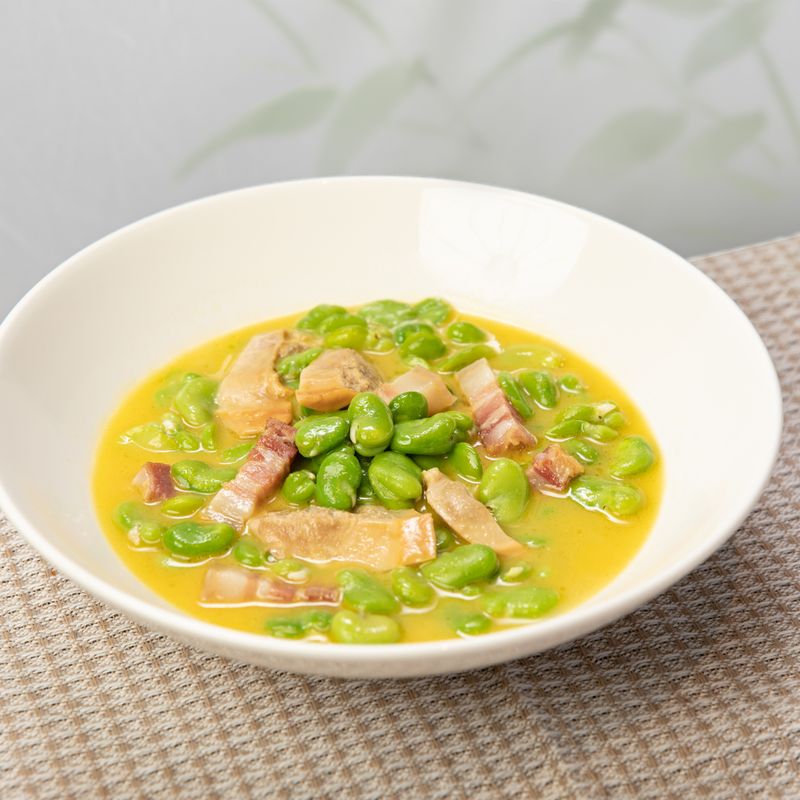
Greek Fava (Yellow Split Pea Purée)
A silky, golden purée of yellow split peas infused with caramelized onion and bright lemon—a traditional Greek appetizer known as fava (despite containing no fava beans). Serve warm or at room temperature with crusty bread, olives, and a drizzle of good olive oil.
- Prep
- 10 min
- Cook
- 50 min
- Wait
- 5 min
- Total
- 1 hr 5 min
- Makes
- 1.5 cups purée (serves 4 as an appetizer)
Steps
Before you start
- Rinse the split peas thoroughly under cold water before cooking—this removes excess starch and creates a lighter purée.
- Have all ingredients measured and prepped before you start cooking.
- Use extra-virgin olive oil for the best Mediterranean flavor and finish.
- Sautéing the onion first is essential for building depth of flavor; don't skip this step.
Rinse and prep
- Rinse the split peas in a colander under cold water for about 1 minute, stirring gently, until the water runs clear; this removes excess starch.
- Pick through them briefly for any small stones or debris.
- Dice the onion into roughly ¼-inch (6 mm) pieces; you should have about ¾ cup.
+ Show details− Hide details
Ready when: Peas are clean and water runs clear; onion is evenly diced
Tip: Don't skip the rinsing step—it removes the starchy coating that can make the purée gummy. A quick rinse makes a big difference.
Sauté the onion
- Heat 2 tablespoons (30 ml) of the olive oil in a large saucepan (3-quart/2.8 L) over medium heat.
- Add the diced onion and cook, stirring occasionally, for 5–7 minutes until the pieces are soft and the edges turn light golden.
- The onion should smell sweet and caramelized, not raw or burnt.
+ Show details− Hide details
Ready when: Onion is soft with golden edges and smells sweet and caramelized
Tip: Don't rush this step—the caramelization is where the flavor comes from. If the heat is too high, the onion will brown too quickly and taste bitter.
Add peas and water
- Pour the rinsed split peas and 4 cups (960 ml) of water into the saucepan.
- Stir well to combine everything.
- Increase the heat to high and bring to a rolling boil, stirring occasionally, about 5 minutes.
- Once boiling, reduce the heat to medium-low.
+ Show details− Hide details
Ready when: Mixture reaches a rolling boil
Simmer until creamy and soft
- Maintain a gentle simmer on medium-low heat, uncovered, for 35–45 minutes.
- Stir every 8–10 minutes to prevent sticking and help the peas break down evenly.
- The mixture will gradually transform from thin liquid into something thick and creamy with soft peas visible.
- When fully cooked, the peas will be completely soft and break apart easily when pressed against the side of the pot with a spoon.
- The total cooking time depends on the age of the split peas—older peas may take slightly longer.
+ Show details− Hide details
Ready when: Split peas break down easily; mixture is thick, creamy, and looks like a coarse purée
Tip: Stir occasionally to prevent the bottom from sticking and scorching. The stirring also helps break down the peas. If the mixture seems too thick before the peas are tender, add a bit more water.
Blend until smooth
- Remove the pan from heat and let the mixture cool for 2–3 minutes until it's warm but not boiling hot.
- Using an immersion blender, blend the purée for 2–3 minutes, moving the blender head around the pot, until the texture is completely smooth and creamy with no visible pea pieces.
- If using a standard blender, allow the mixture to cool to warm first, then blend in 1–2 batches, filling the blender no more than halfway each time.
+ Show details− Hide details
Ready when: Purée is completely smooth with a creamy, hummus-like consistency
Tip: An immersion blender is ideal for this—it's faster and safer than transferring hot liquid to a regular blender. If using a standard blender, cover the top loosely with a kitchen towel to prevent hot liquid from splattering.
Season and adjust
- Stir in the fresh lemon juice (3 tablespoons/45 ml) and ½ teaspoon (3 g) of sea salt.
- Add the black pepper to taste—start with ¼ teaspoon (0.5 g).
- The purée should be creamy and spreadable, similar to hummus.
- If it's too thick, add warm water a tablespoon at a time until you reach the desired consistency.
- If it's too thin, simmer it on low heat for a few more minutes to reduce.
- Taste and adjust the lemon juice and salt as needed; Greek fava should have a pronounced lemony tang with well-balanced saltiness.
+ Show details− Hide details
Ready when: Purée is creamy, well-seasoned, and at the right consistency
Tip: Don't be shy with the lemon juice—it's a defining flavor in authentic Greek fava. The bright acidity balances the earthiness of the split peas. Adjust it to your taste at the end, a tablespoon at a time.
Serve
- Transfer the warm fava to a shallow serving bowl, creating a slight well in the center.
- Drizzle with 1–2 tablespoons (15–30 ml) of additional olive oil and scatter the optional capers and thinly sliced red onion on top if desired.
- Serve warm or at room temperature with crusty bread for scooping, olives, and fresh vegetables for dipping.
+ Show details− Hide details
Tip: Greek fava is best enjoyed warm or freshly cooled to room temperature, when the flavors are brightest and the texture is creamiest. It can sit at room temperature for 2–3 hours if covered loosely.
Good to know
Tips
- Rinsing the split peas removes excess starch and prevents a gummy texture—a quick rinse makes a noticeable difference in the final purée.
- This purée tastes even better the next day once the flavors have melded and intensified. Make it a day ahead if you can.
- For a rustic, chunky texture instead of smooth, mash the fava by hand with a potato masher after cooking instead of blending.
- Serve with a generous glug of your best olive oil, a scatter of capers, thin red onion slices, and crusty bread for an authentic Greek experience.
Make ahead
Yes, the fava can be made up to 3 days ahead, covered and refrigerated. Reheat gently on the stovetop with a splash of water, stirring frequently, or serve at room temperature.
Storage & reheating
Room temperature up to 2 hours; refrigerated in an airtight container for up to 3 days; freezer for up to 1 month. To reheat from cold, warm gently on the stovetop over low heat with a little water added, stirring frequently, until warm through. Add a drizzle of olive oil before serving.
Substitutions
- yellow split peas, dried → Red lentils or green lentils. Red lentils cook much faster (15–20 minutes) and create a softer, more orange purée. Green lentils take 30–35 minutes and hold their shape better, resulting in a lighter, grassier flavor. Fava made with lentils will be thinner and less earthy than split-pea fava.
- extra-virgin olive oil → Canola oil or sunflower oil. These neutral oils work but sacrifice the Mediterranean character. Use the same amount (0.33 cup / 80 ml) and adjust if needed for desired consistency.
- fresh lemon juice → Fresh lime juice or white wine vinegar. Both provide similar brightness and acidity. Use the same amount (3 tablespoons / 45 ml) and adjust to taste. Lime gives a tropical note; vinegar adds more sharpness.
- yellow onion, medium → Shallots (150 g / 1 cup diced) or 4–5 cloves garlic, minced. Shallots offer a more delicate onion flavor. Garlic (especially if sautéed a bit longer) gives a punchier, more Mediterranean taste and is traditional in some regional Greek versions.
More dips & spreads
See all →
Find more like this
- Meal
- Snack
- Cuisine
- Greek
- Method
- Stovetop
- Quick & Easy
- 5 Ingredients or LessEasy