Greek Briam Vegetable Bake with Baked Eggs
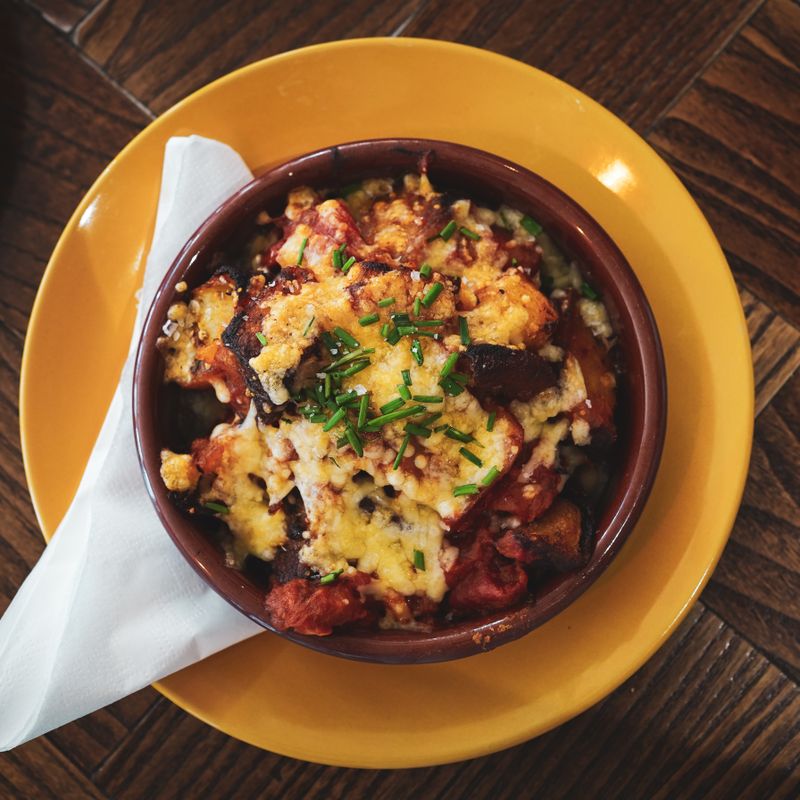
A rustic Greek one-pan bake combining slow-roasted eggplant, zucchini, and tomatoes with herbs, finished with baked eggs nestled into the vegetable medley. Served warm with crusty bread and feta cheese, it's equally good as a weeknight supper or a vegetable-forward brunch.
- Prep
- 20 min
- Cook
- 1 hr 10 min
- Wait
- 15 min
- Total
- 1 hr 45 min
- Makes
- 4 servings (1 baked egg with 1 cup vegetables per serving)
Steps
Before you start
- Preheat oven to 400°F (200°C)
- Have all vegetables prepped and measured—cutting them uniform sizes ensures even roasting
- Use a baking dish or large skillet that can go from stovetop to oven
Prepare the vegetables
- Cut the eggplant into ¾-inch (2 cm) cubes, the zucchini into ½-inch (1.25 cm) half-moons, and slice the onion into thin wedges.
- Mince the garlic.
- Have these ready in separate piles before you start cooking.
+ Show details− Hide details
Tip: Cut the eggplant just before cooking—cubes discolor quickly when exposed to air.
Sauté onion and garlic
- Heat 2 tablespoons (30 ml) of the olive oil in a 9×13-inch (23×33 cm) baking dish or large oven-safe skillet over medium heat.
- Add the sliced onion and sauté for 3–4 minutes, stirring occasionally, until softened and translucent.
- Add the minced garlic and cook for another 30 seconds until fragrant.
+ Show details− Hide details
Ready when: Onion is translucent and soft; garlic is fragrant
Tip: Don't let the garlic brown—it will taste bitter. Remove from heat if it darkens.
Add eggplant and zucchini
- Add the cubed eggplant and zucchini half-moons to the skillet.
- Drizzle with the remaining olive oil (about 6 tablespoons / 90 ml).
- Toss gently to coat everything in oil.
- Sprinkle the dried oregano and thyme over the vegetables, season with salt and black pepper to taste, and toss again.
+ Show details− Hide details
Tip: Oil is crucial—it helps the eggplant and zucchini become tender and golden. Don't skimp on it.
Add tomatoes and bay leaves
- Pour the canned crushed tomatoes with their juice over the vegetables.
- Nestle the 2 bay leaves into the mixture.
- Stir gently to combine, but keep the vegetables loosely arranged.
- Taste and adjust the seasoning with salt and pepper.
+ Show details− Hide details
Tip: Stir gently so the delicate eggplant doesn't break apart. The vegetables will finish cooking and break down in the oven.
Roast the vegetablesOven 400°F / 205°C
- Transfer the skillet to a preheated 400°F (200°C) oven.
- Bake uncovered for 45–50 minutes, stirring once or twice halfway through, until the eggplant and zucchini are very tender and the tomato sauce has reduced by about one-third.
- The edges of the eggplant should begin to collapse slightly, and the oil will shimmer on top.
+ Show details− Hide details
Ready when: Eggplant and zucchini are very soft; sauce has thickened and reduced
Tip: If the vegetables are browning too quickly on top, stir them partway through. The briam should smell deeply savory and herbaceous.
Make four wells for eggs
- Remove the skillet from the oven.
- Using the back of a spoon, gently press down to create four small wells in the vegetable mixture, spacing them evenly around the dish.
- Leave a bit of space between each well so the eggs don't run together.
+ Show details− Hide details
Tip: The wells don't need to be deep—just enough of an indent to cradle the eggs.
Crack eggs into wells
- Crack one room-temperature egg into each well.
- Try to keep the yolk whole.
- If any egg white spills out of the well onto the vegetables, that's fine—it will set with the rest.
- Do not stir.
+ Show details− Hide details
Tip: Room-temperature eggs cook more gently and evenly. If yours are cold, let them sit out for 10 minutes first.
Bake eggs until setOven 400°F / 205°C
- Return the skillet to the 400°F (200°C) oven and bake for 12–15 minutes.
- The egg whites should turn opaque and firm, while the yolks remain soft and runny (medium-cooked).
- If you prefer firmer yolks, bake another 2–3 minutes.
- The total internal temperature of the cooked egg white should reach 160°F (71°C) for food safety; use an instant-read thermometer inserted gently into the egg white to check.
+ Show details− Hide details
Ready when: Egg whites are opaque and firm; yolk jiggles slightly when nudged (or 160°F / 71°C for well-cooked whites)
Tip: Baking eggs at this moderate temperature prevents the whites from becoming rubbery or the yolks from overcooking. Check them at 12 minutes to avoid overbaking.
Rest and finish
- Remove the skillet from the oven and let it rest for 3–5 minutes.
- The residual heat will continue to gently cook the eggs and allow the vegetables to settle.
- Remove the bay leaves.
- Scatter the crumbled feta cheese and fresh chopped parsley over the top, if using.
+ Show details− Hide details
Ready when: Briam is warm; eggs are set to your liking; bay leaves are removed
Tip: The briam continues to cook slightly after leaving the oven, so don't overbake. The resting time is essential for the eggs to finish cooking gently without overcooking.
Serve
- Spoon the briam into shallow bowls or onto plates, making sure each serving gets one baked egg and plenty of vegetables.
- Serve immediately while hot, with crusty bread for soaking up the rich tomato and herb oil.
+ Show details− Hide details
Tip: Briam is best served straight from the skillet to the table for a rustic, communal feel. It can also be portioned into individual bowls to keep everything hot.
Good to know
Tips
- The success of briam depends on good-quality olive oil and ripe, flavorful tomatoes. Use San Marzano or another high-acid variety if you can find it.
- Eggplant absorbs oil readily—don't worry about using a generous amount. It transforms the texture from spongy to silky when properly roasted.
- If your oven runs hot, lower the temperature to 375°F (190°C) for the initial roasting and the eggs; this gives you more control and prevents the dish from browning too fast.
- Briam is excellent served at room temperature as a vegetable salad the next day, drizzled with fresh lemon juice and topped with crumbled feta.
Make ahead
You can prepare the vegetable base up to 1 day ahead. Cool it completely, cover, and refrigerate. Before serving, reheat in a 375°F (190°C) oven for 15–20 minutes, then make the wells and bake the eggs as directed, adding 2–3 minutes to the baking time if the vegetables are cold.
Storage & reheating
Store leftovers (without eggs) in an airtight container in the refrigerator for up to 4 days. Reheat on the stovetop over medium heat, stirring gently, until warmed through (about 8–10 minutes). If reheating with leftover baked eggs, warm the briam first, then add fresh eggs and bake until set. The briam freezes well for up to 3 months (without eggs); thaw in the refrigerator overnight and reheat as above.
Substitutions
- canned San Marzano tomatoes, crushed → Fresh tomatoes, chopped and lightly drained. Use 2 cups (500 g) fresh ripe tomatoes, halved or chopped. You may have slightly more liquid; cook the vegetables for an extra 10–15 minutes to allow it to reduce.
- crumbled feta cheese → Crumbled goat cheese or ricotta salata. Either cheese will add a tangy, creamy note. Use the same amount (½ cup / 110 g) and scatter over the finished dish.
- eggplant, medium → Yellow bell pepper, diced. Bell pepper is sweeter and cooks faster. Reduce initial roasting time by 10–15 minutes and check tenderness early.
- dried oregano → Dried Italian seasoning blend. Use the same amount. Italian seasoning already contains oregano, thyme, and basil, so you can omit the separate thyme if preferred.