
Fresh Tomato and Cilantro Salsa
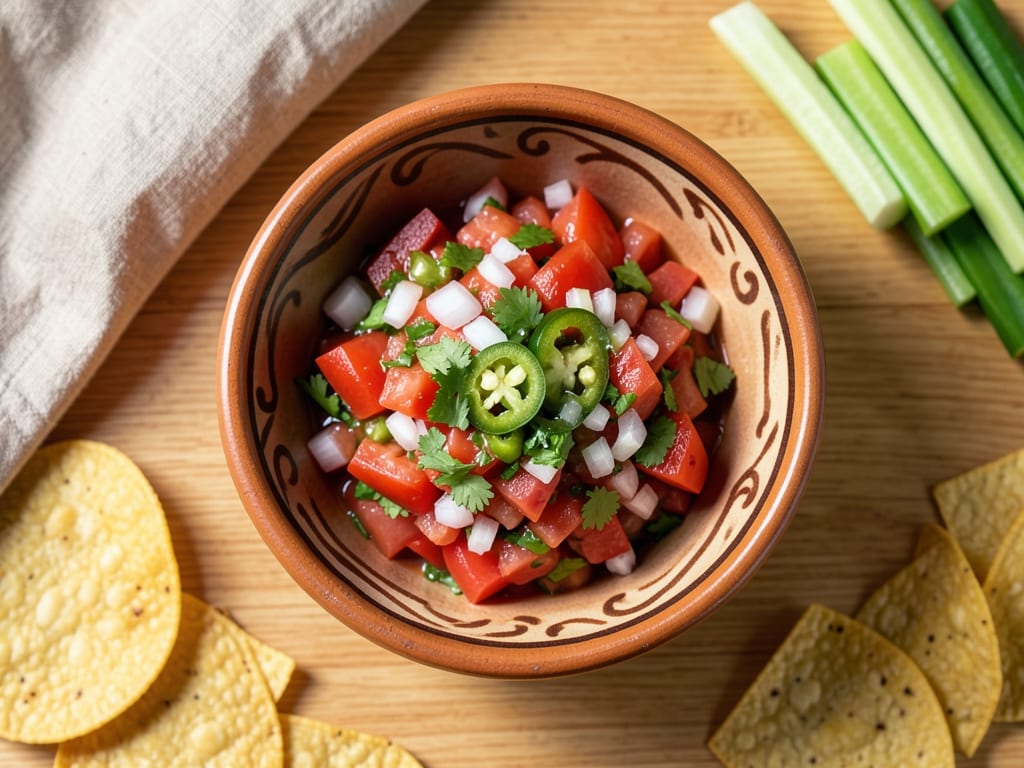
A bright, vibrant no-cook salsa with ripe tomatoes, fresh cilantro, and a kick of jalapeño heat. This classic Mexican dip comes together in minutes and tastes best when served within a few hours of making. Perfect with tortilla chips, alongside grilled meats, or spooned over tacos and nachos.
Steps
Before you start
- Use ripe but firm tomatoes (Roma or beefsteak work best)
- Have all ingredients prepped and at room temperature
- Taste as you go—adjust lime juice and salt to your preference
Prep the tomatoes
- Rinse the Roma tomatoes under cold water and pat dry.
- Cut out the core at the stem end with a small knife, then dice them into ¼-inch (6 mm) pieces, capturing all juices.
- Place the tomatoes and their juice in a medium bowl.
+ Show details− Hide details
Ready when: All tomato pieces are uniform in size and any accumulated juice is in the bowl
Tip: Avoid overripe tomatoes that are mushy or overly juicy, as they'll make the salsa watery
Add aromatic vegetables
- Finely dice the red onion into pieces about the same size as the tomato dice.
- Add the diced onion to the bowl with the tomatoes.
- If using garlic (optional), mince it finely and add it now.
- Stir gently to combine.
+ Show details− Hide details
Ready when: Onion and garlic are evenly distributed throughout the tomatoes
Tip: Use a sharp knife and a firm cutting board so pieces stay crisp and don't get bruised or crushed
Incorporate herbs and heat
- Wash the fresh cilantro under cold running water and spin or pat it dry.
- Remove the stems if they seem tough, then roughly chop both leaves and tender stems.
- Cut the jalapeño in half lengthwise and scrape out the seeds and white membranes with a spoon to moderate the heat level.
- Mince the jalapeño finely.
- Add the cilantro and jalapeño to the bowl.
+ Show details− Hide details
Ready when: Cilantro is chopped and jalapeño is finely minced with seeds and white pith removed
Tip: Removing jalapeño seeds and membranes reduces heat significantly; leave some in for more kick
Season and finish
- Squeeze the lime juice into the bowl.
- Add the sea salt and a small pinch of freshly ground black pepper.
- If desired, add a very small pinch of ground cumin (optional).
- Stir everything together gently but thoroughly with a wooden spoon or fork, being careful not to mash the tomatoes too aggressively.
+ Show details− Hide details
Ready when: All ingredients are evenly distributed and the salsa has a cohesive appearance
Tip: Don't over-stir or the tomatoes will break down and become mushy; a gentle hand is best
Taste and adjust
- After 5 minutes, taste the salsa.
- Add more lime juice if you want extra brightness, more salt if it tastes flat, or more minced jalapeño if you'd like it hotter.
- Remember that flavors will intensify slightly as the salsa sits, so season conservatively.
+ Show details− Hide details
Ready when: Salsa tastes bright, balanced, and at your preferred heat level
Tip: Lime juice is essential to prevent browning of the tomatoes and to brighten the overall flavor
Good to know
Tips
- Salsa is only as good as its tomatoes—use the ripest, most flavorful ones you can find, ideally in peak tomato season
- For chunky salsa, dice everything uniformly into ¼-inch pieces; for smoother salsa, pulse ingredients briefly in a food processor (but be careful not to over-process)
- Warm salsa tastes more flavorful than cold; if making ahead and chilling, pull it from the refrigerator 15 minutes before serving to let flavors come back
- To prevent the salsa from becoming watery, don't add it to a dish until just before serving
Make ahead
Salsa is best served fresh within 2–3 hours of making, while the cilantro is bright and the vegetables are crisp. If you need to make it ahead, prepare all ingredients separately and combine no more than 4 hours before serving. The longer it sits, the more liquid releases and the softer the texture becomes.
Storage & reheating
Room temperature (best served within 1–2 hours, up to 4 hours maximum). Refrigerator: cover and store up to 2 days, though texture and flavor degrade noticeably after 24 hours. Freezing is not recommended—frozen salsa becomes mushy when thawed. Always taste and adjust seasoning before serving chilled salsa, as cold dulls flavors slightly.
Substitutions
- fresh cilantro leaves and tender stems → fresh parsley or a mix of parsley and cilantro. For those who dislike cilantro (or have the genetic soap-taste variant), flat-leaf parsley works well but will be slightly less authentic and more herbaceous than herbal
- red onion → white onion or yellow onion. White onion is milder and sharper; yellow onion is sweeter. Red onion provides the best balance of mild sweetness and color
- fresh jalapeño pepper → serrano pepper or habanero. Serrano is hotter (2–4 times) with a slightly fruity bite; habanero is much hotter and fruity. Start with half the amount and adjust
- fresh lime juice → fresh lemon juice or white vinegar (use 1 tablespoon vinegar instead of 2 tablespoon lime). Lemon is close in acidity but less fragrant; vinegar will give a sharper, less fruity brightness
More dips & spreads
See all →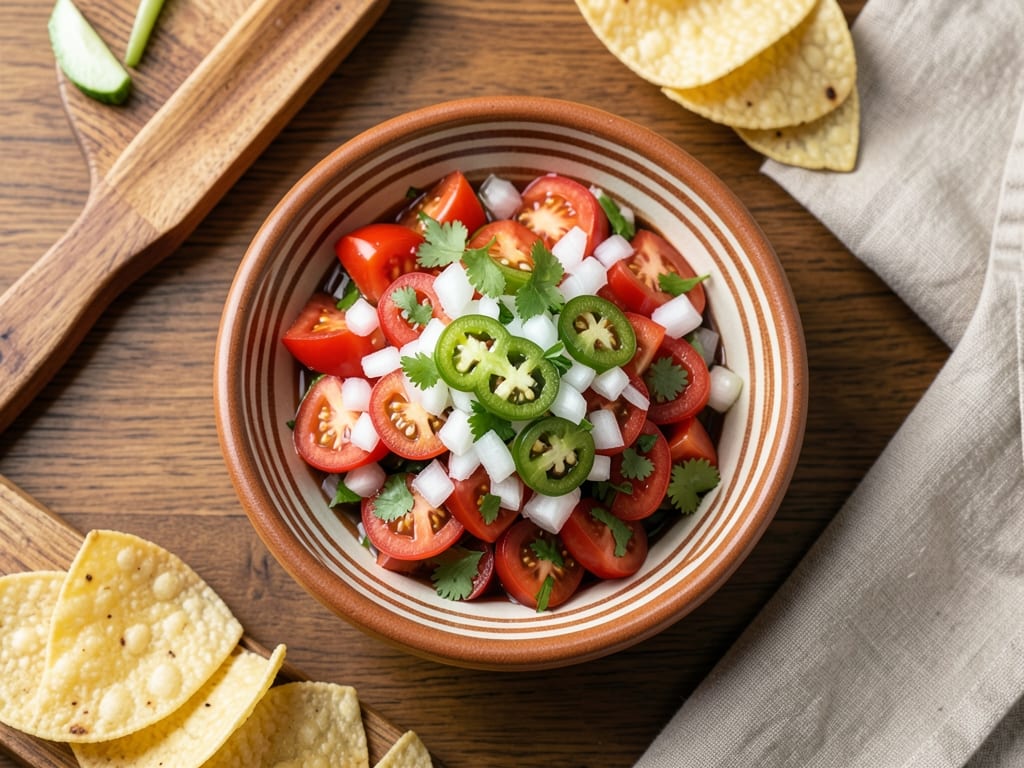


.jpg)
Find more like this
- Meal
- Snack
- Cuisine
- Mexican
- Main ingredient
- TomatoesBell Peppers
- Method
- No-Cook