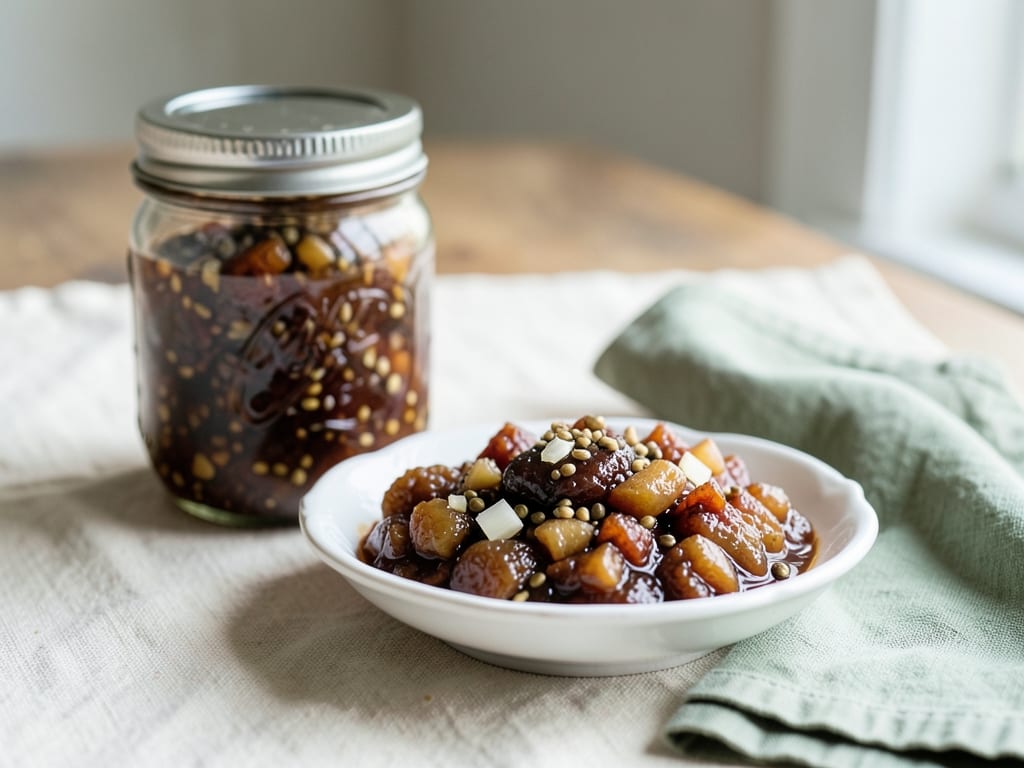
French Pickled Herring with Juniper
Silky herring fillets cured and preserved in a fragrant vinegar brine infused with juniper berries, bay leaves, and peppercorns. This classic French preparation is ready to eat after just a few days and makes an elegant addition to charcuterie boards, appetizer platters, or as a briny, mineral-forward snack. The fish becomes tender and the flavors meld into something complex and deeply satisfying.
- Prep
- 30 min
- Cook
- 15 min
- Wait
- 1 days
- Total
- 1 days
- Makes
- About 1 pound (450 g) pickled herring, 2 cups (480 ml) brine
Steps
Before you start
- Use very fresh, high-quality herring fillets; ask your fishmonger to fillet them if whole fish is all that's available
- Ensure all jars, lids, and utensils are clean and dry
- Have all ingredients measured and ready before you begin
- Plan for at least 24 hours of resting time before serving
Prepare the brine
- Pour the white wine vinegar and cold water into a small stainless-steel saucepan.
- Add the sea salt, sugar, crushed juniper berries, bay leaves, black peppercorns, white peppercorns, and coriander seeds if using.
- Bring to a gentle simmer over medium-high heat, stirring occasionally until the salt and sugar dissolve, about 3–4 minutes.
- Do not boil aggressively.
- Once the salt and sugar have fully dissolved and you see a few lazy bubbles at the surface, remove from heat and let cool to room temperature, about 20 minutes.
- This slow cooling helps the spices infuse gently.
+ Show details− Hide details
Ready when: Salt and sugar are completely dissolved, brine smells fragrant and has cooled noticeably
Tip: Do not use a reactive pot (aluminum or unlined copper); the vinegar will interact with it. Stainless steel is ideal.
Layer the herring
- Pat the herring fillets completely dry with paper towels.
- Divide them into 2 or 3 clean glass jars, alternating layers: place a few herring fillets skin-side down on the bottom, then scatter some onion rings and thyme sprigs on top, then more herring, and repeat until all are in the jars.
- This gentle layering prevents the delicate fillets from sticking together and allows the brine to circulate evenly.
+ Show details− Hide details
Ready when: Herring fillets are arranged in alternating layers with aromatics distributed throughout
Tip: Keep the fish very dry; excess moisture can dilute the brine and encourage spoilage. Don't pack the jars too tightly, or the brine won't reach every surface.
Pour the brine
- Slowly pour the cooled brine over the layered herring fillets until they are completely covered and the liquid reaches the top of the jars.
- Cover the jars with clean lids, but do not seal tightly yet.
- Let them rest at room temperature for 30 minutes while the flavors begin to meld.
+ Show details− Hide details
Ready when: All herring is fully submerged and brine is evenly distributed
Tip: If the herring floats and is not fully covered, place a small piece of crumpled parchment or a small glass weight inside the jar to keep it submerged.
Refrigerate and steep
- After the 30-minute rest at room temperature, secure the lids tightly and transfer the jars to the refrigerator.
- Let them pickle for at least 24 hours, preferably 48 hours, before opening.
- The cold temperature halts any potential fermentation and allows the vinegar, juniper, and spices to fully penetrate the fish's flesh.
- The herring will continue to soften and the flavors will deepen over the first few days.
+ Show details− Hide details
Ready when: Herring fillets are opaque throughout, tender, and smell distinctly of vinegar and juniper. After 48 hours, flavors are at their peak.
Tip: Do not open the jars during the first 24 hours. The sealed environment is important for proper pickling. If you see any cloudiness or off odors when you open them, discard and start over.
Good to know
Tips
- Herring quality is paramount: buy from a reputable fishmonger and ask when it arrived. Fresher fish will pickle more evenly and taste cleaner.
- The juniper berries must be lightly crushed, not ground into powder, so they release their piney essential oils gradually without making the brine cloudy or bitter.
- Serve the pickled herring cold as part of a Scandinavian or French-style appetizer platter alongside mustard, rye bread, boiled potatoes, and fresh dill cream.
- Once opened, consume within 3–4 days; if you don't finish the jar, cover it tightly and it will keep refrigerated for up to 2 weeks total.
Make ahead
Ready to serve after 24 hours, but tastes even better at 48 hours. Will keep in the refrigerator for up to 2 weeks.
Storage & reheating
Refrigerate in covered glass jars for up to 14 days. The brine keeps the herring fresh and protected. To serve, remove the desired number of fillets with a clean fork or spoon and let them come to cool room temperature for 15 minutes for best flavor. Do not freeze; freezing damages the delicate texture of the fish.
Substitutions
- white wine vinegar → White distilled vinegar (5% acidity). Slightly sharper and less aromatic, but still effective. Use the same amount. Avoid malt or apple cider vinegar, which are too strong.
- fresh herring fillets, skin-on → Fresh mackerel or sable fillets. Both have similar fat content and texture. Pickling time remains the same. Mackerel will be slightly richer.
- juniper berries → Caraway seeds. Use the same amount. Caraway is earthier and less citrusy, creating a different but equally traditional northern European profile.
- sea salt → Kosher salt. Use 2 tablespoons (26 g) to account for its lower density. Avoid iodized table salt, which can cloud the brine.