French Normandy Apple Pork Chop Marinade
A classic French marinade from Normandy that captures the region's signature flavors of apple, calvados, and fresh herbs. The combination of apple cider, apple juice, and calvados (apple brandy) creates a sweet and slightly boozy base, while Dijon mustard adds tang and helps tenderize the pork. Fresh thyme and shallots provide aromatic depth. Use this to marinade thick-cut pork chops for 4–8 hours before pan-searing or grilling for a restaurant-quality dish.
- Prep
- 10 min
- Cook
- —
- Wait
- 8 hr
- Total
- 8 hr 10 min
- Makes
- About 1¼ cups (300 ml) marinade, enough for 4 thick pork chops (1½ inches / 4 cm)
Steps
Before you start
- Pat pork chops dry before marinating so they absorb flavors better
- Use a glass or ceramic bowl—not reactive metal—for marinating
- Bring pork chops to room temperature for 30 minutes before cooking after marinating
Combine wet ingredients
- In a small mixing bowl, whisk together the apple cider, apple juice, and Calvados.
- The mixture should smell fragrant and slightly fruity-boozy.
- This forms the base of your marinade.
+ Show details− Hide details
Tip: Use fresh, cold apple cider if you can find it—it has more flavor than long-shelf-life versions.
Add mustard and season
- Add the Dijon mustard, freshly ground black pepper, and fine sea salt to the wet mixture.
- Whisk until the mustard is fully dissolved and the liquid is smooth, about 30 seconds.
- The mustard will emulsify slightly and give the marinade a subtle creamy texture.
+ Show details− Hide details
Ready when: Mustard is fully blended into the liquid with no streaks
Tip: Whisk thoroughly to prevent mustard lumps—they won't dissolve during marinating.
Add aromatics
- Stir in the thinly sliced shallots, fresh thyme sprigs, and bay leaf (if using).
- The aromatics should float throughout the marinade.
- Taste the mixture—it should be balanced between sweet (from the apples), tangy (from the mustard), and herbaceous.
- Do not add more salt; the pork chops' own salt content will season them adequately.
+ Show details− Hide details
Ready when: Shallots and herbs are evenly distributed
Tip: Smell the marinade—you should detect thyme and apple clearly. If it smells too boozy, the Calvados was too strong; this will mellow as it sits.
Marinate the pork chops
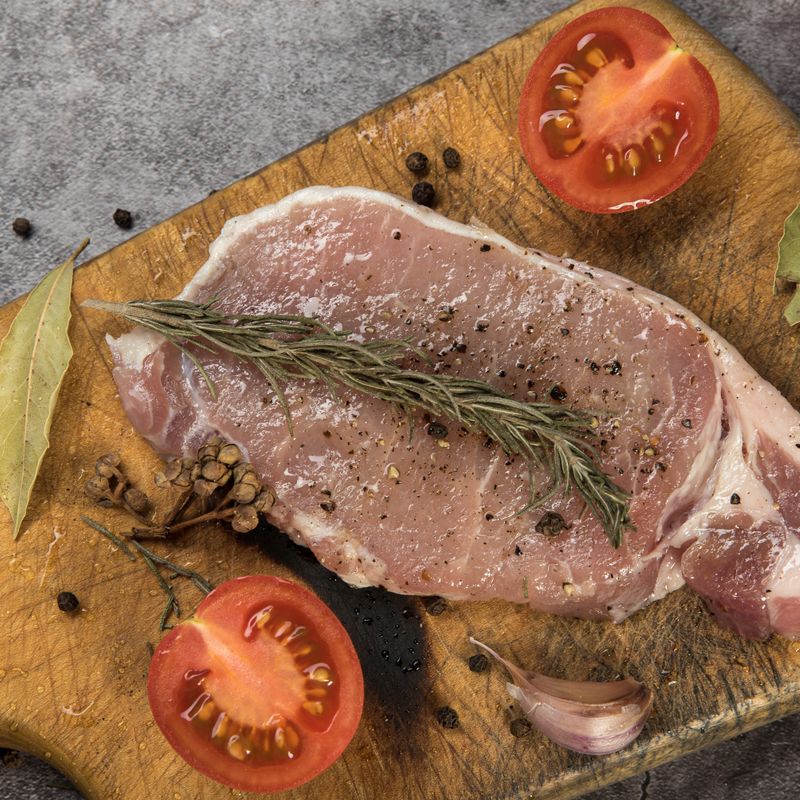
- Place 4 thick-cut pork chops (1½ inches / 4 cm thick, about 6–8 oz / 170–225 g each) in a medium glass, ceramic, or stainless-steel bowl.
- Pour the entire marinade over them, ensuring the liquid covers them by at least halfway.
- Cover the bowl tightly with plastic wrap or a silicone cover and refrigerate for at least 4 hours, preferably 6–8 hours.
- The longer they marinate, the more tender and flavorful they become.
+ Show details− Hide details
Ready when: Pork chops are fully submerged in marinade for the entire marinating time
Tip: Do not marinate longer than 12 hours—the acid and salt will eventually make the pork mushy. If you must wait longer, remove the pork after 8 hours and store it separately in the fridge.
Remove and cook
- Remove the pork chops from the marinade and let them sit at room temperature for 30 minutes before cooking.
- Reserve the marinade if you plan to reduce it into a pan sauce (discard after 2 days).
- Pat the pork chops dry with paper towels before searing or grilling to ensure good browning.
- Heat a heavy-bottomed skillet (cast iron or stainless steel) over medium-high heat with a little oil or butter.
- Sear the pork chops for 4–5 minutes per side for medium doneness (145°F / 63°C internal temperature).
+ Show details− Hide details
Ready when: Pork chops reach an internal temperature of 145°F (63°C) and are golden brown on both sides
Tip: Dry the pork thoroughly before searing—any marinade clinging to them will steam rather than brown. Let them rest 5 minutes after cooking before serving.
Good to know
Tips
- Normandy's cuisine is built on apples, cream, and Calvados. This marinade is a dry version (no cream) but captures that essence perfectly for pork.
- Do not use reactive metal (aluminum or unlined copper) for marinating—the acid in the apple juice and mustard will react with the metal and impart a metallic taste.
- After cooking, you can reduce the reserved marinade in a saucepan over medium heat for 8–10 minutes to make a quick pan sauce. Strain out the shallots and herbs, then drizzle over the cooked pork chops.
- Pork chops thicker than 1½ inches are easier to marinate evenly and less likely to dry out during cooking. Look for bone-in or center-cut varieties for the best flavor.
Make ahead
Prepare the marinade up to 2 days ahead; store it in a covered glass container in the refrigerator. Add the pork chops to marinate 4–8 hours before cooking. For meal planning, marinate the chops the night before and cook the next evening.
Storage & reheating
The marinade (without pork) keeps refrigerated in a covered glass container for up to 2 days. Once pork has been marinated, discard the marinade after 2 days for food safety. Cooked pork chops keep refrigerated for up to 3 days; reheat gently in a 325°F (163°C) oven until warmed through, about 10 minutes. Do not freeze marinated raw pork chops, as the marinade breaks down the cell structure; freeze cooked pork instead, stored up to 1 month, and thaw overnight in the refrigerator.
Substitutions
- Calvados (apple brandy) → Dry hard cider or apple brandy from another region, or ½ oz (15 ml) additional apple juice mixed with 2 tablespoons dry sherry. Calvados is authentic, but a good dry hard cider will still deliver apple character. Sherry adds depth if Calvados is unavailable.
- fresh apple cider or unfiltered apple juice → Unsweetened apple juice or apple cider mixed with 1 tablespoon apple cider vinegar for extra tang. Fresh cider has the most complex flavor, but filtered apple juice is a reliable alternative. Add vinegar to mimic cider's acidity.
- fresh thyme sprigs → 1½ teaspoons (1.5 g) dried thyme or 2–3 sprigs fresh rosemary. Dried thyme is half as potent as fresh; use only if fresh is unavailable. Rosemary is more peppery but still works well with pork.
- Dijon mustard → Wholegrain mustard or Normandy-style apple mustard. Wholegrain will give a slightly more rustic texture; Normandy apple mustard reinforces the apple theme but is harder to find.