French Leek Mustard Seed Rice
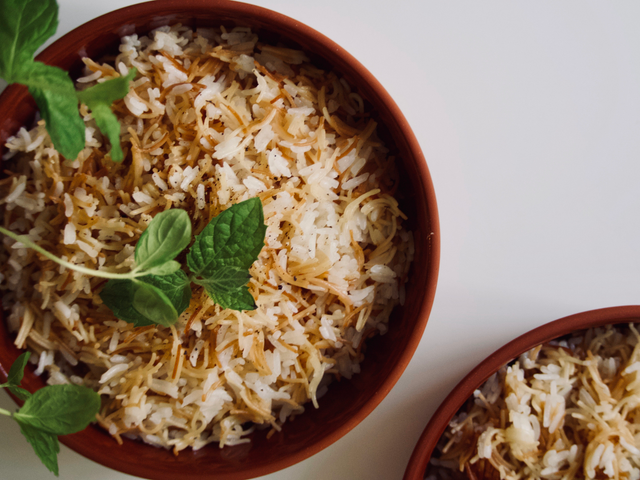
A savory rice pilaf infused with tender leeks, toasted mustard seeds, and a hint of white wine. This French-inspired side dish is elegant enough for dinner parties yet simple enough for weeknight meals. The mustard seeds add a gentle warmth and subtle bite that complements the sweet earthiness of leeks.
- Prep
- 15 min
- Cook
- 20 min
- Wait
- 10 min
- Total
- 45 min
- Makes
- 4 servings (about 3 cups)
Steps
Before you start
- Measure out the broth and have it warm or at room temperature
- Clean the leeks thoroughly by slicing lengthwise and rinsing between layers
- Use medium-grain white rice such as arborio or carnaroli for best texture
Toast the mustard seeds
- Place the sauté pan over medium heat.
- Add the mustard seeds and toast for 1 to 2 minutes, stirring frequently with a wooden spoon, until they become fragrant and begin to pop slightly.
- Listen for a gentle crackling sound.
- This wakes up the seeds' flavor.
+ Show details− Hide details
Ready when: Seeds are fragrant and popping gently
Tip: Watch closely so seeds don't burn; burned mustard becomes bitter.
Sauté the leeks
- Add the butter to the pan with the toasted mustard seeds.
- Once melted and foaming, add the sliced leeks.
- Stir frequently and cook for 4 to 5 minutes over medium heat until the leeks are softened and beginning to turn translucent at the edges.
- They should be tender but not browned.
+ Show details− Hide details
Ready when: Leeks are softened and translucent at the edges
Tip: Keep the heat at medium to prevent the butter from browning and the leeks from scorching.
Toast the rice
- Add the rice to the pan with the leeks and mustard seeds.
- Stir constantly for 2 minutes over medium heat, coating each grain in butter.
- The rice should look slightly translucent at the edges (a technique called 'toasting' the rice), which helps it absorb liquid evenly and prevents mushiness.
+ Show details− Hide details
Ready when: Rice is coated and begins to appear translucent at the edges
Tip: Stir constantly to prevent sticking and ensure even heating.
Deglaze with white wine
- Pour the white wine into the pan and stir with a wooden spoon, scraping up any flavorful bits stuck to the bottom.
- Let the wine simmer for 2 minutes over medium heat, stirring occasionally, until most of the liquid is absorbed and the sharp alcohol smell fades.
- The rice should look moist but not swimming in liquid.
+ Show details− Hide details
Ready when: Wine is mostly absorbed; raw alcohol smell is gone
Tip: This step builds flavor into the rice itself, not just on top.
Add broth and season
- Pour all 3 cups (720 ml) of chicken broth into the pan.
- Stir well to combine, breaking up any clumps of rice.
- Taste and adjust seasoning with salt and black pepper—remember that the broth is already salted, so add conservatively.
- Bring to a simmer over medium-high heat.
+ Show details− Hide details
Ready when: Mixture is at a full simmer with steady bubbles breaking the surface
Tip: Stir occasionally while bringing to a simmer to prevent the bottom from sticking.
Cover and cook
- Once the liquid is simmering steadily, reduce heat to low and cover the pan with a tight-fitting lid.
- Simmer gently for 18 to 20 minutes without lifting the lid.
- The rice will absorb the liquid and cook through.
- Do not stir during this time, as it disrupts the even cooking.
+ Show details− Hide details
Ready when: Rice is tender and liquid is fully absorbed; no broth remains in the pan
Tip: Resist the urge to peek or stir. A tight lid is essential so steam doesn't escape.
Rest the pilaf
- Remove the pan from heat and let it rest, covered, for 10 minutes.
- This allows the rice to firm up slightly and the flavors to settle.
- The residual heat finishes any grains that are still slightly firm.
+ Show details− Hide details
Ready when: Rice is fluffy and individual grains are tender but still distinct
Tip: This resting step is what transforms a good pilaf into a great one.
Fluff and serve
- Remove the lid and fluff the rice gently with a fork, breaking up any clumps.
- Taste and adjust seasoning if needed.
- If using parsley, scatter it over the top just before serving.
- Transfer to a warm serving dish or serve directly from the pan.
+ Show details− Hide details
Ready when: Rice is fluffy and grains are separate
Tip: Use a fork to fluff, not a spoon, which can crush the grains.
Good to know
Tips
- Toasting the mustard seeds intensifies their flavor. If you toast them too long, they become bitter, so listen for gentle popping and stop heat immediately.
- Medium-grain rice like arborio or carnaroli absorbs liquid evenly and yields creamy but distinct grains. Long-grain rice will be drier and may require more liquid.
- Don't skip the resting step. It makes a profound difference in texture—the rice becomes fluffy and cohesive rather than dense.
- This pilaf pairs beautifully with roasted chicken, pan-seared fish, or braised beef. The mustard seed flavor complements rich meats without overwhelming delicate fish.
Make ahead
You can prepare the leeks and measure all ingredients up to 8 hours ahead. Store cleaned, sliced leeks in the refrigerator in an airtight container. Cook the pilaf just before serving for best texture, though it holds well for up to 2 hours covered in a warm place.
Storage & reheating
Refrigerate leftovers in an airtight container for up to 3 days. Reheat gently in a saucepan over medium-low heat with a splash of broth or water, stirring occasionally, until warmed through (about 5 minutes). Do not freeze, as the rice texture becomes grainy when thawed.
Substitutions
- yellow mustard seeds → 1 teaspoon Dijon mustard stirred in at the end, or ½ teaspoon ground mustard powder added with the leeks. Dijon mustard adds tanginess but not the toasted seed texture; ground mustard is milder and more subtle.
- dry white wine → ½ cup (120 ml) dry vermouth, or ½ cup (120 ml) low-sodium vegetable or chicken broth mixed with 1 tablespoon white wine vinegar. Vermouth adds herbal notes; broth and vinegar provide acidity without alcohol.
- leeks (white and light green parts only) → 3 medium onions, halved and sliced into ½-inch (1.3 cm) half-moons. Onions lack leeks' subtle sweetness but are milder and more readily available. Reduce cooking time by 1 minute.
- fresh flat-leaf parsley → 1 tablespoon fresh chervil, or 1 tablespoon snipped fresh chives. Chervil is delicate and French; chives add a mild onion note. Both are optional garnishes.