French Chicken and Wild Mushroom Bisque
A velvety, luxurious bisque built on a foundation of roasted chicken and a medley of wild mushrooms sautéed until deeply caramelized. Cognac and fresh thyme add sophisticated depth, while cream finishes the soup into silken elegance. This one-pot French classic is perfect for entertaining and comes together in under an hour.
Steps
Before you start
- Use a mix of wild mushrooms (cremini, shiitake, oyster, porcini) for the best flavor; avoid delicate varieties like chanterelles that break apart easily
- Have your chicken at room temperature for even cooking
- Keep chicken stock warm on a back burner so it incorporates smoothly into the bisque
- Read through the recipe—the soup comes together quickly once you begin sautéing
Sear the chicken
- Heat a large Dutch oven or soup pot over medium-high heat.
- Season both sides of the chicken breasts generously with sea salt and black pepper.
- Add 1 tablespoon (14 g) of butter to the pot.
- Once it foams, add the chicken breasts and sear for 3–4 minutes on each side until golden brown (they won't be cooked through).
- Transfer to a plate and set aside.
+ Show details− Hide details
Ready when: Golden brown crust on both sides; internal temperature not yet reached
Tip: Don't move the chicken as it sears—let it develop color without fussing, which takes about 3 minutes per side.
Sauté the mushrooms
- In the same pot, add 1 tablespoon (14 g) butter.
- Once foamy, add the sliced wild mushrooms in a single layer and resist the urge to stir for the first 3 minutes—let them caramelize on their bottoms.
- After 3 minutes, stir well and cook for another 3–4 minutes until all mushrooms are tender and golden, releasing their liquid.
- The mushrooms should smell deeply savory and nutty.
+ Show details− Hide details
Ready when: Mushrooms golden brown, tender, and release liquid when pressed; pot smells deeply nutty
Tip: Don't crowd the pan or stir too early—letting mushrooms sit undisturbed develops their umami and caramelization. If your pot feels crowded, sauté in two batches.
Sweat shallots and garlic
- Lower the heat to medium.
- Add the remaining 1 tablespoon (14 g) butter to the pot.
- Add the sliced shallots and cook, stirring occasionally, for 3 minutes until softened and just beginning to turn translucent.
- Add the minced garlic and cook for 1 minute until fragrant.
+ Show details− Hide details
Ready when: Shallots translucent, garlic fragrant, no browning
Tip: Keep the heat at medium so aromatics soften gently without burning; burned garlic will taste acrid in the finished soup.
Deglaze with Cognac
- Raise the heat to medium-high and add the Cognac.
- Stir with a wooden spoon, scraping up any brown bits stuck to the pot—this builds depth of flavor.
- Let it bubble for 2 minutes, then carefully ignite with a long-stemmed lighter if you wish (optional for dramatic flair, but not necessary—the alcohol will cook off either way).
- If you do flambé, let the flames die naturally, about 30 seconds.
+ Show details− Hide details
Ready when: Cognac has reduced by about one-third and smells less intensely of alcohol; flames subside (if flambéed)
Tip: Stand back when flambéing. If you don't flambé, simply bubble the Cognac for 2 minutes—both methods cook off most of the alcohol and build rich flavor.
Return chicken and add stock
- Return the seared chicken breasts to the pot, nestling them among the mushrooms and aromatics.
- Add the warm chicken stock, fresh thyme sprigs, and bay leaf.
- Bring to a boil over medium-high heat, then reduce to a gentle simmer.
+ Show details− Hide details
Ready when: Chicken reaches 165°F (74°C) internal temperature; broth is just barely bubbling
Tip: Use an instant-read thermometer to check doneness—white meat is forgiving but can dry out if overcooked. 165°F is the safe minimum and keeps the meat tender.
Shred and finishOven 165°F / 75°C
- Once the chicken is cooked through (165°F / 74°C internal temperature), transfer the breasts to a cutting board.
- Remove and discard the thyme sprigs and bay leaf.
- Let the chicken cool for 2 minutes, then shred it into bite-sized pieces using two forks.
- Return the shredded chicken to the pot.
+ Show details− Hide details
Ready when: Chicken shreds easily; aromatic herbs removed
Tip: Shred into 1-inch pieces so they stay tender and distribute evenly throughout the soup without breaking down into mush during blending.
Blend the bisque
- Using an immersion blender, blend the soup until creamy and mostly smooth (some small mushroom pieces may remain for texture, or blend until completely silken if you prefer).
- If using a regular blender, work in batches, filling it no more than halfway; cover with a towel before pulsing to avoid hot splashing.
- Return all blended soup to the pot.
+ Show details− Hide details
Ready when: Soup is creamy, velvety, and mostly smooth throughout
Tip: Blend only to the consistency you like—a rustic bisque retains some texture, while a refined one is nearly silken. Don't over-blend or the mushrooms will turn to mush.
Stir in cream and finish
- Return the soup to medium heat (if using a regular blender).
- Stir in the heavy cream, Dijon mustard, and lemon juice.
- Simmer gently for 2–3 minutes, stirring occasionally.
- Taste and adjust seasoning with more sea salt, black pepper, and lemon juice as needed.
- The soup should taste rich, savory, and just slightly bright.
+ Show details− Hide details
Ready when: Cream is fully incorporated, soup is hot throughout (just barely steaming), and flavors are balanced and refined
Tip: The Dijon mustard adds silkiness and a subtle tang without being obvious—it emulsifies the cream and rounds out the flavors beautifully. Don't skip it.
Ladle and serve
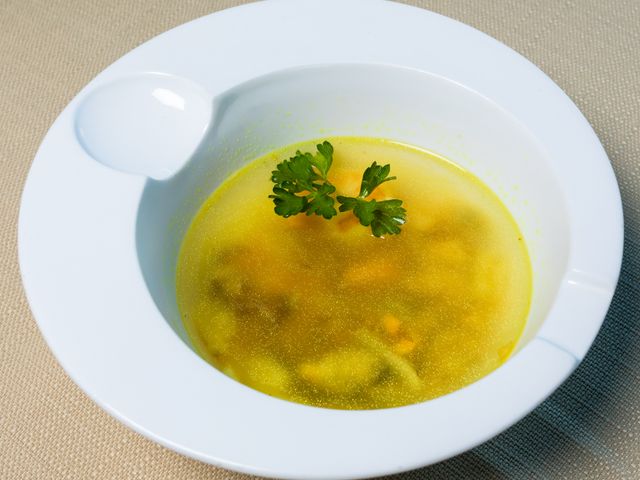
- Ladle the bisque into warm bowls.
- Garnish with a small handful of fresh chopped parsley and a light grind of black pepper if desired.
- Serve immediately.
+ Show details− Hide details
Ready when: Soup is steaming and smells fragrant
Tip: Warming your bowls in the oven or with hot water keeps the soup hot from first spoonful to last—the presentation also feels more luxurious.
Good to know
Tips
- Build the bisque in layers: first caramelize the mushrooms deeply for umami, then sauté aromatics, deglaze with Cognac to lift brown bits from the pot, and finally poach the chicken in stock infused with thyme. Each step adds complexity.
- If your bisque feels too thick after blending, thin it gradually with warm chicken stock—adding a splash at a time prevents over-thinning. If it's too thin, simmer for 2–3 minutes to concentrate flavors and reduce liquid slightly.
- The Dijon mustard is essential but subtle—it acts as an emulsifier to keep the cream from separating and adds a whisper of sophistication that makes guests wonder what the secret ingredient is.
- For an elegant presentation, float a small dollop of crème fraîche in the center of each bowl, dust with a tiny pinch of porcini powder or smoked paprika, and add a thyme leaf. This elevates the dish for entertaining without extra effort.
Make ahead
You can make the bisque up to 2 days ahead. Prepare through Step 8, cool completely, then refrigerate in an airtight container. Reheat gently over medium heat, stirring often, until steaming but not boiling. You may need to thin it slightly with a splash of stock if it has thickened during storage.
Storage & reheating
Store in an airtight container in the refrigerator for up to 3 days. Freeze for up to 3 months. To reheat from frozen, thaw overnight in the fridge, then warm gently over medium heat until steaming throughout. Avoid rapid boiling, which can break the cream emulsion and cause the soup to look curdled or grainy. If separation occurs, whisk vigorously or use an immersion blender to re-emulsify.
Substitutions
- Cognac or brandy → Dry sherry, brandy, or dry white wine. All three provide acidity and depth. Sherry is closest in warmth; white wine is lighter but still effective. Use the same amount.
- mixed wild mushrooms (cremini, shiitake, oyster, porcini) → All cremini mushrooms, or cremini mixed with dried porcini (hydrate dried first in warm water). Fresh wild mushrooms are ideal, but cremini or a blend work well. Dried porcini adds deep umami if fresh wild varieties aren't available.
- heavy cream → Crème fraîche or sour cream. Both add tang and richness. Stir in at the end without simmering to avoid curdling. Start with ⅔ cup (160 ml) and add more to taste for the silkiness you want.
- boneless, skinless chicken breasts → Bone-in, skin-on chicken thighs. Thighs add richer flavor and are more forgiving if slightly overcooked. Use 1.75 lbs (800 g). Poach for 15–18 minutes until fully cooked, then shred, discarding bones and skin.