French Bouillabaisse-Style Fish Chowder
A rustic Provençal fish chowder built on a saffron and fennel-infused broth, finished with white fish, mussels, and a whisper of anise. Serve with toasted bread and rouille for an authentic French seafood experience.
- Prep
- 25 min
- Cook
- 45 min
- Wait
- 10 min
- Total
- 1 hr 20 min
- Makes
- 6 servings (about 9 cups)
Steps
Before you start
- Ask your fishmonger for white fish scraps or bones to make a quick stock, or use store-bought fish stock
- Clean and debeard the mussels just before cooking
- Have all ingredients prepped and within arm's reach before you begin—this chowder moves quickly once the seafood goes in
Build the aromatics
- Heat 3 tbsp (45 ml) olive oil in a large 6-quart (5.7 L) heavy-bottomed pot over medium heat.
- Add the sliced fennel and diced onion, and sauté for 6–8 minutes, stirring occasionally, until they soften and the fennel begins to caramelize at the edges.
- Add the minced garlic and cook for 1 minute more, stirring constantly, until fragrant.
+ Show details− Hide details
Ready when: Fennel is soft and edges are lightly golden; garlic is fragrant
Tip: Don't rush this step—slow caramelization builds depth of flavor
Add tomato and paste
- Stir in the tomato paste, coating the vegetables well, and cook for 1 minute.
- Pour in 1 can (14.5 oz / 410 g) of canned diced tomatoes with their juice, stirring to combine with the paste and aromatics.
+ Show details− Hide details
Ready when: Tomato paste is fully incorporated and darkens slightly
Tip: Cooking the paste briefly caramelizes it, enriching the base
Deglaze and build broth
- Pour in 1 cup (240 ml) dry white wine, scraping the bottom of the pot with a wooden spoon to release any browned bits.
- Let it bubble for 2 minutes to reduce slightly.
- Add 6 cups (1440 ml) fish or shellfish stock, 2 bay leaves, 3 sprigs fresh thyme, and ½ tsp (2 g) finely grated orange zest.
- Bring to a gentle boil, then reduce heat to medium-low.
+ Show details− Hide details
Ready when: Mixture comes to a boil and wine aroma becomes mellow
Tip: The orange zest adds subtle citrus that brightens bouillabaisse without overpowering it
Bloom saffron
- While the broth is heating, place 0.1 tsp (0.2 g) lightly crushed saffron threads in a small bowl and pour 3 tbsp (45 ml) of hot broth over them.
- Let steep for 5 minutes to release the color and flavor.
+ Show details− Hide details
Ready when: Liquid turns deep golden and saffron flavor blooms
Tip: Blooming saffron in hot (not boiling) liquid extracts maximum color and flavor
Simmer base
- Once the broth is at a gentle bubble, cover the pot partially and let it simmer for 15 minutes.
- This allows the fennel, tomato, and herbs to fully meld into the broth.
- The liquid should be aromatic and rich.
+ Show details− Hide details
Ready when: Broth is fragrant and has taken on a light reddish-gold color
Tip: Keep the heat low so it's a lazy bubble, not a rolling boil—this prevents tough fish later
Strain and return broth
- Pour the saffron infusion into the pot and stir.
- Using a fine-mesh strainer, strain the broth into a clean pot or large bowl, pressing gently on the solids to extract liquid (discard solids and herbs).
- Return the strained broth to the pot and bring back to a gentle simmer over medium heat.
+ Show details− Hide details
Ready when: Broth is smooth, fragrant, and golden; no visible vegetable pieces remain
Tip: Straining removes solids but keeps all the saffron flavor suspended in the broth
Season broth
- Taste the broth and adjust with sea salt and freshly ground black pepper.
- The broth should taste rich and balanced, with fennel and saffron prominent but not overwhelming.
- Be conservative with salt—you'll add more after the seafood cooks.
+ Show details− Hide details
Ready when: Broth is well-seasoned with no harsh edges
Tip: Taste as you go—it's easier to add salt than to remove it
Add fish and mussels
- Increase heat to medium-high and bring the broth to a gentle boil.
- Add 1.5 lb (680 g) white fish chunks, distributing them evenly in the pot.
- Let them cook for 3 minutes until they begin to firm up.
- Then add 1 lb (450 g) cleaned and debearded mussels, stirring gently to submerge them.
+ Show details− Hide details
Ready when: Fish is opaque at the edges; mussels are just beginning to open
Tip: Add the fish first so it doesn't overcook while waiting for mussels. Handle gently to keep chunks intact
Finish cooking seafood
- Reduce heat to medium and simmer gently for 4–5 minutes, until the mussels have fully opened and the fish is opaque throughout and flakes easily with a fork.
- Discard any mussels that remain closed after 5 minutes.
+ Show details− Hide details
Ready when: Fish is completely opaque and flakes easily; all mussels are open; broth is just below a boil
Tip: Overcooking fish turns it tough and chalky—watch carefully in the last 2 minutes
Adjust seasoning and finish
- Taste again and adjust salt and pepper as needed.
- The chowder should taste rich, briny, and aromatic.
- Remove from heat and stir in 3 tbsp (10 g) finely chopped fresh parsley.
+ Show details− Hide details
Ready when: Parsley is evenly distributed; chowder looks vibrant
Tip: Add parsley just before serving so it stays bright and fresh
Toast bread and serveOven 400°F / 205°C
- While the chowder finishes, arrange 8 slices of crusty baguette or country bread on a baking sheet and toast under the broiler or in a 400°F (200°C) oven for 2–3 minutes per side until golden and crispy.
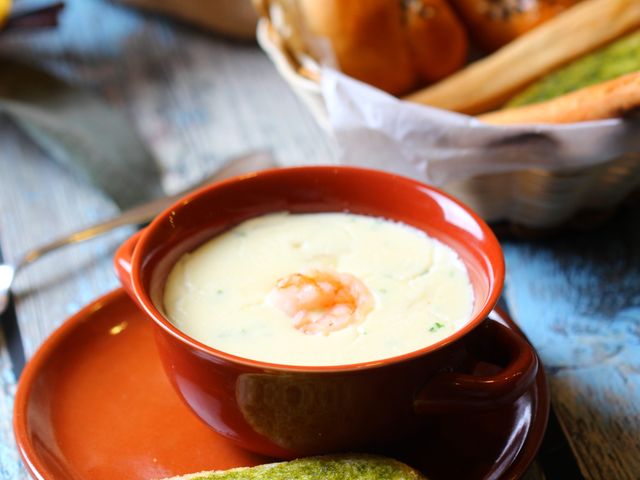
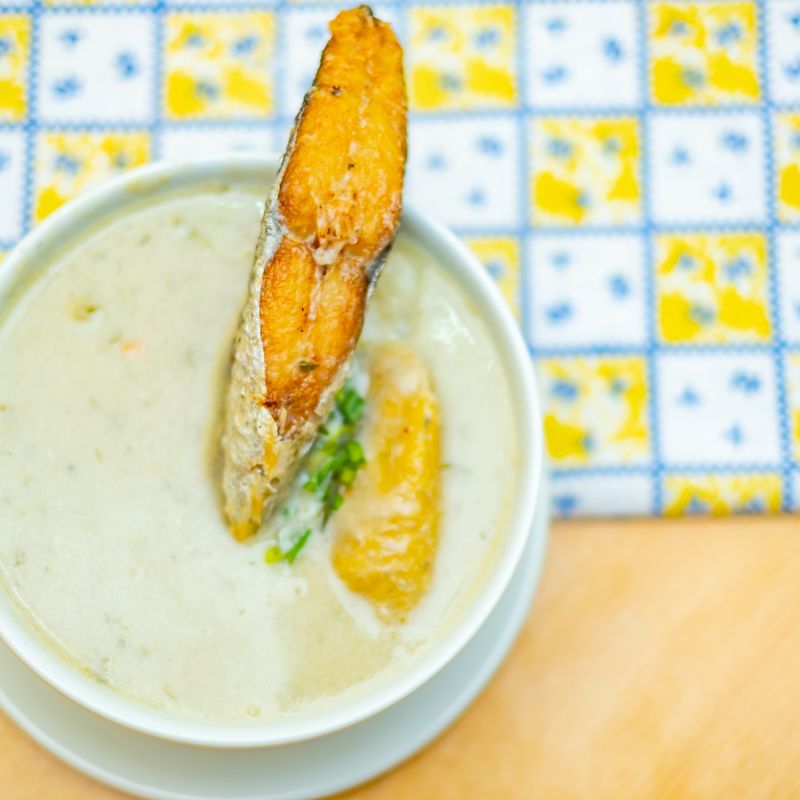
- Ladle the chowder into bowls and place a piece of toasted bread on the rim or float it in the center.
- Serve immediately.
+ Show details− Hide details
Ready when: Bread is golden brown and crispy
Tip: Toast bread separately to keep it from becoming soggy in the chowder
Good to know
Tips
- To serve authentically, top each bowl with a dollop of rouille (a saffron-garlic mayonnaise) and freshly grated Gruyère if desired
- Buy mussels from a reputable fishmonger and store on ice—they should smell like the ocean, not 'fishy'
- If you cannot find saffron or prefer to skip it, increase the fennel and orange zest slightly for similar aromatics
- For a deeper color and richer flavor, add 1 tbsp of Pernod or pastis (anise liqueur) along with the wine
Make ahead
You can prepare the broth base up to 4 hours ahead: complete steps 1–7 and refrigerate. Reheat to a gentle simmer, then proceed with steps 8–10. Do not cook the seafood ahead—it must be added to the hot broth just before serving.
Storage & reheating
Refrigerate leftover chowder in an airtight container for up to 2 days. Reheat gently in a pot over low heat, stirring occasionally, until warmed through. Do not boil. Freeze for up to 3 months (freeze the broth and seafood separately for best quality). To thaw, refrigerate overnight, then reheat as above.
Substitutions
- firm white fish fillets (halibut, cod, or haddock) → Sea bass, monkfish, or snapper. Any firm white fish with mild flavor works. Avoid delicate fish like sole, which falls apart easily in a chowder.
- mussels, cleaned and debearded → Littleneck clams or a mix of mussels and clams. Clams take slightly longer to open (6–7 minutes total). Shrimp can replace mussels, but add them in the last minute of cooking.
- saffron threads → A large pinch of turmeric plus 1 tsp fennel seeds, lightly crushed. This gives earthy warmth and fennel notes, though the golden color will be less vibrant and the flavor less delicate.
- dry white wine → Dry vermouth or additional fish stock. Vermouth adds herbaceous notes; stock will make a broth-forward chowder with less acidity.