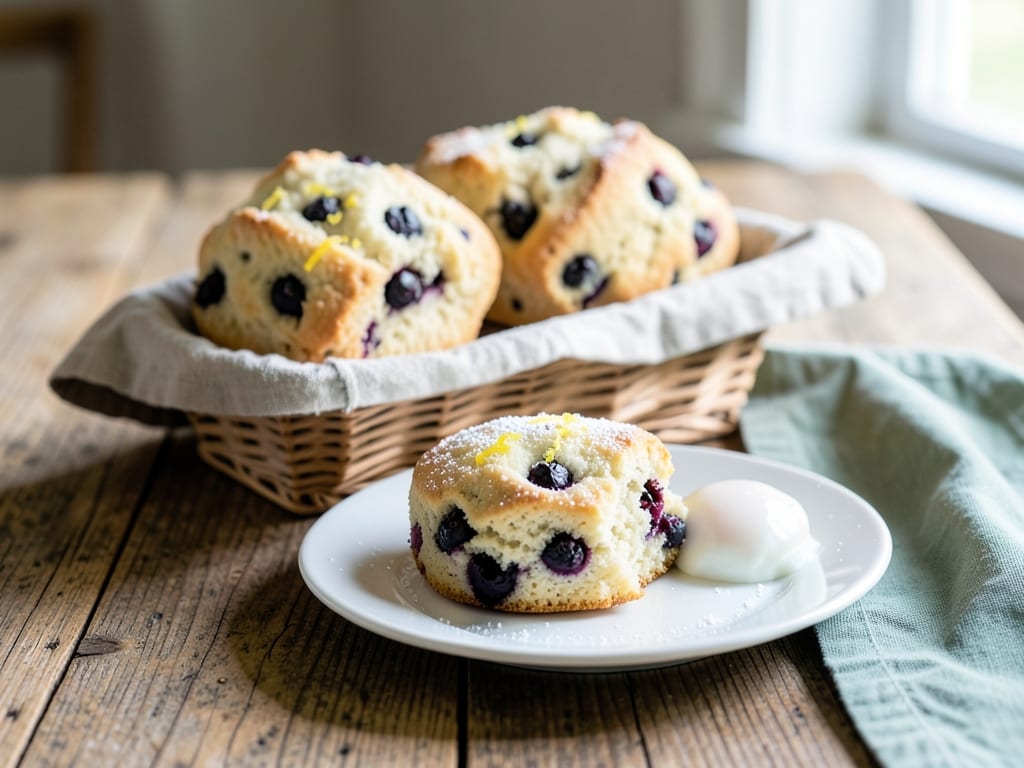
Flaky Sourdough Discard Biscuits
Tall, buttery, layered biscuits with a gentle sourdough tang, made with unfed discard straight from the fridge. No rising time is needed, so they go from bowl to breakfast table in about an hour.
- Prep
- 20 min
- Cook
- 17 min
- Wait
- 20 min
- Total
- 57 min
- Makes
- 8 biscuits (2½-inch / 6 cm)
Steps
Before you start
- Use discard straight from the fridge. It should be cold and about 100% hydration (equal weights flour and water), the consistency of thick pancake batter.
- Cut the butter into cubes and put it in the freezer for 15 minutes, or until very firm, while you gather everything else.
- Measure the flour by spooning it into the cup and leveling it, or better, weigh it. Packed flour makes dry, dense biscuits.
- Position an oven rack in the center. You'll preheat to 425°F (220°C) while the cut biscuits chill.
Chill the butter
- Cut the 6 tablespoons (85 g) cold butter into ½-inch (1 cm) cubes, scatter on a small plate and freeze for 15 minutes.
- Meanwhile, line a 13×18-inch (33×46 cm) rimmed baking sheet with parchment paper.
+ Show details− Hide details
Ready when: Butter cubes feel hard and cold, not at all soft
Tip: Warm butter melts into the flour and gives crumbly, flat biscuits instead of flaky ones.
Whisk dry ingredients
- In a large bowl, whisk together the 280 g flour, baking powder, baking soda, salt and sugar for 20 seconds so the leaveners are evenly distributed.
+ Show details− Hide details
Ready when: No clumps of baking soda or powder visible
Rub in butter
- Add the frozen butter cubes and toss to coat.
- Press each cube flat between your thumb and fingertips, working quickly, until the pieces are mostly the size of large peas and some are flat flakes about the size of a thumbnail.
- Work for no more than 2 minutes.
+ Show details− Hide details
Ready when: Mixture looks shaggy and floury with visible pea-size and flat butter pieces
Tip: If the butter feels soft or greasy, put the whole bowl in the freezer for 5 minutes.
Add discard and milk
- Make a well in the center.
- Add the 240 g cold discard and 80 ml cold milk.
- Stir with a fork or spatula, folding from the edges inward, just until a shaggy, sticky dough forms.
- If much of the flour is still dry, add more milk 1 tablespoon at a time, up to 2 tablespoons (30 ml) total.
+ Show details− Hide details
Ready when: Dough holds together when pressed, looks ragged and slightly sticky, with no large dry pockets
Tip: Stop mixing early. Overmixing develops gluten and makes tough biscuits.
Fold for layers
- Turn the dough onto a counter dusted with about 1 tablespoon of the extra flour.
- Pat it into a rough 8×6-inch (20×15 cm) rectangle.
- Fold it in thirds like a letter, rotate a quarter turn, then pat out again to about 8×6 inches.
- Repeat the fold and pat 2 more times (3 folds total), dusting lightly only when sticky.
+ Show details− Hide details
Ready when: Dough is cohesive and fairly smooth, with visible streaks of butter
Tip: Use a bench scraper to lift the dough if it sticks, and keep your touch light.
Pat and cut
- Pat the dough to an even 1-inch (2.5 cm) thickness.
- Dip the 2½-inch (6 cm) cutter in flour and press straight down without twisting, cutting 6 biscuits with the cuts close together.
- Gently gather the scraps, pat to 1 inch (2.5 cm) thick and cut 2 more.
- Place all 8 on the lined sheet with their sides touching.
+ Show details− Hide details
Ready when: 8 biscuits of even 1-inch height
Tip: Twisting the cutter seals the edges and stops the biscuits from rising tall. Press straight down and lift straight up.
Chill and preheatOven 425°F / 220°C
- Refrigerate the tray of cut biscuits for 15 minutes while the oven preheats to 425°F (220°C).
- Keep the biscuits touching, since this helps them rise upward instead of spreading.
+ Show details− Hide details
Ready when: Oven reaches 425°F (220°C); biscuit tops feel cool and firm
Tip: Use an oven thermometer if you have one. A cool oven makes pale, squat biscuits.
Bake until goldenOven 425°F / 220°C
- Bake on the center rack at 425°F (220°C) for 15–18 minutes, rotating the sheet front to back after 10 minutes, until the biscuits have risen to about double their height and the tops are deep golden brown.
+ Show details− Hide details
Ready when: Tall, deep golden tops; bottoms golden brown; sides look set and dry, not doughy
Tip: Don't open the oven in the first 10 minutes, which lets out the heat and steam needed for rise.
Brush and rest
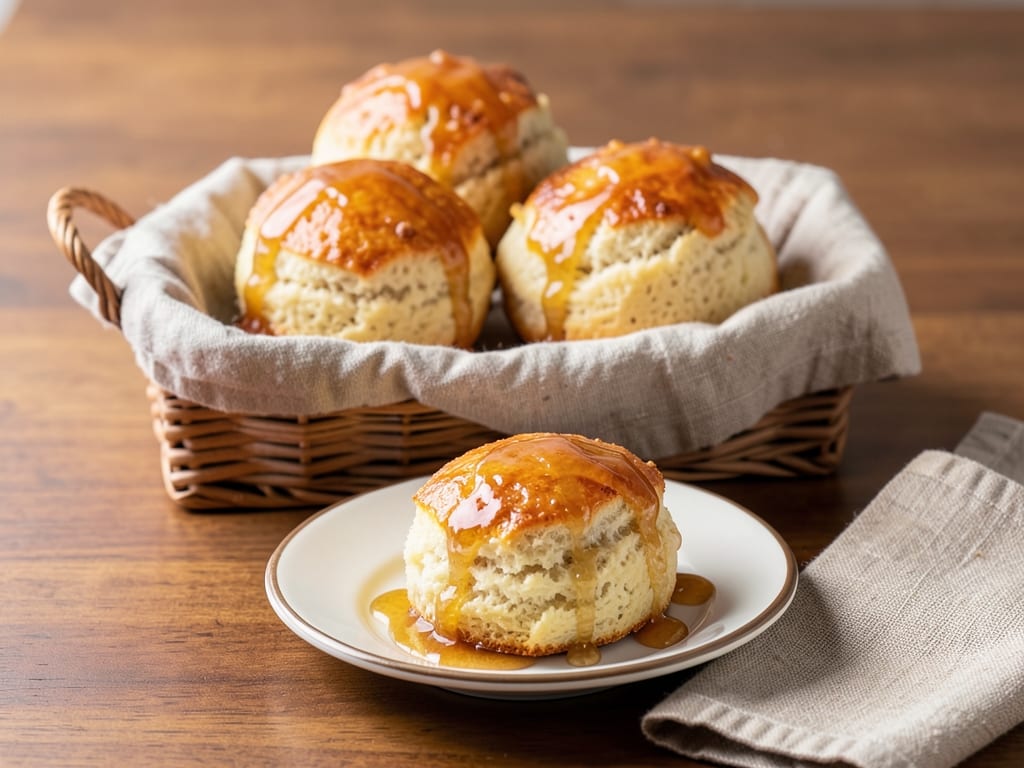
- Immediately brush the hot tops with the 1 tablespoon melted butter and sprinkle with a pinch of flaky salt, if using.
- Let the biscuits cool on the pan for 5 minutes so the interior sets, then serve warm.
+ Show details− Hide details
Ready when: Butter soaks in and tops look glossy; biscuits pull apart into steamy, fluffy layers
Good to know
Tips
- Keep everything cold: butter, discard and milk. Cold butter pieces melt in the oven and release steam, which makes the layers.
- Press the cutter straight down and never twist it, and keep the biscuits touching on the pan for the tallest rise.
- Discard that has sat in the fridge for more than 2 weeks, or smells sharply of acetone, can make the biscuits taste unpleasantly sour. Use fresher discard.
- Brush with melted butter right out of the oven so it soaks in rather than sitting on top.
Make ahead
Cut the biscuits (step 6), place them on the parchment-lined sheet, cover and refrigerate up to 12 hours, or freeze solid on the tray, then transfer to a freezer bag for up to 2 months. Bake refrigerated biscuits as directed; bake frozen biscuits straight from the freezer at 425°F (220°C) for 20–24 minutes.
Storage & reheating
Room temperature: airtight container up to 1 day. Fridge: up to 4 days. Freezer: baked biscuits up to 3 months, wrapped well. Reheat in a 350°F (175°C) oven for 8–10 minutes (12–15 minutes from frozen) until hot and crisp outside.
Substitutions
- whole milk → buttermilk. Gives a slightly tangier, tender biscuit; the baking soda handles the extra acidity.
- unsalted butter → cold vegetable shortening, or half shortening and half butter. Shortening yields a taller, softer biscuit with less buttery flavor.
- sourdough discard (100% hydration, unfed) → fed, active starter at 100% hydration. Gives a milder tang; the dough may be slightly wetter, so dust with a little more flour.
- all-purpose flour → 1¾ cups (220 g) all-purpose flour plus ½ cup (60 g) whole wheat flour. Adds nutty flavor; biscuits will be slightly denser and may need an extra tablespoon of milk.