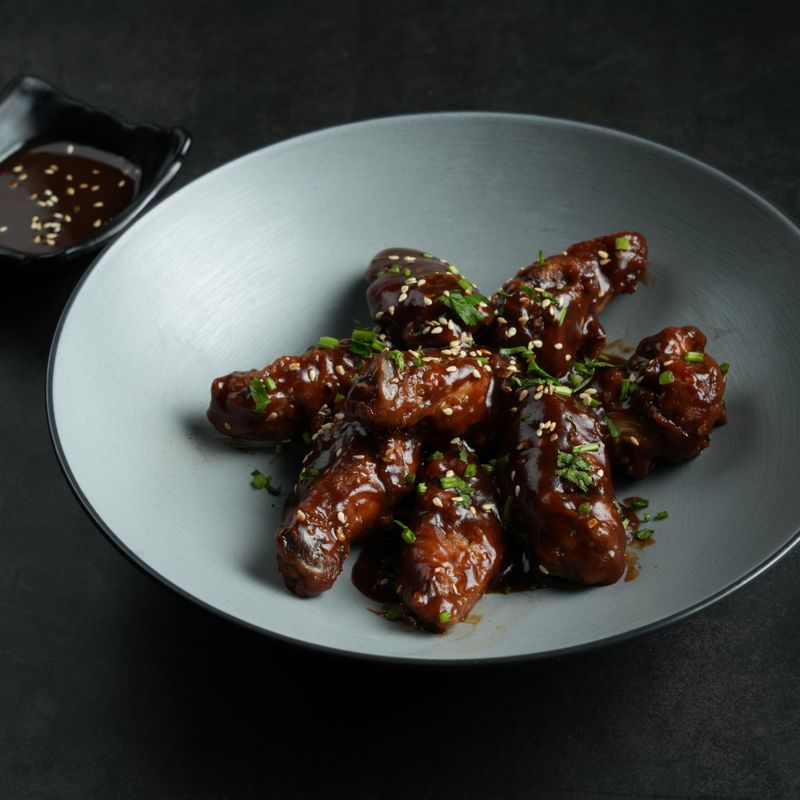
Family Chicken Thigh Brown Sugar Soy Marinade
An easy Asian-American weeknight marinade that combines brown sugar, soy sauce, sesame oil, and fresh ginger to create a sweet-savory glaze on chicken thighs. The marinade takes 10 minutes to prepare, thighs marinate while you finish prep work, then pan-sear to a crispy, golden finish in under 20 minutes. Versatile enough for grilling, baking, or stovetop cooking.
- Prep
- 15 min
- Cook
- 18 min
- Wait
- 35 min
- Total
- 1 hr 8 min
- Makes
- 6 marinated and cooked chicken thighs (4 servings with vegetables)
Steps
Before you start
- Pat chicken thighs thoroughly dry with paper towels to help them brown properly later
- Measure out all marinade ingredients ahead of time for quick mixing
- Plan for at least 30 minutes of marinating time (up to 8 hours ahead if desired for deeper flavor)
- Have a meat thermometer on hand to verify doneness at 165°F (74°C)
Combine the Marinade
- In a 1-quart mixing bowl, whisk together the soy sauce, brown sugar, sesame oil, rice vinegar, and water.
- Add the minced garlic and grated ginger, stirring well to combine.
- If using red pepper flakes, add them now and stir.
- Whisk vigorously for 30–60 seconds until the brown sugar is completely dissolved and the marinade appears smooth, glossy, and well-combined.
+ Show details− Hide details
Ready when: Brown sugar is completely dissolved; marinade is smooth and glossy with no gritty texture
Tip: If brown sugar settles at the bottom, whisk again before adding chicken. Vigorous whisking helps incorporate the sugar fully.
Prepare the Chicken Thighs
- Remove the chicken thighs from their package and pat thoroughly dry on both sides with paper towels—moisture prevents browning.
- Trim any large flaps of excess skin hanging from the edges, but keep the skin that's attached to the meat intact.
- Season both sides of each thigh lightly with kosher salt and black pepper.
+ Show details− Hide details
Ready when: Chicken is thoroughly dried and trimmed; each piece is seasoned evenly on both sides
Tip: Dry chicken is essential for browning. Use plenty of paper towels to absorb as much surface moisture as possible. This creates crispy, golden skin when seared.
Marinate the Chicken
- Place the seasoned chicken thighs in a gallon-sized zip-top bag or 2-quart container.
- Pour the prepared marinade over the chicken, turning the thighs to coat all sides evenly.
- Seal the bag or cover the container and refrigerate.
- For a quick weeknight dinner, marinate for at least 30 minutes.
- For deeper, more developed flavor, marinate for 2–4 hours or overnight (up to 8 hours maximum).
+ Show details− Hide details
Ready when: All chicken pieces are coated in marinade; liquid covers most of the thighs
Tip: If you only have 15–30 minutes, massage the marinade into the chicken repeatedly to speed flavor absorption. Always refrigerate if marinating longer than 1 hour.
Bring to Room Temperature
- Remove the chicken and marinade from the refrigerator 10–15 minutes before cooking to bring them closer to room temperature.
- Remove each thigh from the marinade and place on a clean cutting board or plate.
- Pat the surface of each thigh dry with paper towels to remove excess marinade; this helps the skin brown and crisp in the pan.
- Discard the marinade that has contacted raw chicken.
+ Show details− Hide details
Ready when: Chicken is dry on the surface; excess marinade moisture is blotted away
Tip: Bringing chicken closer to room temperature (10–15 minutes out of the fridge) helps it cook more evenly and allows the residual marinade flavors to integrate better.
Sear Skin Side DownOven 375°F / 190°C
- Heat 1 tablespoon of neutral oil in a large (12-inch / 30 cm) skillet over medium-high heat (about 375°F / 190°C).
- Once the oil shimmers and moves freely in the pan (about 1 minute), carefully place the chicken thighs skin-side down in the skillet.
- You'll hear them sizzle immediately—this is a good sign that the pan is hot enough.
- Do not move the chicken for 6–8 minutes.
- The skin will gradually turn golden, then deepen to mahogany brown, and the fat under the skin will render, making it crispy.
- You'll see the meat start to pull away slightly from the bone along the edges.
+ Show details− Hide details
Ready when: Skin is deep golden to mahogany brown; skin is crispy and will crackle when pressed; meat visibly pulls from the bone edges
Tip: Resist the urge to move the chicken early. If you move it before it releases naturally, the skin will stick and tear, ruining the crispy texture. Confidence and patience yield the best results.
Flip and Finish CookingOven 165°F / 75°C
- Carefully flip each chicken thigh skin-side up using a sturdy spatula or tongs.
- The underside should be golden brown where it touched the pan.
- Cook uncovered for another 8–10 minutes over medium-high heat until the internal temperature reaches 165°F (74°C) when a meat thermometer is inserted into the thickest part of the thigh without touching bone.
- The top of the thighs won't brown as much as the skin side (since the skin is now facing up), but the meat underneath will turn opaque and fully cook through.
+ Show details− Hide details
Ready when: Internal temperature is 165°F (74°C); meat is opaque throughout; juices run clear when pierced with a fork
Tip: A meat thermometer inserted into the thickest part of the meat (not touching bone) is the most reliable way to ensure doneness without cutting into the thigh and losing juices.
Rest and Serve
- Transfer the cooked chicken thighs to a clean serving platter or individual plates.
- Let them rest undisturbed for 5 minutes.
- This resting period allows the juices inside the meat to redistribute and settle, keeping the chicken moist and flavorful.
- If using, garnish with sliced scallions or a light drizzle of sesame oil over the top.
- Serve hot or at room temperature alongside rice, vegetables, or salad.
+ Show details− Hide details
Ready when: Chicken is rested and ready to eat
Tip: Don't skip the resting period—those 5 minutes make the difference between juicy, tender chicken and dry chicken. Keep it on the warm plate; it will stay hot.
Good to know
Tips
- Bone-in, skin-on chicken thighs are essential. They're more forgiving than breasts (harder to overcook), the skin crisps beautifully when seared, and dark meat stays juicier than white meat. Boneless or skinless thighs won't yield the same rich, crispy result.
- Pan-searing timing varies depending on thigh size, thickness, and starting temperature. If your thighs are particularly large or still cold from the fridge, they may need 10 minutes per side instead of 8. Always rely on a meat thermometer (165°F / 74°C); it's far more reliable than timing alone.
- This marinade is your new weeknight base. Once you've made it once, customize freely: add lime juice for brightness, use low-sodium soy sauce to control salt, add 1–2 tablespoons of Sriracha or hot sauce for heat, or stir in a splash of fish sauce for umami depth.
- Brown sugar dissolves better in warm or room-temperature liquid. If using cold soy sauce straight from the fridge, the sugar can be stubborn. Whisk well, or briefly warm the mixed marinade over low heat for 1 minute to help the sugar dissolve fully.
Make ahead
The marinade can be prepared up to 2 days ahead and stored in an airtight container in the refrigerator. Chicken can be marinated up to 8 hours ahead; marinate overnight for best flavor development. Do not freeze raw marinated chicken long-term (the added liquid causes freezer burn); instead, marinate only when you're ready to cook within 24 hours.
Storage & reheating
Cooked chicken keeps in an airtight container in the refrigerator for up to 3 days. Reheat gently in a 350°F (175°C) oven for 8–10 minutes until warmed through, or reheat in a skillet over medium heat for 5–6 minutes. Cooked chicken can be frozen for up to 3 months; thaw overnight in the refrigerator before reheating.
Substitutions
- sesame oil → Peanut oil or neutral vegetable oil. You'll lose the signature nutty Asian flavor, but the marinade will still be delicious. Alternatively, add 1/2 teaspoon of sesame seeds to the marinade for a hint of sesame character.
- rice vinegar → Fresh lime juice, rice wine, or apple cider vinegar (2 tablespoons each). Lime juice adds brightness and is very common in Asian cooking. Rice wine offers mellow sweetness. Cider vinegar brings tang and slight fruitiness.
- fresh ginger, grated → Ground ginger powder (1 teaspoon). Ground ginger is more concentrated and intense than fresh. Use less—start with 1 teaspoon. Fresh ginger has superior flavor and texture, but ground works in a pinch.
- packed brown sugar → White granulated sugar (1/4 cup) or honey (3 tablespoons). Granulated sugar yields the same sweetness and caramelization. Honey adds floral notes and dissolves differently, shifting the flavor profile slightly and creating a different glaze consistency.
More roasts
See all →

Find more like this
- Meal
- Dinner
- Main ingredient
- Chicken Thighs
- Diet
- Dairy-FreeHalal
- Method
- Stovetop
- Quick & Easy
- Easy