Everyday Goat Meat and Tomato Curry
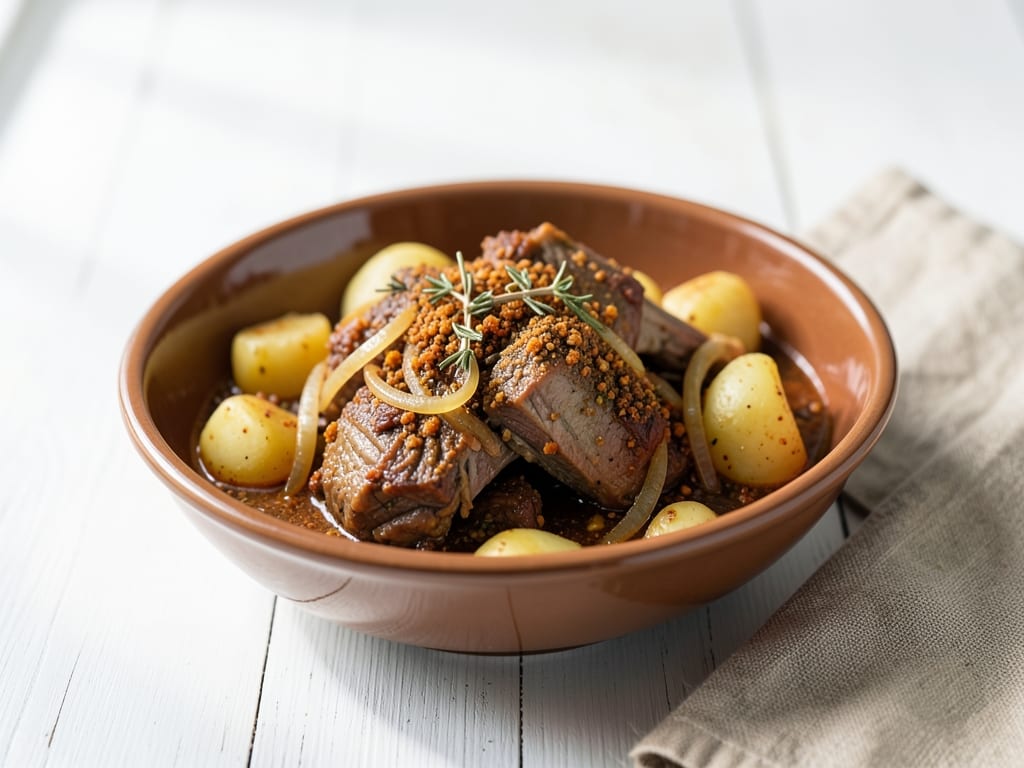
A warming Caribbean goat curry with tender meat, tomatoes, and potatoes, seasoned with allspice, thyme, and scotch bonnet heat. This stovetop version is approachable for weeknight cooking while delivering deep, complex flavors from slow-simmering the meat until it falls apart.
- Prep
- 20 min
- Cook
- 1 hr 30 min
- Total
- 1 hr 50 min
- Makes
- Serves 4 (about 1½ cups per serving)
Steps
Before you start
- Pat the goat meat dry with paper towels so it browns properly
- Prepare all vegetables before you start cooking—the process moves quickly once the oil is hot
- Have a lid ready for your pot to control simmering
Brown the meat
- Heat 3 tbsp oil in a large heavy-bottomed pot over medium-high heat.
- Working in batches so the meat isn't crowded, add the cubed goat meat and sear for 3–4 minutes per side until browned and caramelized (you want color, not cooked through).
- Transfer to a plate.
- This should take about 12–15 minutes total for all the meat.
+ Show details− Hide details
Ready when: Meat is deeply browned on all sides with a caramelized crust
Tip: Don't stir the meat immediately—let it sit 1–2 minutes in the pan to develop a brown crust. Overcrowding the pot will cause steaming instead of browning.
Build the spice base
- Reduce heat to medium.
- Add the diced onions to the same pot and cook for 5 minutes, stirring occasionally, until they soften and begin to turn translucent.
- Add the minced garlic and ginger, and cook for another 1 minute until fragrant.
- Stir in the curry powder and allspice, cooking for 1–2 minutes so the spices toast and bloom in the oil.
+ Show details− Hide details
Ready when: Onions are soft and spices smell warm and aromatic
Tip: Toasting the spices in oil releases their essential oils and deepens the flavor. Don't let them burn—if the pan looks too dry, the oil will be absorbed quickly.
Add tomatoes and broth
- Stir in the tomato paste and cook for 1 minute.
- Pour in the crushed tomatoes with their juice and the broth.
- Add the scotch bonnet pepper (whole or halved, depending on your heat preference—it infuses the curry without breaking apart) and the fresh thyme sprigs.
- Stir to combine.
+ Show details− Hide details
Ready when: Sauce is smooth and evenly mixed
Tip: Keep the scotch bonnet whole so you can easily remove it later if you want to reduce heat, but the flavor will still infuse the entire curry.
Return meat and simmer
- Return the browned goat meat to the pot, stirring to combine.
- Bring the curry to a low boil, then reduce heat to medium-low and cover.
- Simmer for 60 minutes, stirring occasionally, until the meat is fork-tender and the sauce has deepened in color.
+ Show details− Hide details
Ready when: Meat shreds easily when pierced with a fork; sauce has reduced slightly and darkened
Tip: Goat meat is leaner than lamb, so low-and-slow is essential. A covered pot traps steam and keeps the meat moist while it cooks.
Add potatoes
- Add the cubed potatoes to the pot, stirring them into the sauce.
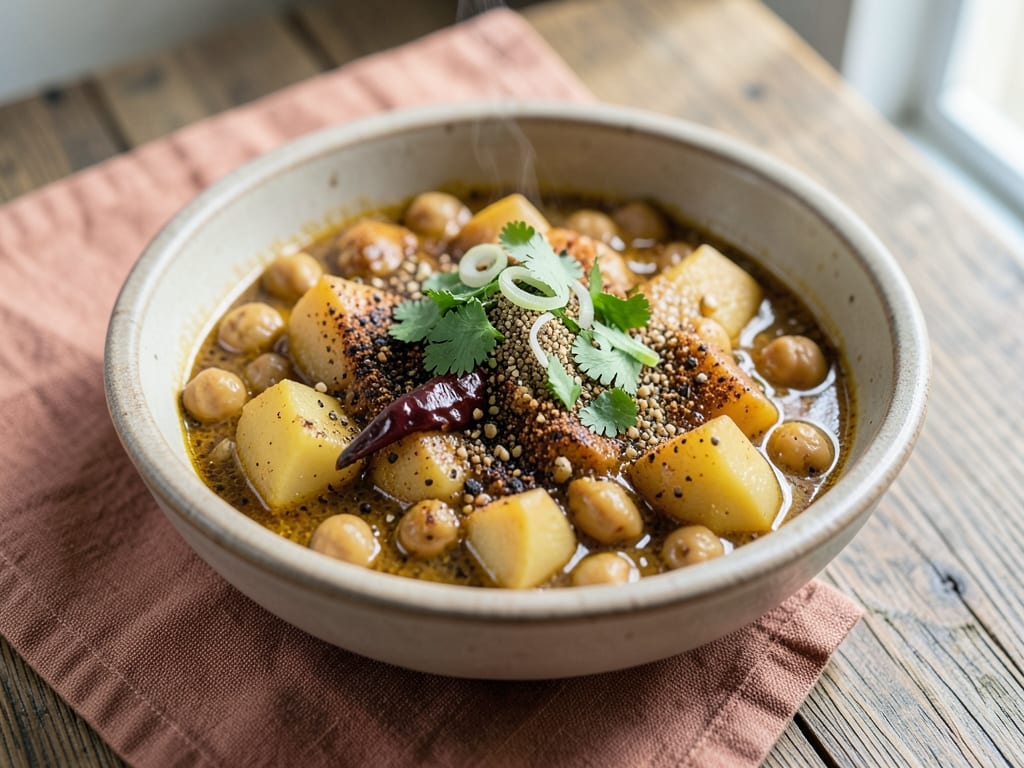
- Return to a gentle simmer over medium-low heat, uncovered, and cook for 20–25 minutes until the potatoes are tender when pierced with a fork but not falling apart.
+ Show details− Hide details
Ready when: Potatoes are fork-tender and sauce has further reduced and thickened slightly
Tip: Stir gently when stirring in potatoes to avoid breaking them. Cooking uncovered allows excess moisture to evaporate and the sauce to concentrate.
Taste and finish
- Taste the curry and season with salt and black pepper as needed.
- Remove the scotch bonnet pepper and thyme sprigs (if using fresh).
- Stir in the fresh cilantro if using.
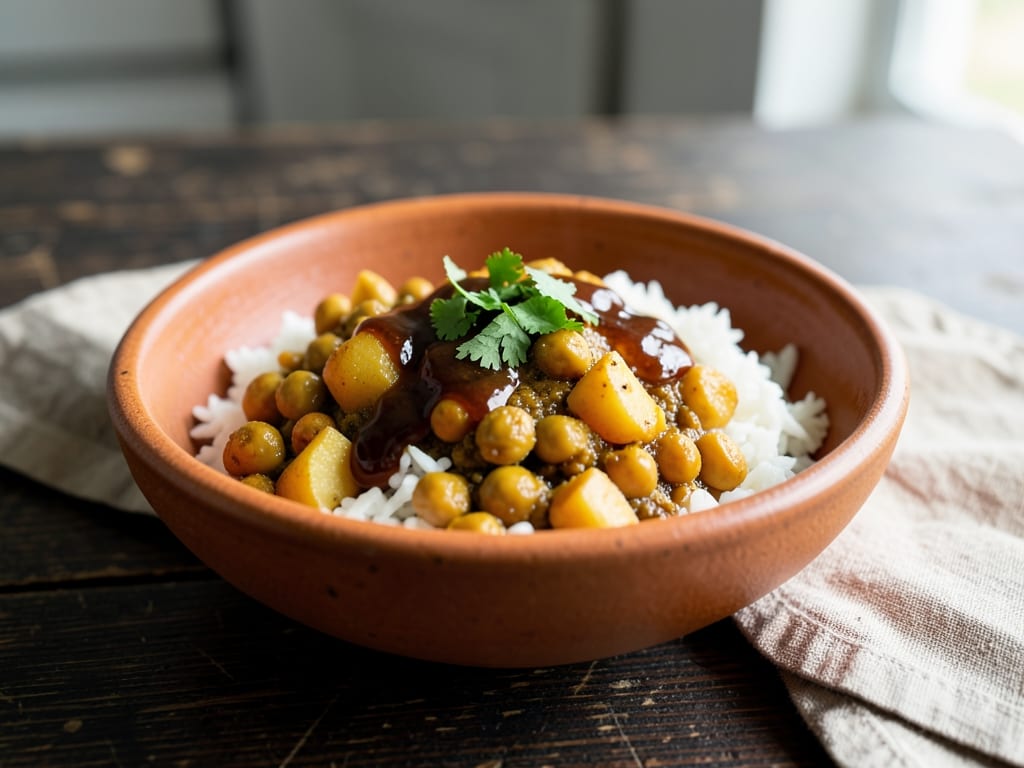
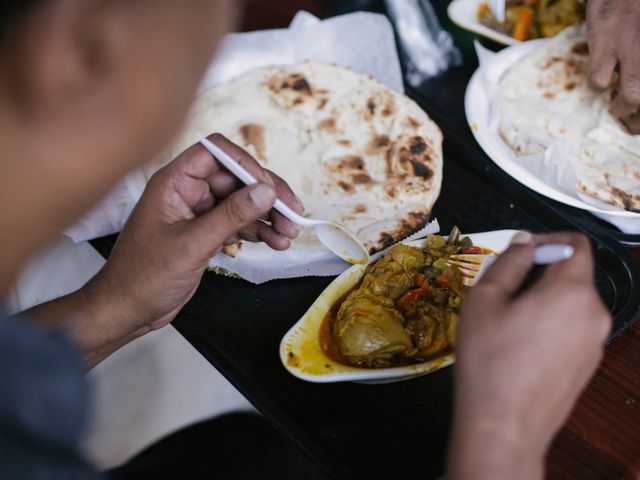
- Ladle into bowls and serve hot with rice, roti, or flatbread.
+ Show details− Hide details
Ready when: Seasoning is balanced and cilantro is stirred through
Tip: Taste before removing the scotch bonnet—you can leave it in for more heat, or take it out for a milder curry. The pepper will make the sauce spicy the longer it sits.
Good to know
Tips
- Goat meat can be found at butcher shops, specialty markets, or Caribbean/South Asian grocers—ask for shoulder or leg meat and request it be cut into 1½-inch cubes, or buy chunks and cube them yourself.
- If your curry seems too thin after the potatoes are done, simmer uncovered for another 5 minutes to reduce and thicken the sauce further.
- Serve with steamed white rice, paratha, roti, or flatbread to soak up the flavorful sauce.
- For a creamier curry, stir in ¼ cup coconut milk or heavy cream at the end, but this is not traditional and optional.
Make ahead
The curry tastes even better the next day as flavors meld. Prepare it up to step 5 (after potatoes are cooked), cool, and refrigerate for up to 3 days. Reheat gently on the stovetop over medium heat, stirring occasionally, and add fresh cilantro just before serving.
Storage & reheating
Room temperature: up to 2 hours. Refrigerator: in an airtight container for up to 3 days. Freezer: up to 2 months in a freezer-safe container (the potatoes may soften slightly upon thawing, but the flavor remains excellent). Reheat on the stovetop over medium heat or in the microwave, stirring occasionally and adding a splash of water if the sauce has thickened too much.
Substitutions
- goat meat, cut from shoulder or leg → lamb shoulder or beef chuck. Lamb will cook slightly faster (50 minutes instead of 60); beef will have a richer, heavier flavor. Both work well but goat is traditional and has a lighter, more distinctive taste.
- scotch bonnet pepper → habanero or jalapeño pepper. Habaneros are similar in heat; jalapeños are milder. Adjust quantity to taste and remove after cooking or keep in for consistent spice level.
- fresh_thyme → dried thyme. Use 1 tsp dried thyme instead of 4 fresh sprigs. Dried thyme is more concentrated, so less is needed.
- beef or chicken broth → water or vegetable broth. Water will give a lighter flavor; vegetable broth is fine but beef broth adds richer body. Use chicken broth if beef is unavailable.