Egg Drop Soup with Frozen Vegetables
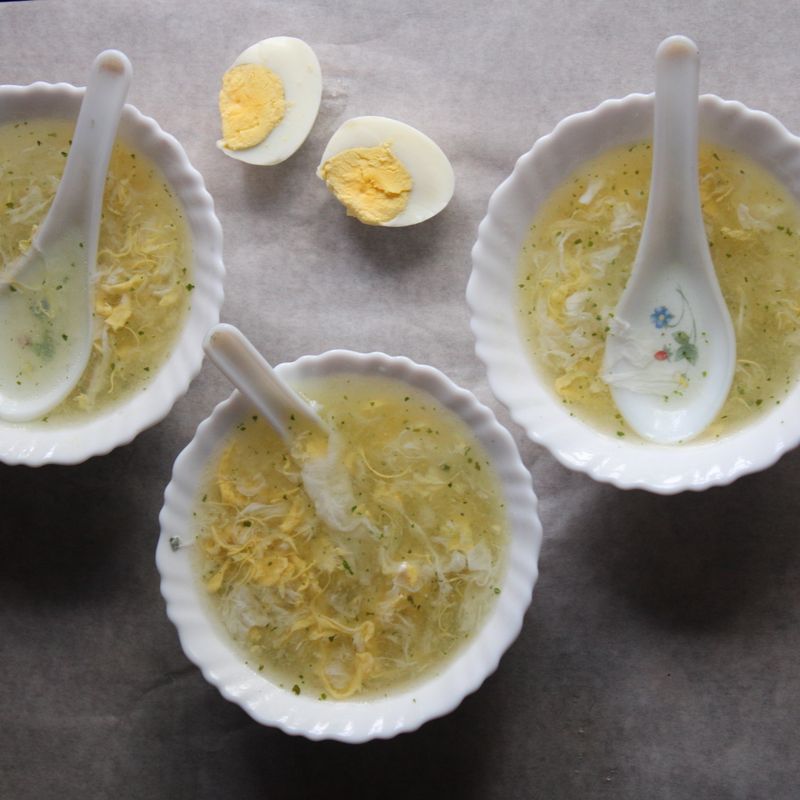
A silky, comforting Chinese egg drop soup made with hot chicken broth, tender ribbons of beaten egg, and a medley of frozen vegetables thickened with a touch of cornstarch. Ready in under 20 minutes, it's a light yet satisfying dish that works as an appetizer or light meal.
- Prep
- 5 min
- Cook
- 12 min
- Total
- 17 min
- Makes
- 4 servings (about 1½ cups each)
Steps
Before you start
- Have all ingredients measured and at hand before you begin—the soup comes together quickly once the broth reaches a boil.
- Use good-quality broth for the best flavor; homemade or low-sodium store-bought both work well.
- Have eggs beaten and set aside so you can drizzle them in smoothly while stirring.
Bring broth to a boil
- Pour the 6 cups (1440 ml) of chicken broth into a 2-quart (2-liter) saucepan or stockpot and bring to a rolling boil over medium-high heat, about 5 minutes.
- This is the foundation of your soup; a good, robust boil will help create silky egg ribbons when you add the beaten eggs.
+ Show details− Hide details
Ready when: Broth is at a rolling boil
Tip: Do not leave the broth unattended; it should boil steadily but not boil over.
Add ginger and frozen vegetables
- Once the broth is boiling, add the minced ginger (if using) and the 1.5 cups (180 g) of frozen mixed vegetables directly to the pot.
- Stir well to submerge them.
- Return to a boil and cook for 2 minutes until the vegetables are heated through and beginning to soften.
+ Show details− Hide details
Ready when: Vegetables are heated through and broth is boiling
Tip: Frozen vegetables release moisture as they thaw; the extra liquid is fine and adds flavor.
Make cornstarch slurry
- While the vegetables cook, whisk together 1 tablespoon (8 g) of cornstarch and 2 tablespoons (30 ml) of water in a small bowl until smooth with no lumps.
- This slurry will gently thicken the soup.
+ Show details− Hide details
Ready when: Slurry is smooth and pourable
Tip: Mix the cornstarch slurry just before you use it to prevent the cornstarch from settling.
Thicken the broth
- Slowly pour the cornstarch slurry into the boiling broth while stirring constantly with a spoon or whisk.
- Stir for 1 to 2 minutes until the soup thickens slightly and becomes glossy—it should coat the back of a spoon lightly.
- Do not overstir once it reaches the right consistency, as excessive stirring can break down the vegetables.
+ Show details− Hide details
Ready when: Soup is glossy and coats the back of a spoon lightly; vegetables remain intact
Tip: Add the slurry slowly and stir constantly to avoid lumps. The soup should thicken noticeably but still be brothy, not creamy.
Drizzle in beaten eggs
- Reduce the heat to medium.
- Beat the 3 large eggs in a bowl until well combined.
- While stirring the soup gently in a slow, circular motion, drizzle the beaten eggs in a thin stream into the broth.
- The eggs will cook instantly, forming delicate ribbons.
- Continue stirring slowly for about 1 minute after all the egg has been added.
+ Show details− Hide details
Ready when: Egg ribbons are set and cooked through, soup is smooth and silky
Tip: Drizzle the egg slowly while stirring—slow drizzling and gentle stirring create silky ribbons rather than scrambled egg bits. If you add the egg too quickly or stir too vigorously, it will break into small pieces.
Season the soup
- Remove the pot from the heat.
- Stir in the 1 tablespoon (15 ml) of soy sauce and the ½ teaspoon (2.5 ml) of toasted sesame oil.
- Taste and season with white pepper to your preference (start with ¼ teaspoon and adjust).
- The soup should be savory, aromatic, and balanced.
+ Show details− Hide details
Ready when: Seasonings are fully incorporated and evenly distributed
Tip: Add white pepper to taste rather than black pepper for a finer, more subtle heat that complements the delicate egg ribbons.
Finish and serve
- Ladle the soup into bowls and garnish each serving with the sliced green onion whites and light green parts.
- Serve immediately while hot.
- The garnish adds a fresh, sharp bite that balances the richness of the eggs and the savory broth.
+ Show details− Hide details
Tip: If you prefer a stronger ginger flavor, add extra minced ginger to your bowl right before serving rather than cooking it in the broth—this preserves its freshness.
Good to know
Tips
- For extra body and richness, whisk one additional egg yolk (separated from the white) into the broth after seasoning, stirring gently; it will cook into silky custard-like threads.
- If the soup looks too thin, make another small batch of cornstarch slurry and add it gradually until you reach the desired consistency.
- A splash of rice vinegar (½ teaspoon) stirred in at the end adds brightness and acidity that livens up the savory flavors.
- Add a ¼-inch (6 mm) piece of fresh ginger, bruised and left whole in the broth during cooking, then remove it before serving for a gentler ginger flavor that infuses the broth.
Storage & reheating
Egg drop soup is best served fresh and hot, but leftovers can be refrigerated in an airtight container for up to 2 days. The cornstarch may cause the soup to thicken slightly as it cools. To reheat, warm gently on the stovetop over medium heat, stirring occasionally; do not boil, as high heat may cause the egg ribbons to become tough. The soup does not freeze well because the egg texture degrades upon thawing.
Substitutions
- frozen mixed vegetables (peas, carrots, corn, green beans) → Fresh vegetables (1½ cups diced carrots, peas, corn, or green beans), added in step 2 and cooked for 4–5 minutes until tender-crisp. Fresh vegetables take longer to cook than frozen ones and offer a slightly different texture.
- soy sauce, low-sodium → Tamari or coconut aminos (1 tablespoon). Both are gluten-free alternatives with similar saltiness and depth.
- sesame oil, toasted → Extra-virgin olive oil (½ teaspoon) or omit entirely. Sesame oil provides authentic flavor; if unavailable, a light olive oil gives warmth, though the soup will be less traditionally Chinese.
- cornstarch → Arrowroot powder (1 tablespoon) or potato starch (1½ teaspoons). Both work well as thickeners; arrowroot creates a more delicate result, while potato starch may create a slightly cloudier broth.