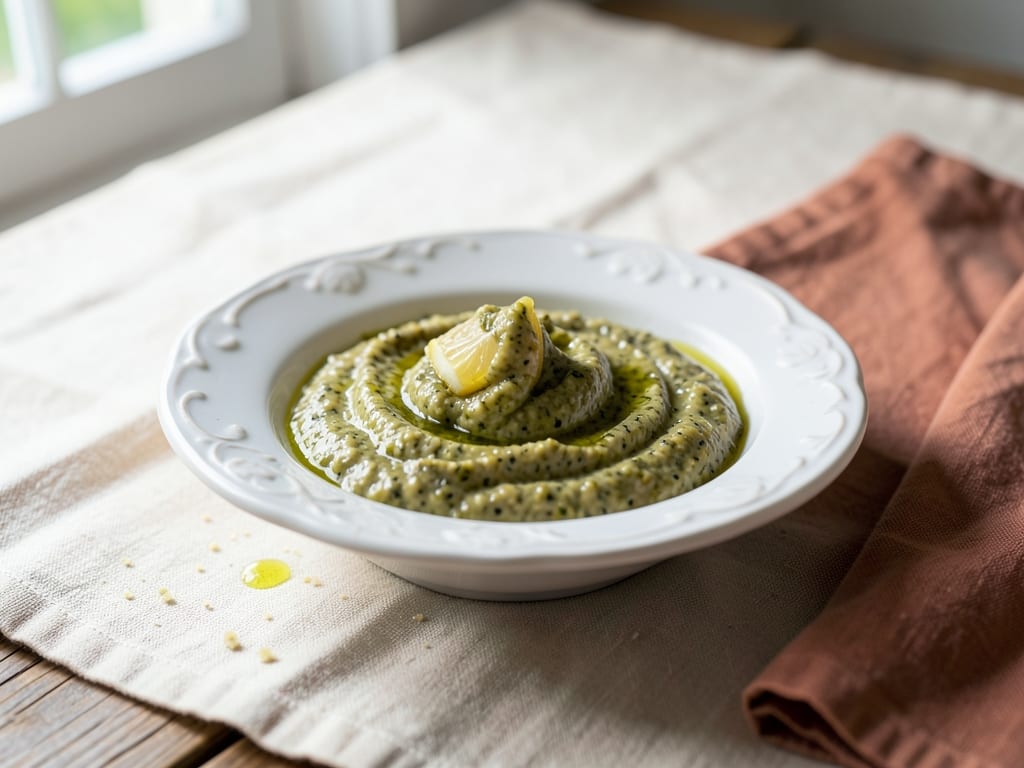
Economical White Wine Butter Sauce
A silky French-style wine butter sauce made with affordable ingredients—white wine, chicken broth, shallots, and butter—that rivals restaurant versions. The broth stretches the wine while building depth; thyme and a touch of acid keep it bright. Perfect over pan-seared chicken, fish, or vegetables, or as a base for mushroom variations.
Steps
Before you start
- Have all ingredients measured and ready before you start—the sauce comes together quickly once heat is applied
- Ensure your butter is cold and cut into cubes
- Use a dry white wine without oak if possible (Pinot Grigio, Sauvignon Blanc, or Muscadet work well; avoid heavily oaked Chardonnay)
Sauté shallots
- Place the medium saucepan over medium-high heat and add 1 tablespoon (14 g) of the cold butter cubes.
- Once melted and foaming, add the minced shallots and sauté for 1–2 minutes, stirring occasionally, until fragrant and softened but not browned.
- The shallots should be translucent at the edges.
+ Show details− Hide details
Ready when: Shallots translucent at edges, fragrant, not browned
Tip: Don't let the shallots brown; they'll taste bitter and the sauce will be cloudy.
Deglaze and reduce wine
- Pour in the white wine while scraping the bottom of the pan with a wooden spoon to release any browned bits.
- Increase heat to high and bring to a boil.
- Let the wine reduce by half, about 4–5 minutes, until it smells less sharp and the liquid is noticeably reduced.
- The sauce should look almost glazed on the sides of the pan.
+ Show details− Hide details
Ready when: Wine reduced by half, less sharp aroma, glazed appearance on pan sides
Tip: A high rolling boil concentrates flavor faster and burns off alcohol completely. Don't skip this step.
Add broth and herbs
- Pour in the chicken broth and add the thyme sprigs.
- Return to a simmer over medium-high heat and let bubble gently for 3–4 minutes.
- The combined liquid should smell savory and smell less wine-forward than before.
+ Show details− Hide details
Ready when: Mixture simmering, thyme flavor integrated, aroma savory
Tip: Don't skip this simmering time—it marries the wine and broth flavors and softens the herb contribution.
Strain and discard solids
- Remove the pan from heat.
- Position a fine-mesh sieve over a clean medium saucepan and carefully pour the sauce through, discarding the thyme sprigs and shallot solids.
- Press gently on any solids with the back of a spoon to extract liquid, but do not force shallots through—you want a clear, smooth sauce.
+ Show details− Hide details
Ready when: Clear, smooth liquid in the clean pan; solids discarded
Tip: Straining removes grit and gives the sauce a silky, refined texture. Do not skip.
Finish with butter
- Return the strained sauce to medium heat and bring to a gentle simmer.
- Remove from heat and whisk in the remaining 3 tablespoons (43 g) of cold butter cubes one at a time, waiting for each piece to almost fully incorporate before adding the next.
- Whisk constantly to emulsify the butter into the sauce.
- The sauce should look glossy and pale, not grainy or separated.
+ Show details− Hide details
Ready when: Glossy, pale, emulsified sauce with no graininess or visible butter streaks
Tip: Keep the sauce off direct heat while whisking in butter and work quickly—this prevents the emulsion from breaking. If it separates (looks slick or separated), whisk in 1 tablespoon of cold water off heat.
Season and serve
- Taste the sauce and add a squeeze of lemon juice (about ½ teaspoon / 2.5 ml), a pinch of kosher salt, and a few grinds of black pepper.
- Whisk to combine.
- Adjust seasoning to your taste—the sauce should taste balanced, with wine brightness, savory depth, and a silky richness.
+ Show details− Hide details
Ready when: Well-seasoned, balanced flavor; no dominant sharpness
Tip: Start with half the lemon juice and add more to taste—acidity brightens the sauce but too much will throw off the balance.
Good to know
Tips
- Emulsion rescue: If the sauce separates or looks grainy while whisking in butter, remove from heat immediately and whisk in 1 tablespoon of ice-cold water or splash of cream. The sauce should come back together.
- Make it ahead, do it right: The sauce can be made several hours in advance and gently reheated, which is handy for dinner parties. Reheat over low heat, whisking often, and do not let it boil.
- Mushroom variation: Sauté 8 oz (225 g) of sliced mushrooms (cremini, portobello, or shiitake) in a separate pan with a pinch of salt until golden. Stir them into the finished sauce for earthiness and body without extra cost.
- Pan-sauce shortcut: Make this sauce directly in the pan where you've cooked your protein (chicken, fish, steak). After removing the protein, keep the fond, skip the initial butter and shallot sauté, and start from the wine step—it's faster and the fond adds umami.
Make ahead
Can be made up to 4 hours ahead and reheated gently. Reheat in a small saucepan over low heat, whisking occasionally; do not boil. If the sauce breaks during reheating, whisk in 1 tablespoon of cold water or cream off heat to re-emulsify.
Storage & reheating
Store in an airtight container in the refrigerator for up to 3 days. Freeze for up to 2 months (the emulsion may separate slightly on thawing; reheat gently and whisk in 1 tablespoon of cream or water to restore silkiness). Room temperature shelf life: none—refrigerate promptly.
Substitutions
- fresh thyme sprigs → ½ bay leaf (remove before straining) or 2–3 fresh tarragon leaves. Tarragon gives a more delicate, slightly anise-forward flavor; omit or reduce if using dried tarragon, which is more potent.
- low-sodium chicken broth → vegetable broth or fish/seafood stock. Fish or seafood stock is excellent for pairing with white fish; vegetable broth is lighter and works well with chicken and vegetables.
- dry white wine → dry vermouth or a mixture of white wine and a splash of apple cider vinegar (if no wine is available). Vermouth adds herbal notes. If substituting with cider vinegar, use a 7:1 white wine to vinegar ratio and omit the fresh lemon juice.
- cold unsalted butter, cut into ½-inch cubes → crème fraîche or heavy cream (2–3 tablespoons / 30–45 ml) whisked in instead of butter. Cream-based versions are slightly less silky but are more forgiving and less likely to break. A mix of 2 tablespoons butter and 1 tablespoon cream is a good middle ground.