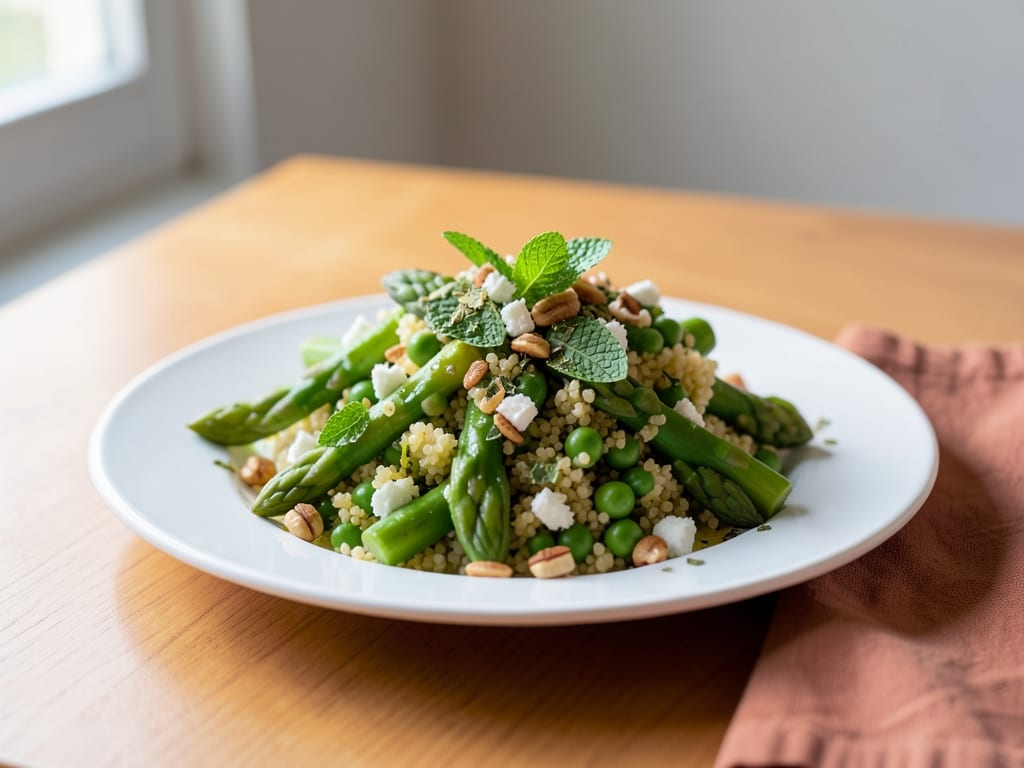
Easter Spring Pea and Mint Pearl Couscous
A bright, herbaceous Mediterranean salad that celebrates spring's best vegetables—tender asparagus, fresh peas, and a generous handful of mint—tossed with pearl couscous and dressed in a vibrant lemon vinaigrette. Perfect for Easter celebrations, potlucks, or any time you want a refreshing, make-ahead side dish.
- Prep
- 15 min
- Cook
- 12 min
- Wait
- 15 min
- Total
- 42 min
- Makes
- 4 to 6 servings (about 6 cups total)
Steps
Before you start
- Trim asparagus and rinse; if using fresh peas, shell them now
- Zest and juice your lemons before cooking for brighter flavor
- Chop mint just before use so it stays bright and fragrant
- If using pine nuts, toast them lightly in a dry skillet over medium heat for 2-3 minutes until fragrant
Blanch spring vegetables
- Bring a large pot of water to a boil and season with 1/2 tsp salt.
- Add trimmed asparagus pieces and cook for 3 to 4 minutes until bright green and just tender-crisp.
- Using a slotted spoon, transfer the asparagus to a plate.
- If using fresh peas, add them to the boiling water and cook for 2 to 3 minutes, then drain and set aside.
- (If using frozen peas, you can add them directly to the warm salad later without blanching.) Set vegetables aside.
+ Show details− Hide details
Ready when: Asparagus is bright green with a slight bend when pressed; peas are tender and sweet
Tip: Keep vegetables slightly undercooked—they'll soften further as the salad sits and when combined with warm couscous.
Simmer pearl couscous
- In a separate medium saucepan, bring vegetable broth to a boil over high heat.
- Stir in 1.5 cups pearl couscous and return to a boil.
- Reduce heat to medium-low, cover, and simmer gently for 8 to 10 minutes until the couscous is tender and has absorbed all the liquid.
- The pearls should be soft but not mushy.
+ Show details− Hide details
Ready when: All liquid is absorbed; couscous is tender and grains are separate and fluffy
Tip: Don't stir or lift the lid while simmering—this keeps the pearl-shaped grains intact and fluffy.
Whisk lemon-mint dressing
- While the couscous cooks, whisk together the zest and juice of 2 large lemons, 1/2 cup extra virgin olive oil, 1/4 tsp black pepper, and a small pinch of salt in a small bowl.
- The dressing should be bright, fragrant, and balanced.
- Taste and add more lemon juice or salt if needed.
- Set aside.
+ Show details− Hide details
Ready when: Dressing is combined and bright yellow-green with visible lemon zest
Tip: Don't skip the lemon zest—it adds floral, slightly bitter notes that balance the salad's sweetness from the peas.
Toss warm ingredients together
- When the couscous is done, fluff it gently with a fork and transfer to a large bowl.
- While the couscous is still warm, add the blanched asparagus, thawed or fresh peas, thinly sliced red onion, most of the fresh mint (reserve a handful for garnish), and all of the lemon-mint dressing.
- Toss gently but thoroughly, coating everything evenly.
- The warm couscous will absorb the bright flavors beautifully.
+ Show details− Hide details
Ready when: All ingredients are evenly coated with dressing and glistening
Tip: Combine while the couscous is still warm—cold couscous won't absorb the dressing as well, and the flavors won't be as vibrant.
Let flavors meld
- Allow the salad to rest for 5 minutes at room temperature.
- Taste and adjust seasoning with additional salt, pepper, or fresh lemon juice as needed.
- The salad should taste bright, herbaceous, and well-balanced—the mint and lemon should pop.
+ Show details− Hide details
Ready when: Flavors are well-integrated and balanced
Tip: Taste as you go—couscous salads often need more acid (lemon) or salt than you'd expect. Be generous.
Garnish and serve
- Transfer the salad to a serving platter or bowl.
- Top with the reserved fresh mint leaves, crumbled feta cheese (if using), and lightly toasted pine nuts (if using).
- Serve warm or at room temperature.
- This salad tastes great fresh and also holds well for several hours, making it perfect for Easter entertaining.
+ Show details− Hide details
Tip: Refresh with an extra squeeze of fresh lemon juice just before serving if the salad has been sitting—this keeps it tasting bright and fresh.
Good to know
Tips
- Spring matters: This recipe shines with fresh, in-season spring vegetables. If asparagus or fresh peas aren't available, make it anyway—blanched green beans or snap peas work beautifully.
- Mint is the star: Use fresh mint, not dried. The grassy, floral notes are essential. Bruise the leaves gently in your hands just before adding to release their essential oils and maximize flavor.
- Lemon is your friend: Couscous salads need more acid and salt than you might expect because the mild, starchy couscous absorbs everything. Taste as you go and be generous with fresh lemon juice and zest.
- Make it a complete meal: Add a protein to turn this side into a light main course. Try grilled or poached chicken breast, crumbled feta cheese, a chopped hard-boiled egg, white beans, or a simple lemon-grilled salmon.
Make ahead
You can prepare the salad through step 5 up to 8 hours in advance. Cover and refrigerate. About 15 to 30 minutes before serving, remove from the fridge and allow it to come to room temperature. Just before serving, refresh with an extra squeeze of fresh lemon juice and adjust seasoning. Garnish with fresh mint, feta, and pine nuts just before serving so the herbs stay bright.
Storage & reheating
Room temperature (up to 4 hours): Cover loosely with plastic wrap. Refrigerator (up to 2 days): Store in an airtight container. The couscous will continue to absorb moisture; before serving, stir in 1 to 2 tbsp more olive oil and a squeeze of fresh lemon juice to refresh. Serve cold or warm gently in a 300°F (150°C) oven for 5 minutes, covered. Freezer: Not recommended—couscous becomes grainy and vegetables lose texture when thawed. To reheat: Warm gently in a 300°F (150°C) oven for 5 to 7 minutes, covered, or in a skillet over medium heat for 2 to 3 minutes, stirring frequently. Do not microwave.
Substitutions
- pearl couscous → Regular couscous or Israeli couscous; quinoa also works beautifully. Regular couscous cooks faster (5 to 6 minutes) and is more delicate. Quinoa requires its own cooking method but adds a nuttier flavor and more protein.
- fresh or frozen peas, shelled if fresh → Frozen peas, snap peas, fava beans, or blanched green beans. Frozen peas work perfectly and often taste as sweet as fresh. Halved snap peas add crunch. Fresh fava beans (blanched and peeled) are luxurious. Blanched green beans cut into 2-inch pieces are a reliable substitute.
- fresh mint leaves, loosely packed → Fresh basil, fresh parsley, or a blend of both. Basil brings an Italian note (delicious). Parsley is milder but works. Cilantro is NOT recommended—it clashes with the Mediterranean profile. You can also use a mix of mint and basil.
- vegetable or chicken broth → Chicken broth or water with a pinch of salt. Chicken broth adds richness and depth. Plain water with a pinch of salt works but tastes less flavorful. Beef broth is too heavy for this spring salad.
More grain salads
See all →
Find more like this
- Meal
- Dinner
- Cuisine
- Mediterranean
- Main ingredient
- Feta
- Diet
- HalalSugar-Free
- Method
- Stovetop
- Quick & Easy
- EasyBeginnerMake Ahead
- Season
- Spring