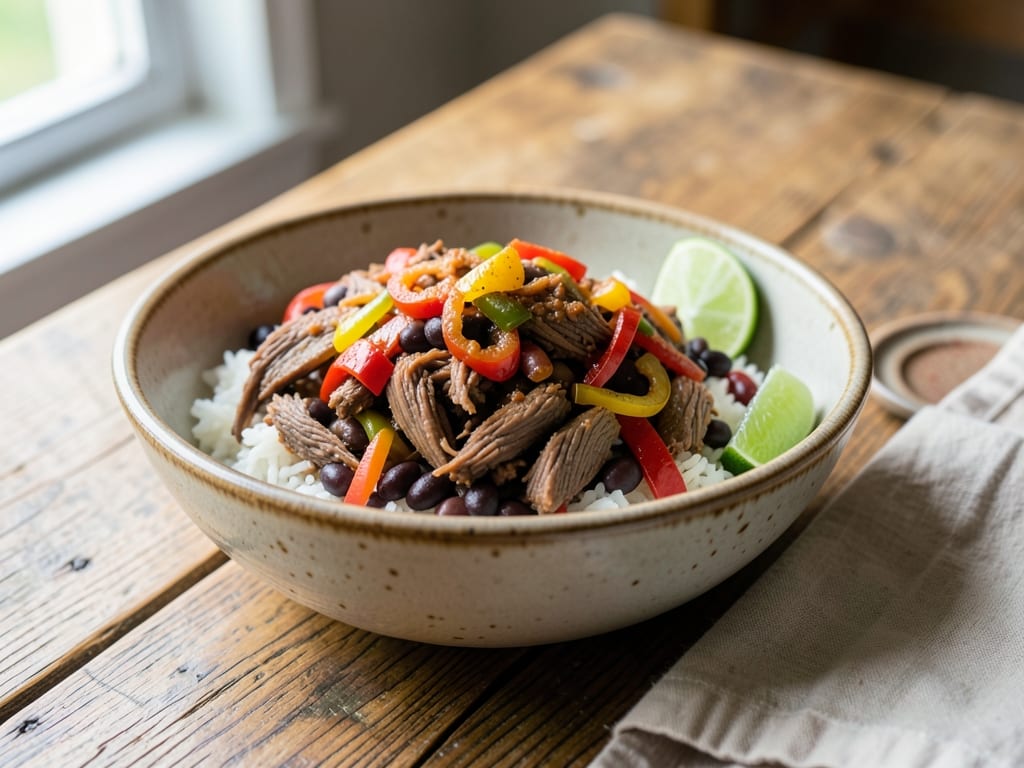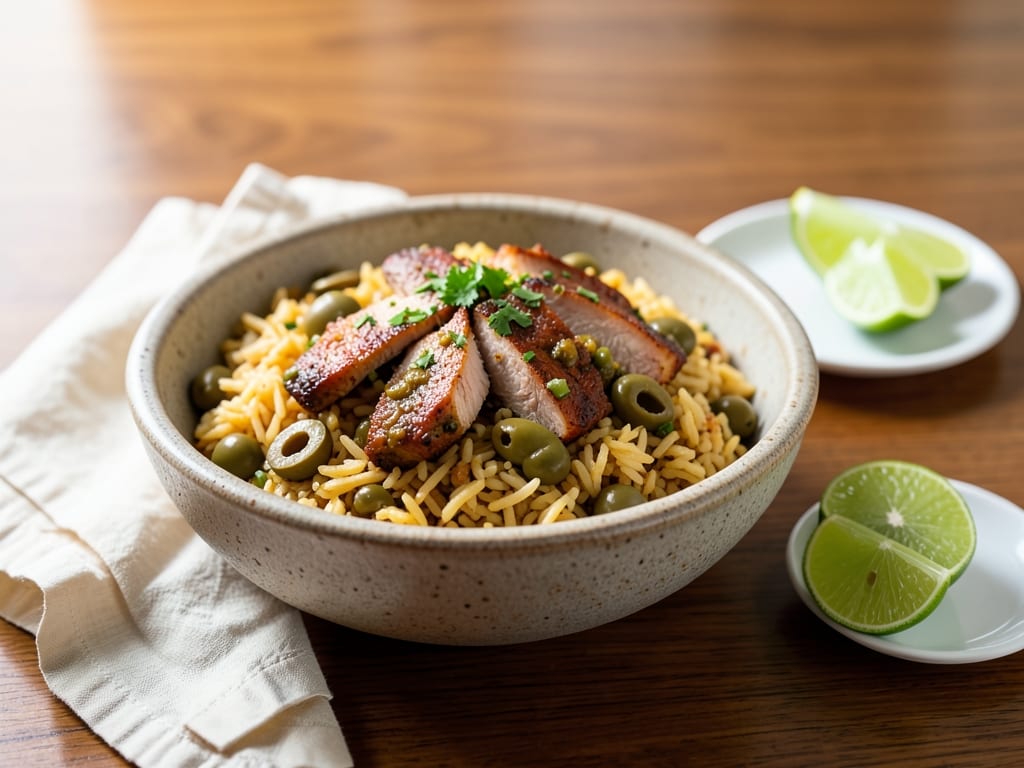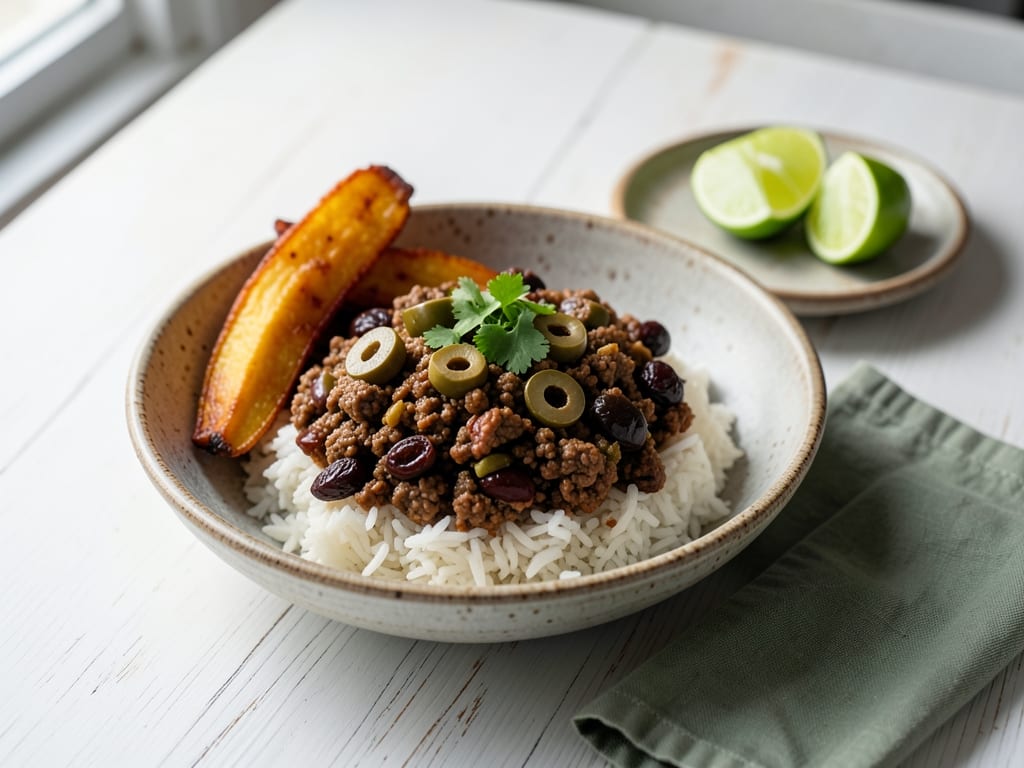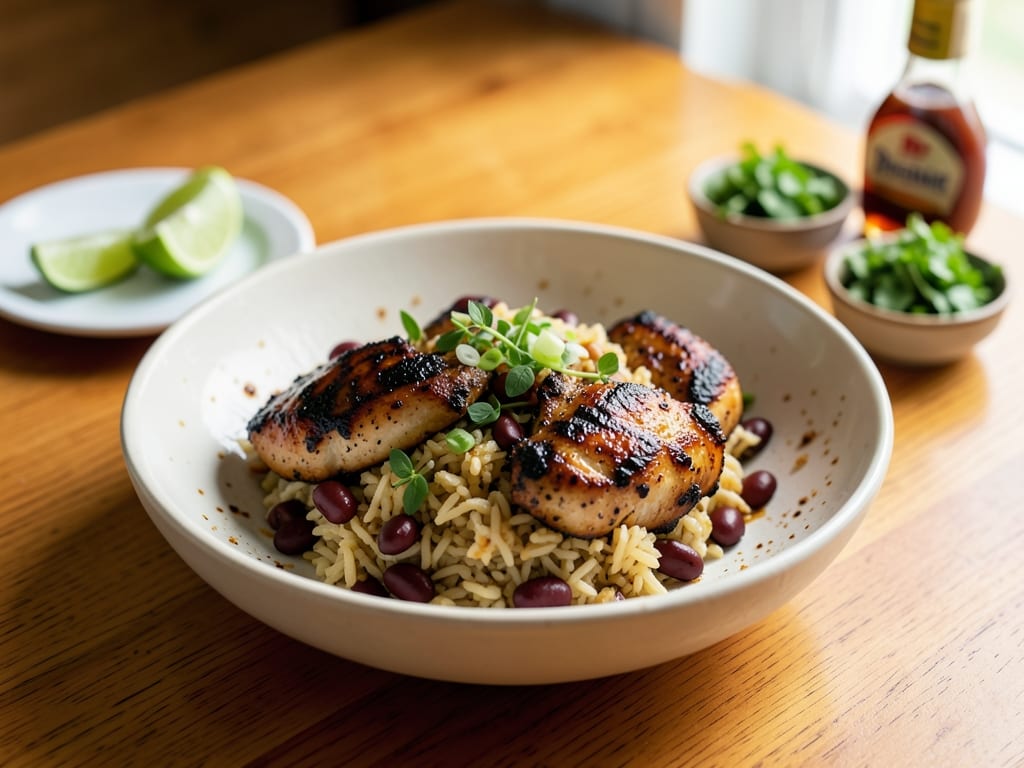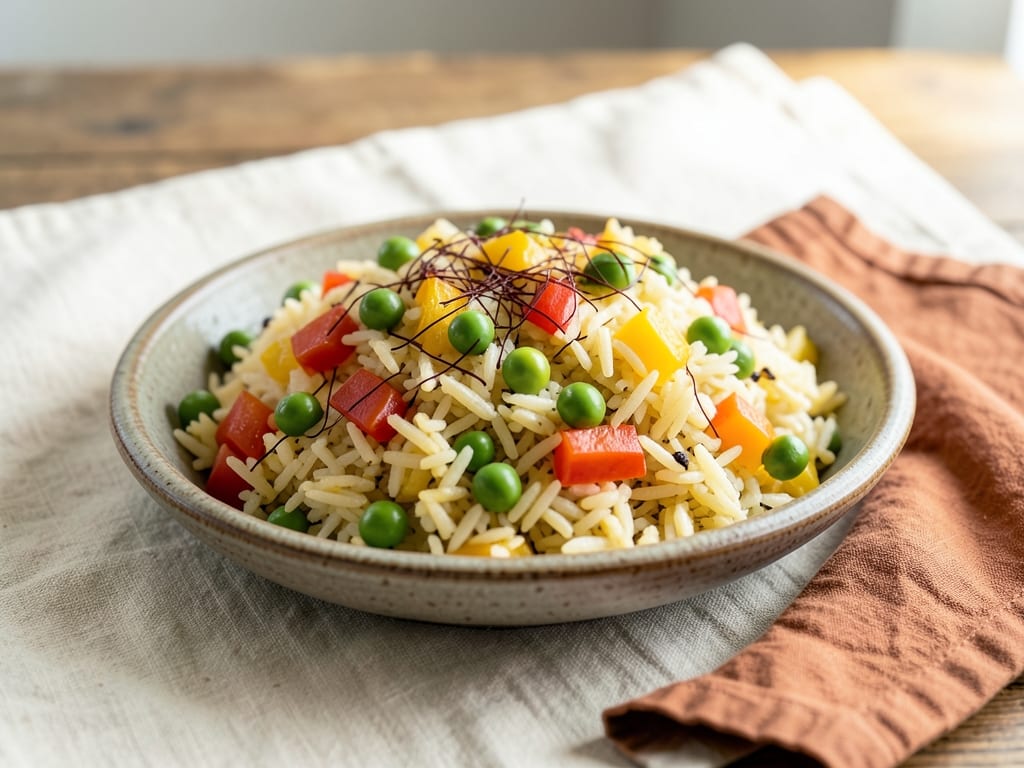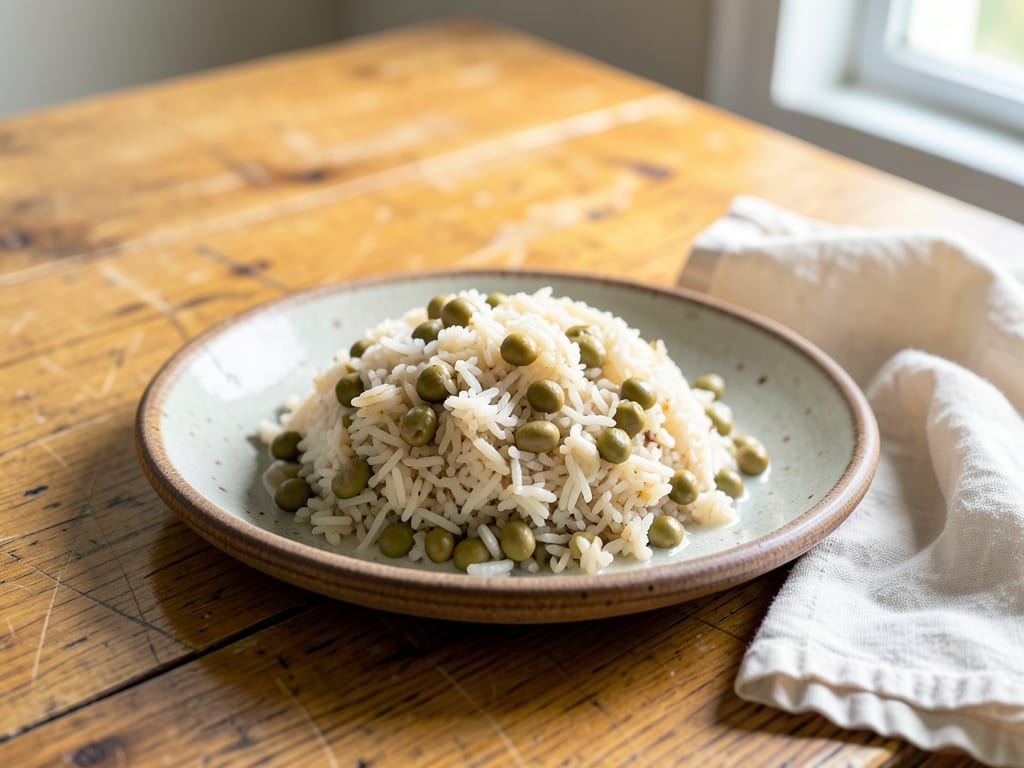
Dominican Moro de Guandules
A traditional Dominican rice and pigeon pea dish simmered with coconut milk and sofrito. This aromatic, creamy side pairs beautifully with roasted meats or fried fish, bringing the warm, layered flavors of the Caribbean to your table.
- Prep
- 5 min
- Cook
- 30 min
- Wait
- 5 min
- Total
- 40 min
- Makes
- About 4 cups (4 servings as a side dish)
Steps
Before you start
- Read the recipe through so you understand the timing and don't stir the rice once it's covered
- Have all ingredients measured and ready before you start cooking (mise en place)
- Use good-quality sofrito from the Hispanic foods aisle—it should smell fragrant and contain garlic, cilantro, and peppers
- If using fresh pigeon peas instead of canned, cook them until tender (about 1 hour) before beginning the recipe
Prepare ingredients
- Drain the canned pigeon peas in a fine-mesh sieve and rinse under cool running water for about 30 seconds to reduce excess sodium.
- If they still taste too salty, rinse again.
- Measure the long-grain rice into a small bowl, measure the coconut milk and broth into separate containers, and have the chopped cilantro ready.
- Having everything prepped and ready before you start cooking ensures the recipe flows smoothly.
Bloom the sofrito
- Place the medium pot over medium heat and add the olive oil.
- Let it heat for about 1 minute until it shimmers and is visibly hot.
- Add the sofrito and stir frequently for 1-2 minutes with a wooden spoon.
- The aromatics will bloom—you'll smell the garlic, cilantro, and sweet peppers becoming fragrant and rich.
- This step is crucial because it develops the flavor base and prevents the sofrito from tasting raw in the final dish.
+ Show details− Hide details
Ready when: Sofrito smells very fragrant; aromatics have bloomed
Tip: Don't let the sofrito brown or scorch—stir constantly to avoid sticking
Toast the rice
- Add the uncooked rice to the pot and stir frequently with the wooden spoon for 2-3 minutes.
- You'll notice the rice grains becoming slightly translucent at their edges, and the rice will smell toasty and nutty—a sign that you're gelatinizing the exterior of each grain.
- This essential step prevents the rice from becoming mushy and absorbing too much liquid.
- Watch carefully so the rice doesn't brown or stick to the bottom of the pot.
+ Show details− Hide details
Ready when: Rice grains are slightly translucent at the edges and smell nutty and toasted
Tip: Don't walk away—stir constantly to prevent sticking or browning
Add liquid and peas
- Carefully pour the coconut milk and chicken broth into the pot, then add the drained pigeon peas.
- Stir everything together with the wooden spoon, making sure the rice is evenly distributed throughout and no grains are stuck to the bottom.
- Taste the mixture and season generously with salt and black pepper—it should taste well-seasoned because the rice will absorb the liquid and flavors.
- Remember, you can always add more salt, but you can't remove it.
+ Show details− Hide details
Tip: Taste and season now—this is your only chance to adjust flavors before the rice absorbs the liquid
Bring to a boil
- Increase the heat to medium-high and bring the mixture to a rolling boil, stirring occasionally.
- You should see visible steam rising from the pot and hear a gentle bubbling sound as the liquid comes to a rolling boil.
- This usually takes 5-7 minutes from when you added the liquids.
- Once you reach a rolling boil (not just a few bubbles, but a steady, vigorous bubble), you're ready to proceed to simmering.
+ Show details− Hide details
Ready when: Mixture reaches a rolling boil with steady bubbles and visible steam
Tip: A rolling boil ensures the rice cooks evenly; a gentle simmer won't fully cook the rice
Simmer covered
- Once the mixture is boiling, immediately reduce the heat to low (or medium-low if your burner runs hot).
- Place a tight-fitting lid on the pot—it should seal snugly so steam stays inside.
- Simmer undisturbed for 18-20 minutes without lifting the lid.
- The steam trapped inside is essential for even cooking.
- After 18 minutes, carefully lift the lid and peek: the rice should be tender and nearly all the liquid should be absorbed.
- You may see a few small air pockets in the rice, which is perfect.
- If there's still liquid pooling, cover and cook for another 1-2 minutes.
+ Show details− Hide details
Ready when: Rice is tender, nearly all liquid is absorbed, and small steam pockets are visible
Tip: Resist the urge to stir or lift the lid—undisturbed cooking is the secret to fluffy, separate grains
Rest and finish
- Remove the pot from the heat and keep the lid on for 5 minutes.
- This resting period allows any remaining steam to finish cooking the rice gently and allows the grains to firm up slightly, making them less likely to clump.
- Remove the lid and fluff the rice gently with a fork, folding in the fresh cilantro as you go.
- Taste and adjust the seasoning with a pinch more salt and pepper if needed.
- The moro de guandules should smell aromatic, the grains should be separate and fluffy, and the pigeon peas should be tender and well-distributed throughout.
+ Show details− Hide details
Ready when: Rice is light and fluffy when fluffed with a fork; pigeon peas are tender and distributed evenly
Tip: Use a fork, not a spoon, to fluff—it aerates the rice without breaking the grains
Good to know
Tips
- Toasting the rice is not optional—this step prevents mushy, sticky rice by gelatinizing the grain's exterior. It's the difference between fluffy grains and a porridge-like dish.
- A tight-fitting lid is essential. If your pot's lid doesn't seal well, lay a damp paper towel over the pot rim before placing the lid on top to trap more steam.
- This dish is best served fresh and hot, but it reheats exceptionally well. Leftover moro actually tastes better the next day as the flavors meld.
- To make this vegan, substitute vegetable broth for chicken broth and verify that your sofrito is vegan-certified (most commercial sofrito is, but check the label).
Make ahead
Yes. This dish can be made up to 2 days ahead. Store in an airtight container in the refrigerator. Reheat gently in the microwave with 2-3 tablespoons of water or broth per cup, or on the stovetop over low heat with a splash of liquid, stirring occasionally, until warmed through.
Storage & reheating
Room temperature (in an airtight container): up to 2 hours. Refrigerator (in an airtight container): up to 4 days. Freezer (in an airtight or freezer-safe container): up to 3 months. To reheat: Warm in the microwave with a splash of water or broth (add 2-3 tablespoons per cup), or reheat on the stovetop over low heat with a small splash of liquid, stirring occasionally, until warmed through (about 3-5 minutes).
Substitutions
- pigeon peas, canned (15 oz) → chickpeas, black beans, or kidney beans (canned and drained). Use the same amount. The texture and earthy flavor will shift slightly, but the dish remains delicious and equally traditional in many Caribbean households.
- sofrito, Dominican → 3 minced garlic cloves sautéed with ½ diced onion, then add 2 tbsp finely chopped fresh cilantro and 1 tbsp tomato paste. Sauté the garlic and onion in the oil for 3-4 minutes until soft, then add cilantro and tomato paste. Continue with the recipe from the 'Toast the rice' step. The flavor will be fresher but less complex.
- coconut milk, unsweetened, canned (13.5 oz) → use ¾ cup additional chicken or vegetable broth (total 2 cups broth) for a lighter version, or heavy cream for a richer version. For a lighter dish, the coconut flavor will be lost but the dish will still be delicious. For heavy cream, use ½ cup cream mixed with ¾ cup broth to maintain proper liquid ratios.
- cilantro, fresh → fresh flat-leaf parsley. Use the same amount. Parsley is milder and less aromatic, making the dish less traditional but still pleasant. Avoid dried cilantro, which loses its delicate flavor.