Cuban Arroz Amarillo with Saffron and Peas
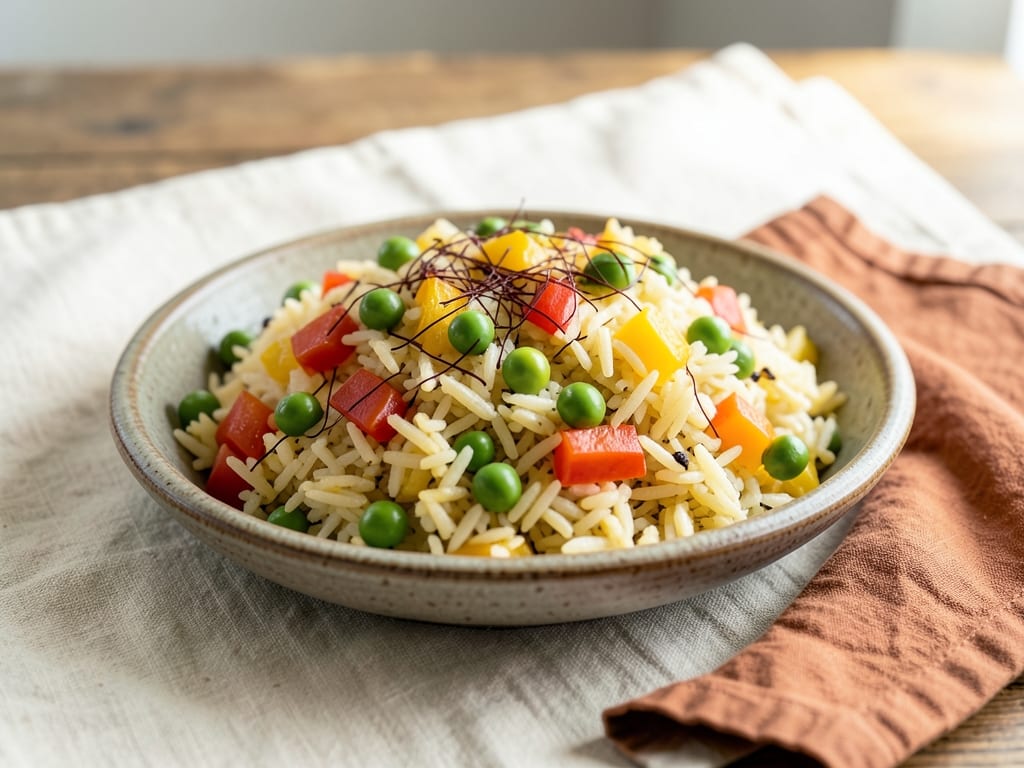
A vibrant, aromatic one-pot rice dish where saffron threads infuse long-grain white rice with a golden hue and delicate floral flavor. Tender green peas, diced bell pepper, and garlic create pockets of freshness throughout. This stovetop method produces perfectly cooked rice with individual grains that stay separate and fluffy, ready to serve as a side dish or light main course.
- Prep
- 10 min
- Cook
- 25 min
- Wait
- 5 min
- Total
- 40 min
- Makes
- 4 servings (about 5 cups cooked rice)
Steps
Before you start
- Have your broth ready (warm or room temperature—warm broth will cook the rice slightly faster)
- Measure and prepare all ingredients before cooking starts, as you'll move quickly once heat is applied
- While the saffron steeps, you can chop vegetables simultaneously to save time
- Use a pot with a tight-fitting lid to trap steam, which is essential for even rice cooking
Steep the Saffron
- Pour 1/4 cup (60 ml) of the broth into a small bowl.
- In a small saucepan over low heat or using a microwave, warm the broth for 30–45 seconds until steaming (do not boil).
- Pour the warm broth over the saffron threads in the bowl and let sit undisturbed for 5 minutes.
- The saffron will infuse the broth and turn it bright golden yellow.
- You can prep vegetables during this time.
+ Show details− Hide details
Ready when: Broth is bright golden yellow and saffron threads are softened
Tip: Don't skip this step or rush it—steeping is what releases the distinctive flavor and color that defines arroz amarillo
Prepare the Vegetables
- While the saffron is steeping (or while you wait for it to heat), dice the bell pepper into small, uniform pieces about 1/4-inch (6 mm) square.
- Mince the garlic cloves finely.
- Set both aside.
- Uniform vegetable pieces will cook evenly and distribute throughout the rice.
+ Show details− Hide details
Tip: Uniform dicing means the vegetables cook at the same rate and distribute evenly throughout the rice, creating consistent flavor in every spoonful
Toast the Rice
- Place the medium pot on the stove over medium heat.
- Add the olive oil and let it heat for about 30 seconds until shimmering.
- Add the rice and stir constantly with a wooden spoon for 2–3 minutes until the grains turn pale golden and smell fragrant and toasty.
- This toasting step adds depth of flavor and helps the rice stay fluffy instead of becoming mushy.
+ Show details− Hide details
Ready when: Rice grains are pale golden and smell fragrant and toasty
Tip: Keep heat at medium—if too high the rice will brown or burn; if too low it won't toast properly and will taste bland
Add the Garlic
- Add the minced garlic to the toasted rice and stir constantly for about 30 seconds until very fragrant.
- The garlic should be lightly coated with oil but not browned or burned.
+ Show details− Hide details
Ready when: Garlic is fragrant and lightly coated with oil
Tip: Work quickly and keep stirring—garlic burns easily and will taste bitter if allowed to brown
Add Broth and Vegetables
- Pour the saffron-infused broth (along with the soaked saffron threads) into the pot.
- Then add the remaining 2.75 cups (650 ml) of plain broth.
- Stir in the diced bell pepper, salt, and ground cumin.
- Stir everything once with the wooden spoon to combine.
- Increase heat to medium-high and bring the mixture to a rolling boil, about 2–3 minutes.
- You'll see steam rise and large bubbles breaking the surface.
+ Show details− Hide details
Ready when: Liquid boils vigorously with large rolling bubbles
Tip: Stir only once to combine—resist the urge to keep stirring, as excess stirring will release starch and make the rice mushy
Simmer Until Rice is Tender
- Once the liquid reaches a rolling boil, immediately reduce the heat to the lowest setting on your burner (this is crucial—you want a gentle simmer, not a rolling boil).
- Cover the pot with the lid and simmer undisturbed for 15–18 minutes, depending on the type of rice.
- The rice is done when it is just tender to the bite and most of the liquid has been absorbed into the grains.
- A tiny amount of liquid may remain at the bottom of the pot, which is normal and will be absorbed during resting.
+ Show details− Hide details
Ready when: Rice is tender when bitten and liquid is mostly absorbed
Tip: Do not lift the lid to stir or peek at the rice—escaping steam is essential for cooking the rice evenly and keeping it fluffy
Add Peas and Rest
- Remove the pot from the heat.
- Scatter the frozen peas evenly over the top of the rice (no need to thaw them first—they'll warm through with residual heat).
- Cover the pot again with the lid and let it sit undisturbed for 5 minutes.
- The residual heat in the pot will warm the peas through and allow the rice to finish absorbing any remaining moisture.
+ Show details− Hide details
Ready when: Peas are heated through (warm to the touch) and rice is set
Tip: This resting step is essential—it allows the rice to firm up slightly, making it easier to fluff and preventing the grains from breaking apart
Fluff and Serve
- Remove the lid carefully (hot steam will rise).
- Sprinkle the black pepper over the rice if desired.
- Using a fork (never a spoon), gently fluff the rice by dragging the fork through it in two or three directions.
- This separates the grains and releases remaining steam.
- Taste a spoonful and adjust salt if needed.
- Serve immediately while hot and fragrant.
- If not serving right away, cover loosely with aluminum foil and keep warm for up to 15 minutes.
+ Show details− Hide details
Ready when: Rice is fluffy, grains are separate and light
Tip: Always use a fork to fluff, never a spoon—a spoon will break the delicate cooked grains and turn the rice mushy
Good to know
Tips
- Do not stir the rice once it's simmering—constant stirring breaks the grains and releases starch, turning the rice mushy instead of light and fluffy. One initial stir after adding the broth is all you need.
- A tight-fitting lid is crucial. If your pot's lid is loose, place a sheet of aluminum foil under the lid to seal any gaps and trap steam effectively.
- Toast the rice before adding liquid—this traditional Spanish technique adds depth of flavor and helps keep the rice from becoming mushy, resulting in grains that stay separate and fluffy.
- Saffron is expensive, so buy threads rather than pre-ground powder whenever possible. Threads stay fresh much longer (up to 2 years in an airtight container away from light and heat) and you can verify the quality by appearance. Store in a small dark glass jar or tin in a cool, dark place.
Make ahead
This dish is best served fresh and hot, but it can be made up to 1 day ahead. Cool completely, store in an airtight container in the refrigerator, and reheat gently on the stovetop with a splash of water or broth over medium heat, covered, for 5–7 minutes, stirring occasionally.
Storage & reheating
Room temperature: up to 2 hours (cover with plastic wrap or a clean kitchen towel to prevent drying). Refrigerator: up to 3 days in an airtight container. Freezer: up to 3 months in a freezer-safe container or bag. To reheat: Thaw overnight in the refrigerator if frozen. Add a splash of water or broth and reheat covered on the stovetop over medium heat for 5–7 minutes, stirring occasionally, until heated through. Microwave is less ideal as it can dry the rice, but in a pinch, heat in a microwave-safe bowl covered with a damp paper towel in 2-minute intervals until warm.
Substitutions
- saffron threads → Ground turmeric (1/2 teaspoon). This is the most accessible substitute and will provide the golden color, though the flavor will be earthier and less delicate and floral. Turmeric doesn't require steeping—simply add it directly to the broth in step 5.
- frozen peas → Corn kernels, fresh or frozen diced green beans, or diced carrots (same amount). Corn kernels work well at any stage. Carrots should be added with the broth in step 5 so they cook through completely. Green beans can be added with the peas at the end if you prefer a fresher, less-cooked texture.
- chicken or vegetable broth, warmed → Water with 1–2 bouillon cubes or a pinch of additional salt. This creates a vegetarian or vegan version if using vegetable bouillon. The overall flavor will be more subtle, so taste carefully at the end and adjust seasoning.
- olive oil → Vegetable oil, canola oil, or unsalted butter (use the same amount). Olive oil is traditional in Spanish-influenced Cuban cooking and has a distinctive flavor. Other neutral oils work well. Butter will add richness and slightly different browning properties.