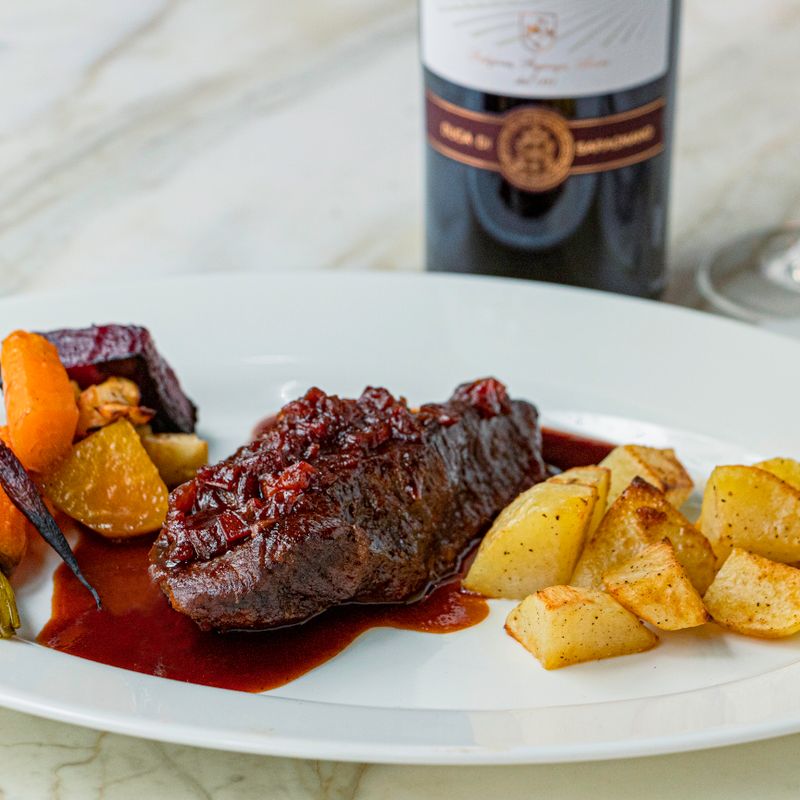
Dinner Party Balsamic Fig Beef Tenderloin Marinade
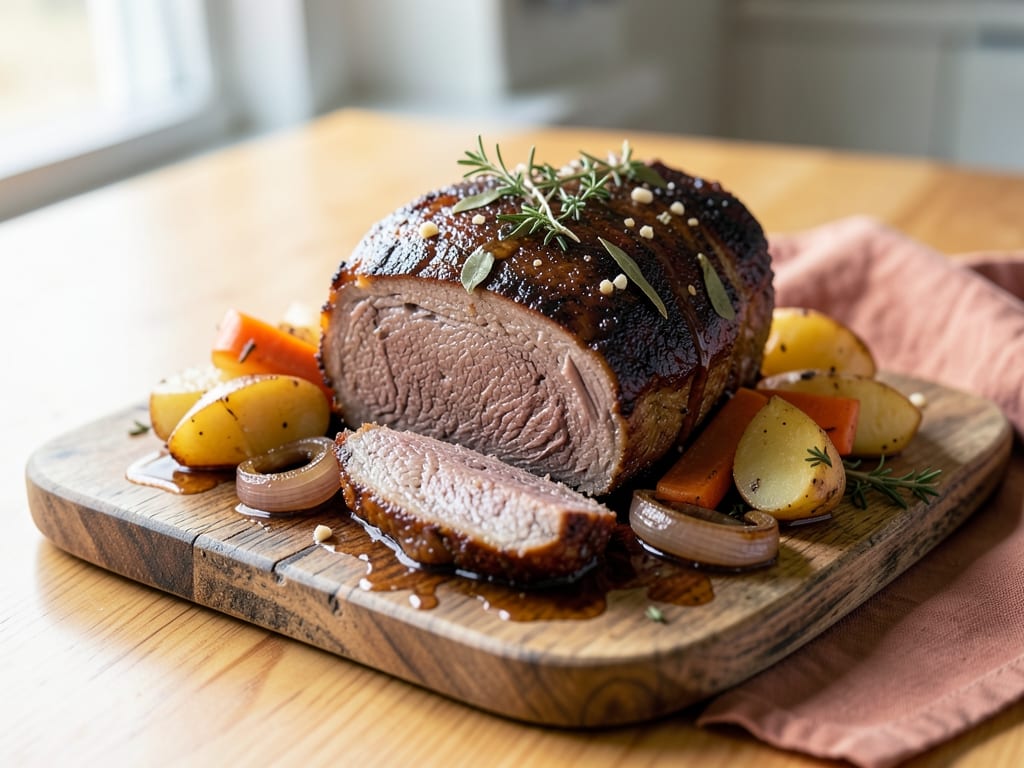
This sophisticated marinade combines aged balsamic vinegar with sweet dried figs, creating a glossy, complex sauce that adheres beautifully to beef tenderloin. Fresh rosemary and garlic add Italian-inspired depth, while olive oil emulsifies everything into a rich coating. When pan-seared, the marinade caramelizes into a golden-brown crust. Perfect for entertaining since it can be made days ahead and the beef marinated hours before guests arrive.
- Prep
- 13 min
- Cook
- 12 min
- Wait
- 8 hr 38 min
- Total
- 9 hr 3 min
- Makes
- 1.5 cups marinade, enough for 2.5 lb beef tenderloin (serves 4–6)
Steps
Before you start
- Plan ahead: marinate the beef at least 4 hours before dinner, ideally 8–24 hours
- Remove the beef from the refrigerator 30 minutes before searing to ensure even cooking
- Preheat your skillet for 2–3 minutes until smoking before the beef hits the pan
- Read through all steps to understand the full timeline and gather your equipment
Prepare the ingredients
- If using dried figs, chop them into quarters, discarding any tough stems.
- If using fresh figs, chop them into 1-inch pieces.
- Mince the 4 garlic cloves finely (about ¼-inch pieces).
- Strip the rosemary needles from the stems and chop finely until you have about 1 tablespoon of chopped leaves; discard the woody stems.
- Pat the beef tenderloin dry with paper towels and set aside.
+ Show details− Hide details
Ready when: All ingredients are prepped and measured
Tip: Dried figs deliver a more concentrated, jammy flavor, while fresh figs add brightness. Choose based on what's available and whether you want intensity or freshness.
Make the fig-balsamic base
- Pour the balsamic vinegar into a blender.
- Add the chopped figs.
- Blend on medium speed for 1–2 minutes until the figs are broken down and the mixture is mostly smooth with some small fig pieces still visible.
- You want a thick, textured base, not a completely smooth purée.
- The mixture should smell rich and slightly sweet.
+ Show details− Hide details
Ready when: Figs are fully incorporated with no large chunks remaining; mixture is thick and fragrant
Tip: Don't over-blend. You want some texture and small fig pieces visible in the final marinade; a completely smooth purée is less interesting.
Add aromatics and herbs
- Add the minced garlic and chopped rosemary to the fig-balsamic mixture in the blender.
- Pulse 3–4 times until the garlic and rosemary are evenly distributed throughout.
- Transfer the mixture to a medium bowl.
- Do not over-process.
+ Show details− Hide details
Ready when: Garlic and rosemary are evenly distributed; mixture is transferred to bowl
Tip: Don't over-blend garlic—it can turn bitter. Just a few pulses distribute it throughout without releasing harsh sulfur compounds.
Finish the marinade with oil
- While whisking constantly, pour the olive oil in a slow, steady stream into the fig mixture.
- This gradual addition helps emulsify the marinade slightly, creating a glossy, cohesive sauce.
- Continue whisking until the oil is fully incorporated and the marinade looks well combined and rich.
- Taste and season with salt and pepper to your preference, starting conservatively (about ½ teaspoon salt and ¼ teaspoon pepper).
- The marinade will concentrate as the beef absorbs it.
- The finished marinade should be thick, glossy, and fragrant.
+ Show details− Hide details
Ready when: Marinade is thick, glossy, and well combined; oil is fully incorporated
Tip: If you'd like to serve the marinade as a warm sauce over the sliced beef, reserve ½ cup of this finished marinade in a separate container before using the rest for marinating the raw meat. This ensures food safety while giving you a flavorful drizzle.
Marinate the beef
- Place the beef tenderloin in a large zip-lock bag or a shallow container just large enough to accommodate it.
- Pour the entire marinade over the beef, ensuring it is well coated on all sides.
- Use your hands (wash them first) to massage the marinade into the meat, rubbing it into every surface.
- If using a zip-lock bag, seal it carefully, removing as much air as possible.
- If using a container, cover it tightly with plastic wrap or a lid.
- Place the marinating beef in the refrigerator.
- After 12 hours, open the bag and flip the beef to ensure even marinating on both sides.
- Marinate for a minimum of 4 hours, but ideally 8–24 hours.
- The longer you marinate, the more deeply the flavors penetrate the meat.
- Even 4 hours will yield excellent results if you're in a time crunch.
+ Show details− Hide details
Ready when: Beef is well coated; marinating in the refrigerator with flavors infusing into the meat
Tip: Do not marinate longer than 24 hours. The acidity in the balsamic vinegar can break down muscle fibers excessively, making the meat mushy and unpleasantly tender.
Bring beef to room temperature
- Remove the beef tenderloin from the refrigerator about 30 minutes before you plan to sear it.
- This brings it closer to room temperature, ensuring more even cooking throughout the meat rather than a cold center and overdone exterior.
+ Show details− Hide details
Ready when: Beef is no longer cold to the touch; at approximately room temperature
Pan-sear the beefOven 400°F / 205°C
- About 3 minutes before searing, place a large cast-iron skillet or heavy-bottomed pan over medium-high heat.
- The skillet should be large enough to accommodate the tenderloin with a bit of space around it (at least 12 inches).
- Once the skillet is very hot (you should see wisps of smoke coming from the surface, around 375–400°F / 190–205°C), pat the beef dry with paper towels, removing excess marinade—the beef must be dry to achieve a good sear.
- Season lightly with salt and pepper on all sides.
- Carefully place the beef in the center of the hot skillet.
- You should hear a loud sizzle immediately.
- Do not move or flip for 3–4 minutes; this creates the golden-brown crust.
- After 3–4 minutes, using tongs, flip the beef and sear the second side for another 3–4 minutes until a deep golden-brown crust forms.
- If your tenderloin is particularly thick (over 2 inches / 5 cm), sear the ends/sides for 1–2 minutes each.
- Check the internal temperature with a meat thermometer inserted horizontally into the thickest part: 120–125°F (49–52°C) for rare, 130–135°F (54–57°C) for medium-rare, 135–145°F (57–63°C) for medium.
- For a quality beef tenderloin, medium-rare is ideal.
- Once the beef reaches your target temperature (or is 5°F below, as carryover cooking will finish it), transfer it to a clean cutting board.
+ Show details− Hide details
Ready when: Deep golden-brown crust on all seared sides; internal temperature reaches 130–135°F (54–57°C) for medium-rare
Tip: Resist the urge to flip the beef constantly. Let it sear undisturbed for the full 3–4 minutes per side to develop a proper crust. Frequent flipping prevents browning and delays crust formation.
Rest and serve
- Let the seared beef rest on the cutting board for 5–10 minutes without cutting into it.
- This is crucial—the muscle fibers relax and reabsorb the juices, keeping the meat tender and moist rather than dry and stringy.
- While the beef rests, if you reserved ½ cup of raw marinade earlier, gently heat it in a small saucepan over low heat (do not boil) until just steaming.
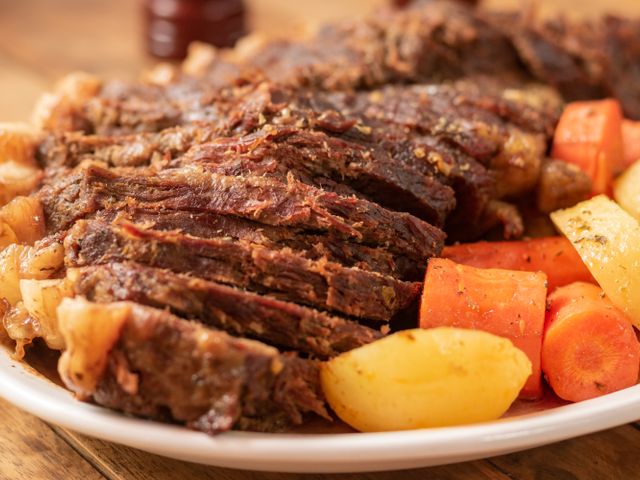
- After resting, slice the beef against the grain into ½-inch (1.3 cm) thick slices using a sharp knife.
- Cutting against the grain makes the meat more tender to eat.
- Arrange the slices on a serving platter.
- Drizzle with the reserved warm marinade, or serve it on the side for guests to dress their plates.
- Garnish with fresh rosemary sprigs and cracked black pepper if desired.
+ Show details− Hide details
Ready when: Beef has rested; sliced against the grain; ready to serve
Tip: If you did not reserve marinade earlier and want a sauce, quickly deglaze the hot skillet with ¼ cup beef broth or red wine, scraping up all the browned bits, and simmer for 1–2 minutes. This pan sauce captures all the caramelized flavors.
Good to know
Tips
- Save ½ cup of the raw marinade in a separate container before using it for the beef if you want to serve it as a warm sauce. This ensures food safety while giving you an extra-flavorful drizzle for the sliced meat.
- Pat the beef completely dry with paper towels before searing. Any excess marinade will create steam and prevent the crust from browning properly.
- Use a meat thermometer for accuracy. Beef tenderloin is most forgiving and flavorful at medium-rare (130–135°F / 54–57°C); it's lean enough that medium or above can make it taste dry.
- Never skip the resting step. It's the difference between juicy, tender slices and dry, stringy meat. The 5–10 minutes is non-negotiable.
Make ahead
The marinade can be made up to 2 days in advance and stored in an airtight container in the refrigerator. The beef can be marinated up to 24 hours in advance; longer than that risks the acidity breaking down the meat fibers excessively.
Storage & reheating
Marinade: Store in an airtight container in the refrigerator for up to 1 week. Bring to room temperature before using. Cooked beef: Refrigerate sliced beef in an airtight container for up to 3 days. Reheat gently in a low oven (275°F / 135°C) for 10–15 minutes, or serve cold at room temperature as a composed salad element. Cooked beef freezes well for up to 2 months; thaw overnight in the refrigerator and reheat gently.
Substitutions
- dried figs → Fresh figs (10 oz / 280g, chopped into 1-inch pieces). Fresh figs add a brighter, fresher flavor note and less intensity than dried figs. Use the same quantity and adjust salt/pepper to taste if needed.
- balsamic vinegar → White balsamic vinegar or aged sherry vinegar. White balsamic is milder and slightly sweeter; sherry vinegar is nuttier. Use the same quantity; white balsamic won't brown the marinade as visibly.
- fresh rosemary → Fresh thyme or oregano. Use the same quantity. Thyme is more delicate and herbaceous; oregano is more peppery. Both work beautifully with balsamic and figs.
- extra virgin olive oil → Light olive oil, grapeseed oil, or avocado oil. These alternatives will slightly reduce the richness and fruity notes of the marinade but won't significantly impact the overall flavor.
More roasts
See all →

Find more like this
- Meal
- Dinner
- Cuisine
- Italian
- Main ingredient
- Beef Roast
- Method
- Stovetop
- Quick & Easy
- EasyMake Ahead
- Occasion
- Parties