Cold Sesame Noodles
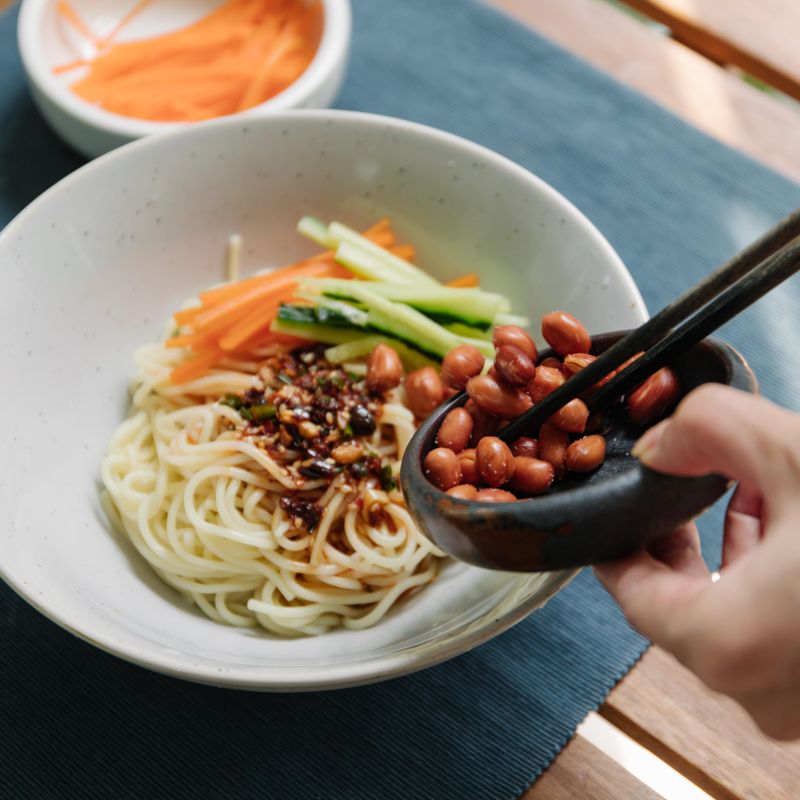
Chewy wheat noodles tossed in a creamy, nutty no-cook sesame sauce with soy, black vinegar tang and chili oil heat, topped with crisp cucumber and scallions. Ready in 25 minutes and served chilled.
- Prep
- 15 min
- Cook
- 8 min
- Wait
- 7 min
- Total
- 30 min
- Makes
- 4 main-course servings (about 2 cups / 350 g each)
Steps
Before you start
- Stir the tahini jar well before measuring; the oil separates and the paste at the bottom can be stiff.
- Fill a large bowl with ice and water before you boil the noodles so you can chill them immediately.
- Check the noodle package for cook time; fresh noodles cook in 2 to 4 minutes, dried in 4 to 8.
- Chili oil heat varies a lot by brand. Start with the lower amount and add more at the end.
Prep ice bath
- Fill a large bowl with 4 cups (about 1 liter) of cold water and a big handful of ice cubes.
- Set it next to the sink with a colander.
- Bring 5 quarts (5 L) of water to a rolling boil in a large pot over high heat.
+ Show details− Hide details
Ready when: Water is at a full rolling boil with large bubbles breaking the surface.
Tip: Start this first so the water boils while you make the sauce.
Whisk the sauce
- In a medium bowl, combine the tahini, soy sauce, rice vinegar, sugar, 1 tablespoon toasted sesame oil, 2 tablespoons chili oil, garlic and ginger.
- Whisk vigorously.
- The mixture will seize up and look thick and clumpy at first; this is normal.
+ Show details− Hide details
Ready when: Sugar is dissolved and no streaks of plain tahini remain.
Tip: Grate the garlic and ginger on a rasp-style grater so they melt into the sauce rather than leaving raw chunks.
Loosen the sauce
- Whisk in the 1/3 cup (80 ml) hot tap water a tablespoon at a time.
- The sauce will go from stiff paste to smooth and creamy.
- Taste it: it should be nutty, salty, tangy and a little sweet.
- Add 1 to 2 more tablespoons water if needed.
- Set aside.
+ Show details− Hide details
Ready when: Sauce is smooth, pourable and falls from the whisk in a thick ribbon, like heavy cream.
Tip: Make the sauce slightly looser than you want; the noodles will absorb some and it thickens as it sits.
Cut the vegetables
- Cut the cucumbers into 2-inch (5 cm) lengths, then slice each into thin matchsticks about 1/8 inch (3 mm) thick.
- Thinly slice the scallions.
- Keep both separate for topping.
+ Show details− Hide details
Ready when: Cucumber pieces are uniform, thin and crisp.
Tip: If using a regular cucumber with thick seeds, halve it lengthwise and scoop out the seeds first so the noodles don't get watery.
Boil the noodles
- Stir 1 tablespoon salt into the boiling water, then add the noodles and stir immediately to separate the strands.
- Cook following the package time, usually 3 to 6 minutes, stirring occasionally.
- Start tasting 1 minute before the stated time.
+ Show details− Hide details
Ready when: Noodles are tender but still pleasantly chewy, with no hard white core when bitten.
Tip: Slightly underdone is better than overcooked; they soften a bit more as they sit in the sauce.
Chill and drain
- Drain the noodles in the colander, then plunge them into the ice water.
- Swish with your hands for about 1 minute, rubbing gently to wash off surface starch.
- Lift out and drain very well, shaking the colander for 30 seconds.
+ Show details− Hide details
Ready when: Noodles feel completely cold and slippery, not sticky, and no water pools beneath them.
Tip: Thorough draining matters. Leftover water will thin and dilute the sauce.
Oil the noodles
- Return the drained noodles to the dry colander or a large bowl and toss with 1 teaspoon toasted sesame oil so the strands stay loose while you finish.
+ Show details− Hide details
Ready when: Noodles are glossy and strands separate easily.
Toss with sauce
- Add the noodles to the bowl with the sauce, or pour the sauce over them in a large bowl.
- Use tongs or clean hands to lift and toss for about 1 minute until every strand is coated.
- Taste and adjust: a splash more soy sauce for salt, vinegar for tang, or chili oil for heat.
+ Show details− Hide details
Ready when: Noodles are evenly coated in a creamy beige sauce with no pale or dry patches.
Tip: If the noodles look dry or clumpy, toss in 1 to 2 tablespoons of cold water to loosen.
Top and serve
- Divide the noodles among 4 shallow bowls, piling them high.
- Top each with a mound of cucumber matchsticks, scallions and a sprinkle of sesame seeds.
- Drizzle with extra chili oil, spooning up some sediment, and serve right away.
+ Show details− Hide details
Ready when: Noodles are cool and creamy and the toppings are crisp and bright.
Tip: Add the cucumber at the last minute so it stays crunchy.
Good to know
Tips
- Do not skip the ice bath. Rinsing in cold water stops the cooking and removes surface starch, which prevents gummy, clumped noodles.
- Add hot water to the sauce gradually. Tahini seizes at first, and water turns it silky.
- Stir chili oil from the bottom of the jar so you get both the oil and the flavorful crispy chili sediment.
- For extra protein, top with shredded poached chicken, a soft-boiled egg, or cubed baked tofu.
Make ahead
"The sauce can be made up to 4 days ahead and refrigerated in a sealed jar; whisk in a splash of water to loosen before using. Noodles can be cooked, chilled, oiled and refrigerated up to 1 day in an airtight container. Toss with sauce and top just before serving."
Storage & reheating
"Best eaten the day it is made. Dressed noodles keep covered in the refrigerator for up to 2 days; the noodles absorb sauce, so toss with 1 to 2 tablespoons cold water before serving, and keep cucumber separate. Serve cold or at room temperature. Not recommended for freezing."
Substitutions
- tahini (or Chinese sesame paste) → Chinese sesame paste or smooth natural peanut butter. Sesame paste is deeper and more roasted; peanut butter gives a sweeter, classic takeout-style sauce. Use the same amount.
- unseasoned rice vinegar → Chinkiang black vinegar. Gives a deeper, maltier tang. Use the same amount, or use half black vinegar and half rice vinegar.
- fresh or dried wheat noodles (thin lo mein, ramen-style, or spaghetti-style Chinese noodles) → spaghetti. Cook 1 minute past al dente, and add 1/2 teaspoon baking soda to the water for a springier, more noodle-like texture.
- soy sauce → tamari. Makes the sauce gluten-free, though the noodles must also be gluten-free (rice or buckwheat noodles).