Classic Lemon Dutch Baby Pancake
A dramatic, puffed oven pancake with crisp, golden, buttery edges and a custardy center, baked in a hot cast iron skillet and finished with fresh lemon juice and powdered sugar. It takes 10 minutes of effort and comes together with pantry staples.
- Prep
- 10 min
- Cook
- 22 min
- Wait
- 20 min
- Total
- 52 min
- Makes
- 1 large 10-inch pancake (4 servings)
Steps
Before you start
- Take the eggs and milk out of the fridge about 30 minutes ahead, or warm the eggs in a bowl of warm tap water for 5 minutes. Room-temperature batter puffs higher.
- Position an oven rack in the center and remove any rack above it, because the pancake can rise 3 to 4 inches above the pan.
- The skillet must preheat in the oven for a full 20 minutes. Do not skip this, as the hot pan is what creates the puff.
- Use oven mitts for the skillet handle from the moment it goes into the oven. It stays dangerously hot for a long time.
Preheat oven and skilletOven 425°F / 220°C
- Place the empty 10-inch cast iron skillet on the center rack.
- Heat the oven to 425°F (220°C) and let the skillet preheat with it for at least 20 minutes.
+ Show details− Hide details
Ready when: The oven has reached 425°F (220°C) and the skillet has been inside for 20 minutes
Tip: A cold or lukewarm pan gives a flatter, denser pancake.
Zest the lemon
- While the oven heats, finely grate the zest from the lemon into a small pile, then set the lemon aside to juice later.
+ Show details− Hide details
Ready when: You have about 1 teaspoon of fine yellow zest with no white pith
Tip: Zest before juicing. A squeezed lemon is nearly impossible to grate.
Blend the batter
- In a blender, combine the eggs, milk, flour, sugar, salt, vanilla and lemon zest.
- Blend on medium speed for 30 seconds until completely smooth and slightly frothy.
- If using a bowl, whisk the eggs and milk first, then whisk in the dry ingredients until no lumps remain.
+ Show details− Hide details
Ready when: The batter is thin like heavy cream, smooth and has no flour streaks
Tip: Do not let the batter sit for long. Pour it in soon after blending while it is still frothy.
Melt the butterOven 425°F / 220°C
- Wearing oven mitts, carefully pull out the oven rack with the hot skillet and set the skillet on a heatproof surface or the stovetop.
- Add the butter pieces and swirl the pan for 15 to 20 seconds until the butter melts completely and coats the bottom and sides.
+ Show details− Hide details
Ready when: Butter is melted, sizzling and foamy, and coats the pan up the sides, but is not browned
Tip: Put a towel or mitt over the handle as a reminder that it is extremely hot.
Pour in batterOven 425°F / 220°C
- Immediately pour the batter into the center of the skillet in one steady stream.
- Do not stir.
- The edges should sizzle as the batter hits the butter.
+ Show details− Hide details
Ready when: Batter sizzles at the edges on contact
Tip: Work quickly so the pan does not cool down.
Bake until puffedOven 425°F / 220°C
- Slide the skillet back onto the center rack and close the door.
- Bake at 425°F (220°C) for 18 to 22 minutes without opening the oven.
- The pancake will climb the sides, puff dramatically and turn deep golden brown.
+ Show details− Hide details
Ready when: The edges are tall and deep golden brown, and the center is set and lightly golden with no wet batter showing
Tip: Opening the door before the 15-minute mark lets heat escape and can cause the pancake to collapse.
Juice the lemon
- While the pancake bakes, squeeze the zested lemon to get 1 tablespoon of juice, removing any seeds.
- Cut any leftover lemon into wedges for the table if you like.
Finish and serve
- Using oven mitts, remove the skillet and place it on a trivet.
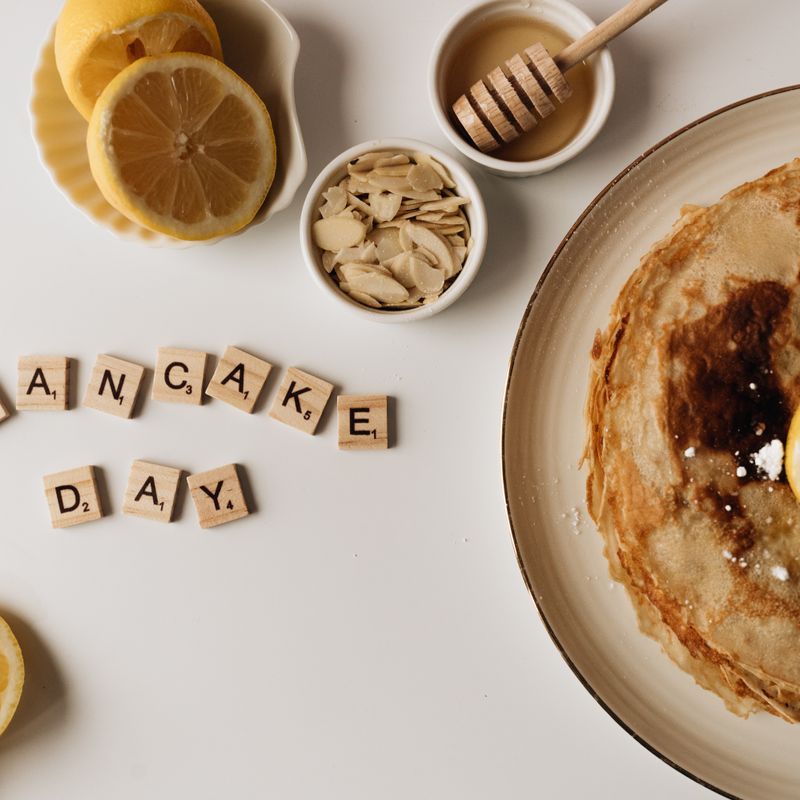
- Drizzle the lemon juice over the pancake and dust with powdered sugar through a fine sieve.
- Serve immediately, cut into 4 wedges, straight from the skillet.
- The puff will begin to deflate within a minute or two, which is normal.
+ Show details− Hide details
Ready when: The pancake is puffed, golden and fragrant, with a custardy center
Tip: Leave a towel over the skillet handle to remind everyone that it is still very hot.
Good to know
Tips
- Room-temperature eggs and milk help the batter puff higher and more evenly.
- Blend rather than hand-whisk for the smoothest batter and the most volume.
- Serve straight away. The dramatic puff settles within a couple of minutes, but the flavor stays just as good.
- Top with fresh berries, a spoonful of yogurt or a drizzle of maple syrup for variations.
Make ahead
The batter can be blended, covered and refrigerated up to 24 hours. Let it sit at room temperature for 30 minutes and re-blend or whisk briefly before using. Always preheat the skillet and melt the butter fresh.
Storage & reheating
Best eaten right away. Refrigerate leftovers in an airtight container up to 2 days. Reheat on a baking sheet at 350°F (175°C) for 8 to 10 minutes to re-crisp the edges. Not recommended for freezing, as the texture turns spongy.
Substitutions
- whole milk → 2% milk or unsweetened oat milk. Whole milk gives the richest, most custardy center. Lower-fat or oat milk works but is slightly less rich.
- all-purpose flour → 1:1 gluten-free baking flour blend. Rise and texture are very similar, but the pancake may be a bit more delicate.
- unsalted butter → ghee or clarified butter. Handles high heat better and reduces the chance of browning too fast.
- fresh lemon juice → fresh orange juice or maple syrup. Use the same amount for a sweeter finish, and substitute orange zest for lemon zest.