Christmas Herb Roasted Duck and Cherry Wrap
Elegant herb-roasted duck breast sliced thin and wrapped in delicate crêpes with tart cherry compote, fresh thyme, and crisp endive. A sophisticated French-inspired holiday starter or light entrée that balances rich duck with bright fruit and herbs.
- Prep
- 25 min
- Cook
- 40 min
- Wait
- 20 min
- Total
- 1 hr 25 min
- Makes
- 4 wraps (serves 4)
Steps
Before you start
- Remove duck breasts from refrigerator 15 minutes before cooking to bring to room temperature
- Preheat oven to 400°F (200°C)
- Have all ingredients prepped and within reach before you begin assembling wraps
Prepare cherry compote
- In a small saucepan over medium heat, combine thawed frozen cherries, cherry juice or port wine, sugar, balsamic vinegar, and cinnamon.
- Bring to a gentle simmer and cook for 8–10 minutes, stirring occasionally, until the mixture thickens slightly and the cherries break down into a chunky compote.
- The mixture should reduce by about one-third and coat the back of a spoon.
- Remove from heat and let cool to room temperature (about 10 minutes).
+ Show details− Hide details
Ready when: Mixture thickens and coats the back of a spoon; cherries are soft and broken down
Tip: Make the compote first so it cools while you prepare the other components. Don't overcook—you want visible fruit pieces, not a jam.
Make crêpe batter
- In a blender, combine flour, eggs, milk, melted butter, and salt.
- Blend until smooth, about 30 seconds.
- Let the batter rest at room temperature for 10 minutes.
- The batter should be thin, like heavy cream.
+ Show details− Hide details
Ready when: Batter is smooth and pourable without lumps
Tip: Don't skip the resting time—it results in more tender crêpes. Stir gently before using.
Cook crêpes
- Heat a crêpe pan or 8-inch (20 cm) nonstick skillet over medium-high heat.
- Lightly butter or oil the pan.
- Pour about 3 tablespoons (45 ml) batter into the center and immediately tilt and swirl the pan in a circular motion until batter thinly coats the bottom.
- Cook for about 1–1.5 minutes until the bottom is light golden, then flip and cook the other side for about 30 seconds.
- Transfer to a plate.
- Repeat with remaining batter to make 4 crêpes total.
- Stack finished crêpes, lightly separated by parchment or a towel.
+ Show details− Hide details
Ready when: Crêpe is thin and light golden on both sides; edges are slightly crispy
Tip: The first crêpe is often imperfect as the pan adjusts to heat—don't worry. Tilt the pan quickly to spread batter evenly before it sets.
Roast duck breastsOven 400°F / 205°C
- Pat duck breasts dry with paper towels and season both sides generously with salt and pepper.
- In a 12-inch (30 cm) skillet over medium-high heat, place duck breasts skin-side down.
- Cook without moving for 6–7 minutes until the skin is golden brown and most of the fat has rendered.
- Drain rendered fat (reserve 1 tablespoon for later, if desired), then flip breasts meat-side down and sear for 1 minute to caramelize.
- Transfer the skillet to a preheated 400°F (200°C) oven and roast for 12–15 minutes until an instant-read thermometer inserted into the thickest part reads 165°F (74°C).
- The skin should be crispy and dark golden.
+ Show details− Hide details
Ready when: Skin is dark golden and crispy; internal temperature reaches 165°F (74°C); no pink at the center when sliced
Tip: Don't move the duck while skin-side down—it needs uninterrupted contact with heat to render fat and crisp up. A meat thermometer ensures food safety; duck reaches safe doneness at 165°F (74°C).
Rest and slice duck
- Remove duck from the oven and let rest on a cutting board for 5 minutes.
- This allows juices to redistribute and keeps the meat moist when sliced.
- Slice each breast diagonally into thin strips, about ¼ inch (6 mm) thick.
+ Show details− Hide details
Ready when: Duck is rested and sliced cleanly; meat is fully cooked through with no pink
Tip: A sharp carving knife or serrated blade slices duck cleanly without tearing. Resting is crucial—skipping this step causes juices to run onto the plate instead of staying in the meat.
Prepare herb coating
- In a small bowl, combine minced garlic, fresh thyme leaves, chopped rosemary, and 1 tablespoon (15 ml) olive oil.
- Season lightly with salt and pepper.
- This aromatic mixture will coat the warm duck slices.
+ Show details− Hide details
Ready when: Mixture is well combined and fragrant
Tip: Make this while the duck rests so it's ready to toss with the warm slices, which helps the herbs adhere.
Toss duck with herbs
- While the duck is still warm, gently toss the sliced duck with the herb coating, turning the slices to coat lightly.
- Avoid overmixing, which can break up the slices.
- Let sit for 1 minute to allow flavors to meld.
+ Show details− Hide details
Ready when: Duck slices are evenly coated with herbs and oil
Tip: Toss the warm duck so the herbs cling to the residual heat. If duck cools too much, the herbs won't stick.
Assemble wraps
- Lay a crêpe on a clean work surface.
- In the center-left area, arrange 3–4 Belgian endive leaves in an overlapping line.
- Top with a portion of herb-coated duck slices (about 5–6 slices per wrap, roughly 2 oz / 60 g per wrap).
- Spoon about 2 tablespoons (30 ml) cherry compote over the duck.
- Scatter a few fresh chervil leaves on top if using.
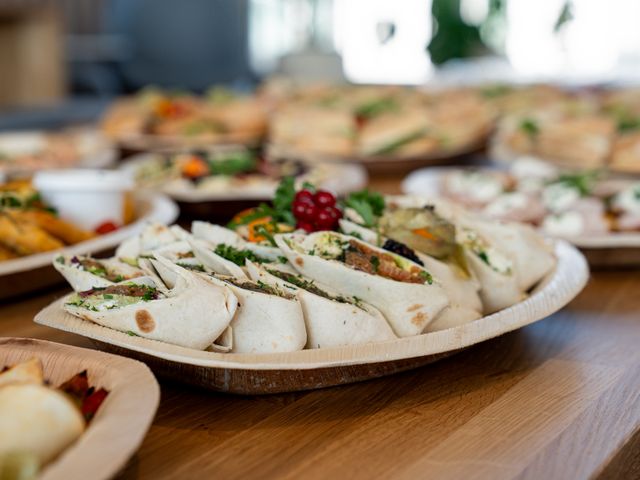
- Fold the crêpe from the bottom edge up and over the filling, then fold the left and right sides inward to form a neat cylinder or envelope.
- Place seam-side down on a serving plate.
- Repeat with remaining crêpes and fillings.
+ Show details− Hide details
Ready when: Wraps are neatly folded with filling tucked inside; presentation is tight and tidy
Tip: Don't overfill—the crêpe should fold cleanly without bursting. Arrange endive in a thin line to create height and elegance.
Finish and serve
- Arrange the assembled wraps on a serving platter or individual plates.
- Drizzle any remaining cherry compote around the plate for visual appeal.
- Season the top of each wrap lightly with fleur de sel if using, and add a final scatter of fresh herb leaves for a festive touch.
- Serve immediately while the duck is still warm and the crêpe is tender.
+ Show details− Hide details
Ready when: Plates are garnished and ready to serve
Tip: This dish is best served immediately—the warm duck and cool endive create a pleasant textural contrast, and the crêpe is most tender when warm.
Good to know
Tips
- Rendering duck skin requires patience and medium-high heat—rushing will result in undercooked fat and soft skin instead of the desired crispy texture.
- Crêpes are an elegant French technique that may seem daunting but are very forgiving once you get the feel of swirling the pan. Practice with the first one; success builds quickly.
- Cherry compote pairs beautifully with the richness of duck, the acidity balancing the fat; avoid overly sweet compotes that would overpower the dish.
- This is a composed dish—all elements should be finished and ready before final assembly. Mise en place (prep everything beforehand) ensures smooth, confident plating.
Make ahead
The cherry compote can be made up to 3 days ahead and stored in the refrigerator. Crêpes can be made up to 1 day ahead, layered with parchment, wrapped tightly, and chilled. Bring to room temperature before assembling. The herb coating and duck should be prepared fresh on serving day for optimal flavor and texture.
Storage & reheating
Leftover assembled wraps do not store well due to the contrast of textures. However, components can be stored separately: cherry compote in an airtight container in the refrigerator for up to 4 days; crêpes, wrapped tightly in plastic, for up to 2 days in the refrigerator or up to 1 month frozen (thaw at room temperature before using); leftover cooked duck, covered, for up to 3 days (slice and reheat gently in a 300°F / 150°C oven for 5 minutes). Endive keeps in a sealed container for up to 5 days.
Substitutions
- frozen sour cherries, thawed → fresh pitted cherries (reduce cook time to 5–7 minutes) or dried tart cherries (rehydrate in warm port for 10 minutes before using). Fresh cherries will produce a lighter, brighter compote; dried cherries will be more intense and chewy.
- cherry juice or port wine → red wine, red wine vinegar diluted with water, or additional port wine. This affects the depth of flavor and color. Red wine vinegar will add tang; port wine will add richness and sweetness.
- fresh thyme sprigs → dried thyme (use half the amount) or fresh sage leaves, finely chopped. Dried thyme will be more concentrated. Sage adds a slightly peppery, earthy note that pairs beautifully with duck.
- Belgian endive → thinly sliced radicchio, tender baby spinach leaves, or watercress. Radicchio adds a pleasant bitter edge; spinach is milder and less structured; watercress adds peppery bite. Endive's crispness and slight bitterness best complement rich duck.