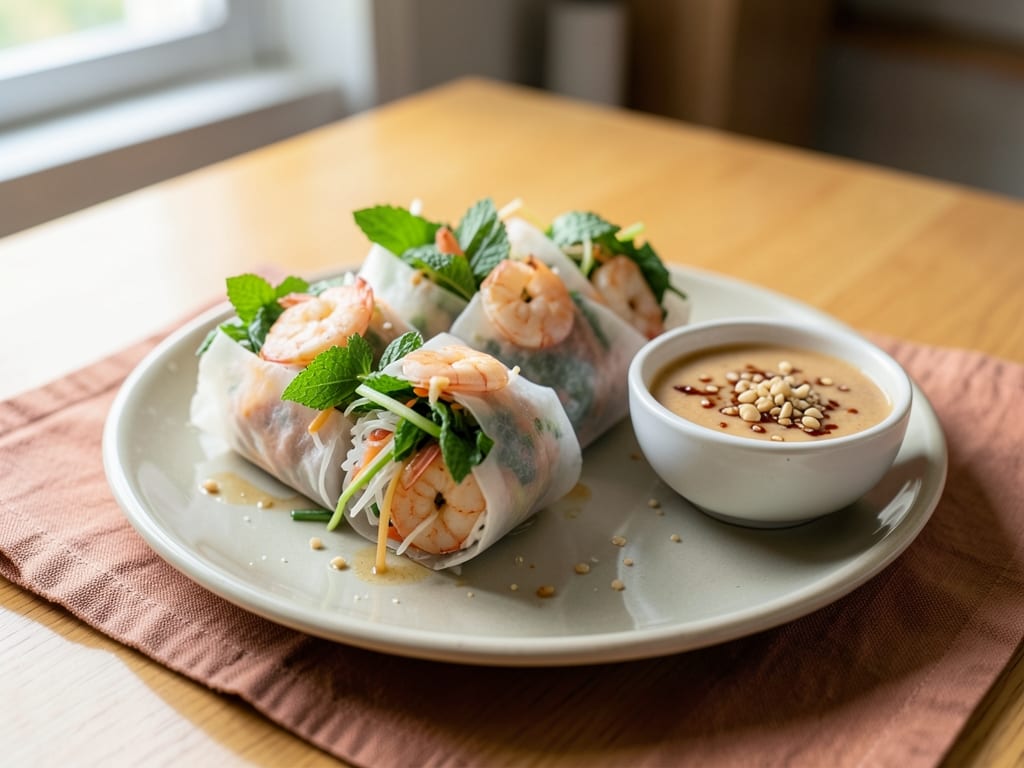
Party Sriracha Shrimp and Mango Wraps
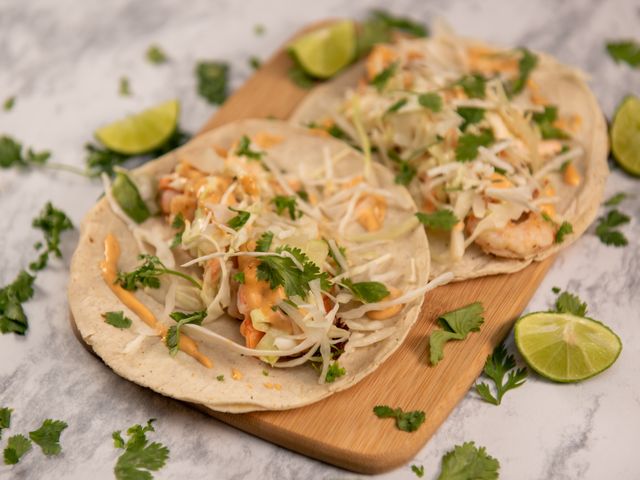
Crispy pan-fried rice paper wraps filled with garlicky sriracha shrimp, fresh mango, cucumber, and herbs. Served with a sweet-spicy dipping sauce, these handheld bites are perfect for parties and entertaining. The combination of warm shrimp, cool fruit, and fragrant herbs creates an exciting contrast of flavors and textures.
- Prep
- 25 min
- Cook
- 15 min
- Wait
- 5 min
- Total
- 45 min
- Makes
- 16 wraps (appetizer for 8, or 2 per person)
Steps
Before you start
- Pat shrimp completely dry before cooking so they brown properly
- Have all filling components prepared and within arm's reach before you start assembling wraps
- Set up a shallow dish with warm water for dipping rice paper
- Make the dipping sauce before you cook the shrimp
Make the dipping sauce
- In a small bowl, whisk together 2 tbsp sriracha, 2 tbsp fresh lime juice, 1 tbsp honey, 0.5 tsp fish sauce, and 3 tbsp water until smooth and well combined.
- Taste and adjust heat or sweetness as desired.
- Set aside at room temperature.
+ Show details− Hide details
Ready when: sauce is smooth and combined
Tip: Make this while shrimp marinates so it's ready when you serve
Marinate the shrimp
- In a small bowl, combine 3 tbsp sriracha, 1 tbsp fish sauce, 3 minced garlic cloves, and 0.5 tsp honey.
- Add the patted-dry shrimp and toss gently to coat evenly.
- Let sit for 5 minutes while you prepare the filling components.
+ Show details− Hide details
Ready when: shrimp are evenly coated
Tip: Don't marinate longer than 5–10 minutes or the fish sauce will make the shrimp mushy
Prepare the filling components
- While the shrimp marinates, peel and pit the mango and cut it into thin 2-inch matchsticks (you need about 1 cup).
- Halve the cucumber lengthwise, scoop out the seeds with a spoon, and cut into thin 2-inch matchsticks (about 1 cup).
- Pick fresh mint leaves from stems and, if using, pick Thai basil or cilantro leaves.
- Arrange all components on a cutting board or plate within arm's reach of your assembly station.
+ Show details− Hide details
Ready when: all components prepped and organized
Tip: Cutting vegetables into thin matchsticks (julienne) makes them easier to roll and more elegant; a vegetable peeler works well for mango and cucumber
Pan-fry the shrimp
- Heat 2 tbsp vegetable oil in a large 12-inch skillet over medium-high heat until shimmering (about 1 minute).
- Add the marinated shrimp in a single layer and cook for 2 minutes without moving them so they develop a golden crust.
- Flip each shrimp and cook the second side for another 1.5–2 minutes until the shrimp are opaque throughout and the marinade caramelizes slightly.
- The shrimp should curl and feel firm when pressed.
- Transfer to a plate and set aside to cool slightly.
+ Show details− Hide details
Ready when: shrimp are opaque, firm, and caramelized at edges
Tip: Don't overcrowd the pan or move the shrimp too early—this prevents browning and releases moisture. Work in batches if needed, though these 16–20 count should fit in one layer
Prepare warm water for rice paper
- Fill a shallow dish or pie plate with warm (not hot) water—aim for around 100–110°F (37–43°C), like a warm bath.
- This is the ideal temperature for softening rice paper quickly without tearing it.
+ Show details− Hide details
Ready when: water is warm to the touch
Tip: If water is too hot, the rice paper becomes fragile and tears; too cold, it won't soften properly
Assemble the first wrap
- Dip one rice paper wrapper into the warm water for 2–3 seconds, turning it once, until it's pliable but still firm (it will continue to soften as you work).
- Lay it flat on a clean cutting board.
- Arrange 1 shrimp in the center of the wrapper, then layer on a small handful of mango matchsticks, cucumber matchsticks, 3–4 mint leaves, and 1–2 Thai basil or cilantro leaves if using.
- Keep the filling 2 inches from the edges and in a loose horizontal line.
+ Show details− Hide details
Ready when: rice paper is softened but still holds its shape
Tip: Under-dip the rice paper slightly—it continues to soften from residual heat and moisture. Over-soaking makes it tear when you roll it
Roll the wrap tightly
- Fold the bottom edge of the rice paper up and over the filling, tucking it tightly underneath.
- Fold in both sides, then roll the whole wrap away from you as tightly as possible without tearing, pressing gently as you go to create a compact cylinder about 4 inches long.
- The seal will be on the underside.
- Place seam-side down on a serving platter.
+ Show details− Hide details
Ready when: wrap is tightly rolled and holds its shape
Tip: A tight roll prevents the wrap from unraveling when eaten; if you feel the rice paper tearing, you've likely over-soaked it—dip for a shorter time next wrap
Repeat for all wraps
- Working quickly and methodically, repeat steps 6 and 7 with the remaining 15 rice paper wrappers, using 1 shrimp per wrap and distributing the mango, cucumber, herbs evenly among all 16 wraps.
- Arrange the finished wraps on a serving platter, seam-side down, in a single layer if space allows so they don't stick together.
+ Show details− Hide details
Ready when: all 16 wraps are assembled and arranged
Tip: If wraps begin to dry out while you work, cover finished wraps loosely with a damp paper towel, but don't let them touch each other or they'll stick
Serve
- Arrange the wraps on a serving platter with the bowl of sriracha-lime dipping sauce nearby.
- Serve at room temperature or chilled.
- Guests can dip each bite into the sauce as they eat.
+ Show details− Hide details
Tip: These are best eaten within 1–2 hours of assembly while the rice paper is still tender and the shrimp is at peak flavor
Good to know
Tips
- Pat shrimp completely dry before cooking—moisture prevents browning and creates steam instead of a golden crust.
- Rice paper tears easily when over-soaked; dip for only 2–3 seconds. It will continue to soften from residual moisture as you fill and roll.
- Prep all filling components before you start cooking shrimp so assembly moves quickly and smoothly.
- For a crowd, assemble wraps on a platter just before guests arrive, cover lightly with plastic wrap, and serve within an hour for the best texture.
Make ahead
You can pan-fry the shrimp and prepare all the filling components up to 4 hours ahead, storing them separately in the refrigerator. Assemble the wraps no more than 1–2 hours before serving so the rice paper remains tender. The dipping sauce keeps, covered, in the fridge for up to 3 days.
Storage & reheating
Finished wraps: Store loosely wrapped in plastic wrap in the refrigerator for up to 2 hours. Do not freeze, as the rice paper becomes hard and brittle. Dipping sauce: Cover and refrigerate for up to 3 days. Reheat sauce gently in a small pot over low heat or serve cold.
Substitutions
- fresh ripe mango → ripe papaya or pineapple. Cut into the same thin matchsticks. Papaya offers a similar texture; pineapple is tangier and slightly firmer.
- Thai basil or cilantro → cilantro or regular basil. Thai basil has a slight anise flavor, but cilantro (more common) or basil work well. Use the same quantity.
- fish sauce → soy sauce or tamari. Use 1 tbsp soy sauce per 1 tbsp fish sauce. The umami depth will be slightly different but still delicious.
- sriracha chili sauce → sambal oelek or hot sauce. Use an equal amount. Adjust heat to taste. Sambal oelek is chunkier and slightly less sweet.