Christmas Eve Roasted Root Vegetable and Thyme Amaranth
A festive grain-and-vegetable side dish combining fluffy amaranth with deeply caramelized roasted root vegetables, garlic, and fresh thyme. The warm spices and aromatic butter make it perfect for holiday tables.
- Prep
- 20 min
- Cook
- 55 min
- Wait
- 10 min
- Total
- 1 hr 25 min
- Makes
- 6 servings (about 1 cup each)
Steps
Before you start
- Preheat oven to 425°F (220°C) at least 15 minutes before starting
- Peel and cut all root vegetables into ¾-inch pieces so they roast evenly
- Measure the amaranth and vegetable broth beforehand to keep the process smooth
Prepare root vegetables
- Peel and cut all root vegetables into ¾-inch (2 cm) pieces.
- Keep beets separate from the other vegetables on your cutting board to prevent staining them with beet juice.
- You should have roughly 1 lb 9 oz (710 g) total prepared vegetables.
+ Show details− Hide details
Tip: Cut vegetables to uniform size so they roast at the same rate and won't have dry or raw spots.
Season and roast vegetablesOven 425°F / 220°C
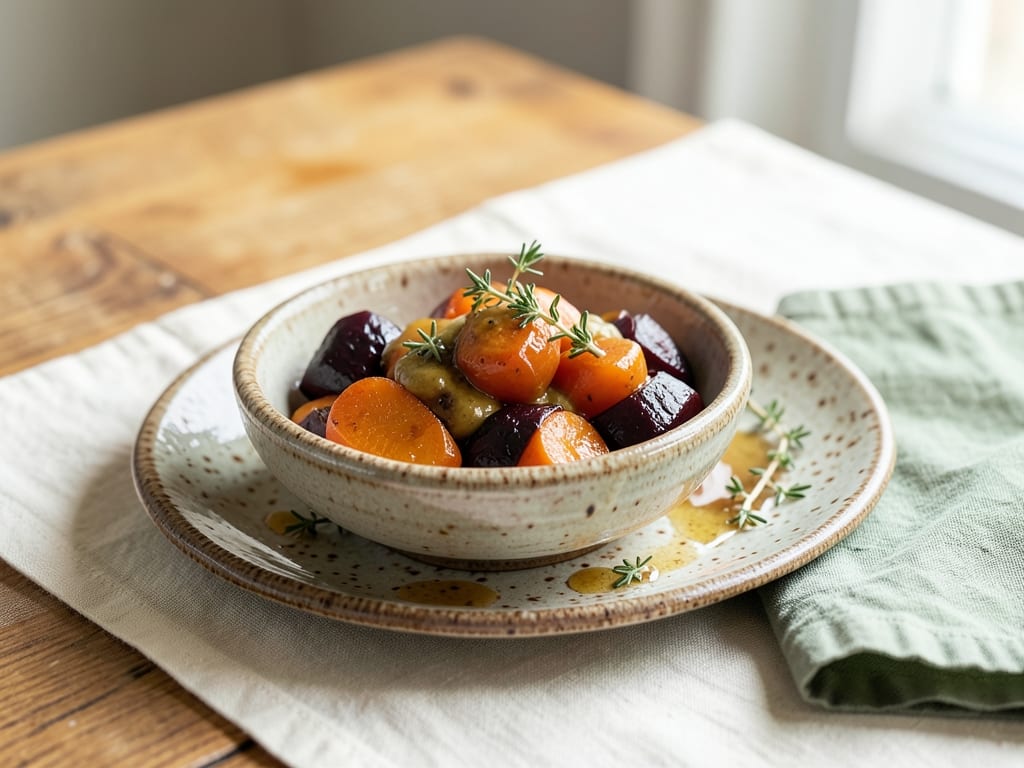
- Divide the cut vegetables between two large rimmed baking sheets, keeping beets on one sheet and carrots, parsnips, and turnips on the other (this prevents the beets from staining other vegetables).
- Drizzle each sheet with 2 tablespoons (30 ml) olive oil and toss to coat evenly.
- Season generously with kosher salt and freshly ground black pepper.
- Scatter half of the smashed garlic cloves on each sheet, then top with 2 thyme sprigs per sheet.
- Place both sheets in the preheated 425°F (220°C) oven and roast for 35–40 minutes, stirring halfway through, until the vegetables are very tender and deeply caramelized at the edges.
+ Show details− Hide details
Ready when: Vegetables are very tender and golden-brown at the edges, with caramelized spots
Tip: Stir roasted vegetables halfway through cooking to ensure even browning and prevent sticking.
Toast amaranth
- While vegetables roast, place a medium saucepan over medium heat and add the amaranth grain.
- Toast for 2–3 minutes, stirring frequently with a wooden spoon, until fragrant and you hear a slight popping sound.
- The grains will warm through and release a nutty aroma.
+ Show details− Hide details
Ready when: Grains smell nutty and a few grains pop lightly
Tip: Don't skip toasting—it brings out the natural nutty flavor and prevents the finished grain from tasting raw or flat.
Cook amaranth
- Pour the vegetable broth into the toasted amaranth, increase heat to medium-high, and bring to a boil, stirring occasionally.
- Once boiling, reduce heat to low, cover the saucepan with a lid, and simmer for 20–22 minutes until the liquid is absorbed and the grains are tender and fluffy.
+ Show details− Hide details
Ready when: All liquid is absorbed, grains are fluffy and tender, no liquid pooling at bottom of pan
Tip: Don't peek under the lid during cooking; this releases steam and can leave grains undercooked.
Rest roasted vegetables
- When the vegetables are done roasting, remove both baking sheets from the oven.
- Let them cool for 2 minutes so you can handle them safely, then pluck out and discard the thyme sprigs.
Combine and finish
- Once the amaranth is cooked, remove the saucepan from heat.
- Add the roasted root vegetables (from both sheets), the cold butter pieces, dried thyme, nutmeg, and an additional pinch of salt and pepper.
- Gently fold everything together using a wooden spoon until the butter melts and coats the grains and vegetables.
- Taste and adjust seasoning as needed.
- Transfer to a serving dish.
+ Show details− Hide details
Ready when: Butter is melted, flavors are evenly distributed, grains are glossy
Tip: Fold gently to avoid crushing the roasted vegetables and to keep the dish looking appetizing.
Good to know
Tips
- For extra holiday color, keep the beets roasting separately on their own sheet pan to prevent their deep red color from bleeding onto the other vegetables.
- Fresh thyme sprigs are removed before serving, so don't worry about guests finding tough stems—they're just for infusing flavor.
- If your amaranth seems dry after cooking, stir in a tablespoon or two of warm vegetable broth to loosen it up slightly.
- This dish pairs beautifully with roasted poultry, glazed ham, or as a vegetarian main alongside a green salad and crusty bread.
Make ahead
The roasted vegetables can be prepared up to 2 days ahead. Store them in an airtight container in the refrigerator. Reheat gently in a 350°F (175°C) oven for 10 minutes before combining with the amaranth. Cook the amaranth fresh on the day of serving for the best texture.
Storage & reheating
Store leftovers in an airtight container in the refrigerator for up to 3 days. Reheat gently on the stovetop over medium-low heat with a splash of vegetable broth or water, or microwave in a covered bowl in 1-minute intervals, stirring between each, until warm. Do not freeze; the texture of amaranth becomes mushy after thawing.
Substitutions
- amaranth grain → quinoa or millet. Use the same quantity and cooking method (toast, then simmer in broth for 15–18 minutes). The flavor and texture will be slightly different but equally delicious.
- parsnips, large → celery root (celeriac), peeled and cut into ¾-inch pieces. Celery root adds an earthy, nutty quality. Use the same weight.
- fresh thyme sprigs → fresh rosemary sprigs. Rosemary is more assertive, so use 3 sprigs instead of 4. Remove before serving.
- unsalted butter → ghee or olive oil. Use the same quantity. Olive oil will make the dish lighter; ghee adds richness.