Chicken Broth Congee with Soft-Boiled Egg and Scallions
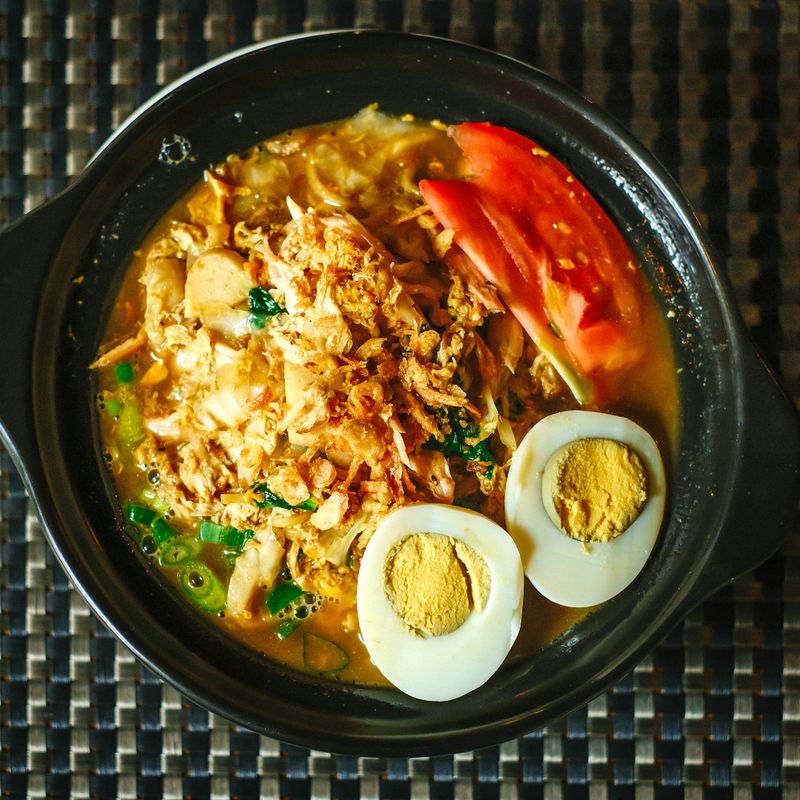
A silky, comforting Chinese rice porridge simmered slowly in chicken broth with fresh ginger, then topped with a jammy soft-boiled egg, sliced scallions, toasted sesame oil, and a splash of soy sauce. It is gentle enough for a sick day and satisfying enough for a weekend breakfast.
- Prep
- 20 min
- Cook
- 1 hr 20 min
- Wait
- 18 min
- Total
- 1 hr 58 min
- Makes
- About 8 cups congee (4 generous bowls)
Steps
Before you start
- Plan on about 2 hours from start to finish; the congee needs 70+ minutes of gentle simmering, but most of it is hands-off.
- Use a heavy-bottomed pot of at least 4 quarts (3.8 L) so the congee has room to bubble without boiling over, and so the rice doesn't scorch on the bottom.
- Use low-sodium chicken broth so you can control the salt. Regular broth can make the finished congee too salty as it reduces.
- Take the eggs straight from the refrigerator when it's time to cook them; cold eggs give the most reliable soft-boiled timing.
Rinse and soak rice
- Put the 1 cup (200 g) jasmine rice in a fine-mesh strainer and rinse under cold running water, swishing with your fingers, for about 1 minute until the water runs mostly clear.
- Transfer to the 4-quart pot and cover with 1 cup (240 ml) of the water.
- Let the rice soak for 15 minutes.
- Soaking helps the grains burst open and break down more quickly later.
+ Show details− Hide details
Ready when: Grains look slightly opaque and chalky white
Tip: Don't skip the rinse; excess surface starch can make the congee gluey and cause it to boil over.
Prep the aromatics
- While the rice soaks, smash the 4 ginger coins lightly with the flat of your knife so they release flavor.
- Cut the 1-inch (15 g) piece of ginger into very fine matchsticks for garnish.
- Thinly slice the 4 scallions on a diagonal and keep them in a small bowl.
- Set aside the soy sauce, sesame oil, and optional chili crisp.
+ Show details− Hide details
Ready when: Ginger matchsticks are hair-thin and scallions are evenly sliced
Tip: Freezing the ginger for 10 minutes first makes it much easier to cut into thin matchsticks.
Bring to a boil
- Pour the 7 cups (1660 ml) chicken broth and the remaining 1 cup (240 ml) water into the pot with the soaked rice and its soaking water.
- Add the smashed ginger coins and 1 tsp salt.
- Set over high heat, uncovered, and stir once or twice as it heats so the rice doesn't settle and stick.
- Bring to a full boil, about 8 minutes.
+ Show details− Hide details
Ready when: Large bubbles break across the entire surface
Tip: Stay nearby; once it boils, starchy liquid can foam up and spill over quickly.
Simmer low and slow
- Reduce the heat to low so the surface bubbles lazily.
- Set the lid on the pot slightly ajar, leaving a 1-inch (2.5 cm) gap for steam to escape.
- Simmer for 60 minutes, stirring from the bottom every 10 to 15 minutes with a wooden spoon, scraping the corners so nothing sticks.
- The congee is ready for the next step when most grains have burst and the mixture looks creamy.
+ Show details− Hide details
Ready when: Most rice grains have burst open, and the porridge coats the back of a spoon and looks creamy
Tip: If it starts to catch on the bottom, lower the heat, stir more often, and don't scrape up any browned bits.
Adjust the consistency
- Stir well.
- Congee should flow slowly off a spoon like thick, loose oatmeal.
- If it seems too thick, stir in hot water ¼ cup (60 ml) at a time.
- If it seems too thin, continue simmering uncovered.
- Simmer 10 more minutes, stirring often, as the rice continues to dissolve.
- Meanwhile, start the eggs in the next step.
+ Show details− Hide details
Ready when: Porridge is thick, creamy, and slowly drops off a spoon, with few whole grains left
Tip: Congee keeps thickening as it cools, so aim for slightly looser than you'd like to eat it.
Soft-boil the eggs
- Fill the small saucepan about two-thirds full with water and bring to a rolling boil over medium-high heat.
- Gently lower the 4 cold eggs in with a slotted spoon, reduce the heat slightly to keep a steady gentle boil, and start a timer for 6 minutes 30 seconds.
- While they cook, fill a large bowl with ice and cold water.
+ Show details− Hide details
Ready when: Timer reaches 6 minutes 30 seconds for large cold eggs
Tip: Lower the eggs gently to avoid cracks. For medium-set yolks, cook 7 minutes; for firm yolks, 10 minutes.
Chill and peel eggs
- As soon as the timer goes off, transfer the eggs with the slotted spoon into the ice bath.
- Chill for 3 minutes to stop the cooking.
- Gently tap each egg all over on the counter, then peel under a thin stream of cool water, starting at the wider end.
+ Show details− Hide details
Ready when: Eggs feel cool to the touch; peeled whites are smooth and firm, and yolks are glossy and soft
Tip: Peeling under running water helps the shell slip off cleanly without tearing the soft whites.
Season the congee
- Remove and discard the ginger coins.
- Stir in the white pepper.
- Taste and add more salt, ¼ teaspoon at a time, until the congee tastes savory and well balanced.
- Keep over low heat while you assemble the bowls.
+ Show details− Hide details
Ready when: Congee tastes savory with a gentle ginger warmth and the ginger coins are removed
Tip: Season at the end; the congee reduces during cooking, and salt added early can end up too strong.
Assemble and serve
- Ladle the hot congee into 4 warm bowls.
- Halve each egg and set 2 halves in the center of each bowl, the yolk side up.
- Drizzle each bowl with 1½ tsp soy sauce and ½ tsp sesame oil.
- Top with sliced scallions and ginger matchsticks, and add 1 tsp chili crisp if using.
- Serve immediately while piping hot.
+ Show details− Hide details
Ready when: Yolks glisten and the congee is steaming hot
Tip: Break the yolk and stir it into the congee as you eat for extra richness.
Good to know
Tips
- Rinse the rice thoroughly and stir from the bottom of the pot regularly; this is the key to a smooth, creamy texture that doesn't scorch.
- Congee thickens a lot as it sits. Keep a kettle of hot water nearby and loosen individual bowls as needed.
- Taste and season at the end, not the beginning, because the flavor concentrates as the liquid reduces.
- For a heartier meal, stir in shredded rotisserie chicken during the last 5 minutes of simmering.
Make ahead
"The plain congee (through seasoning) can be made up to 3 days ahead. Cool it, refrigerate in an airtight container, then reheat with a splash of water or broth. Soft-boiled eggs can be cooked and peeled up to 1 day ahead and kept in the fridge; rewarm them for 1 minute in hot water before serving."
Storage & reheating
Room temperature: do not leave congee out for more than 2 hours. Refrigerator: store congee in an airtight container for up to 4 days; store eggs and toppings separately for up to 1 day. Freezer: freeze plain congee in portions for up to 2 months. Reheat in a pot over medium-low heat with ¼ to ½ cup (60 to 120 ml) water or broth per portion, stirring often, until steaming hot (165°F / 74°C). Thaw frozen congee overnight in the fridge first.
Substitutions
- jasmine rice → short-grain white rice. Makes a slightly creamier, thicker congee; the cooking time stays about the same.
- low-sodium chicken broth → vegetable broth. Gives a lighter, vegetarian version; add an extra ¼ tsp salt at the end if needed.
- light soy sauce → tamari. Use for a gluten-free option; check the label to be sure.
- chili crisp → fried shallots or crushed roasted peanuts. Adds crunch without heat.