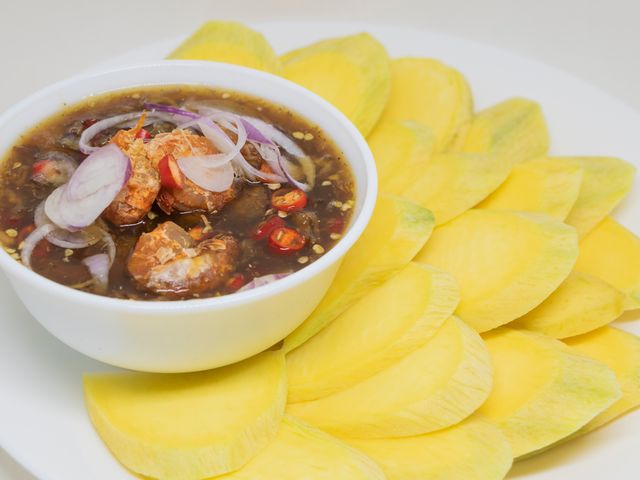
Charred Scotch Bonnet and Mango Dip
A vibrant Caribbean-inspired dip that balances the sweet, tropical notes of ripe mango with the smoky heat of charred Scotch bonnet peppers. Red onion and fresh cilantro add depth and brightness, while lime juice brings acidity to round out the flavors. The charring process mellows the pepper's intensity while adding a subtle smokiness. Serve with tortilla chips, fresh fruit, or crudités for a bold appetizer.
- Prep
- 15 min
- Cook
- 8 min
- Wait
- 10 min
- Total
- 33 min
- Makes
- About 1¾ cups (420 ml)
Steps
Before you start
- Select ripe, fragrant mangoes that yield slightly to pressure but are not soft
- Have a bowl of ice water ready for cooling the charred peppers
- Read through the heat level and adjust pepper quantity to your spice preference
Char the Scotch bonnets
- Heat a cast iron or heavy-bottomed skillet over medium-high heat for 2 minutes.
- Place the whole, uncut Scotch bonnet peppers directly onto the hot skillet.
- Allow them to char and blister, turning every 30–40 seconds with tongs, until the skin is blackened all over and the pepper is fragrant with a caramelized smell, about 4–5 minutes total.
- Do not break or cut open the peppers during charring, as this releases capsaicin fumes into the air.
+ Show details− Hide details
Ready when: Peppers are blackened and blistered all over with a smoky, caramelized aroma
Tip: Keep the kitchen well-ventilated or use a stovetop exhaust to avoid irritation from capsaicin fumes. Do not lean directly over the pan.
Cool and prepare peppers
- Transfer the charred peppers to a bowl of ice water and let them cool for 8–10 minutes.
- Once cool enough to handle, carefully remove the blackened skin by gently rubbing under cool running water or with your fingers.
- Cut each pepper in half lengthwise and remove the seeds and white membrane inside.
- You should have about ¼ cup (60 ml) of prepared pepper flesh.
- Discard the skin and seeds.
+ Show details− Hide details
Ready when: Peppers are cool enough to touch and skin is fully peeled away
Tip: Wear gloves if you have sensitive skin or are making this for the first time; capsaicin can irritate hands. Do not touch your eyes or face.
Blend mango and pepper
- Add the prepared mango chunks and charred pepper flesh to a blender or food processor.
- Add the lime juice, diced red onion, cilantro, and cumin if using.
- Pulse until the mixture is smooth but still retains a slight texture—you want a dip consistency, not a completely liquified purée.
- Stop and scrape the sides of the blender as needed.
- If the dip is too thick, add a tablespoon of water at a time and blend briefly to loosen it.
+ Show details− Hide details
Ready when: Mixture is smooth and spoonable, with a dip-like consistency
Tip: Do not over-blend; a slightly chunky texture is more appealing and easier to scoop than a completely smooth purée.
Season to taste
- Transfer the dip to a serving bowl.
- Taste a small spoonful and adjust with a pinch of sea salt and freshly ground black pepper.
- The dip should be bright, slightly smoky, and gently spicy—not overpowering.
- Add more lime juice if you want additional acidity, or a touch more cilantro for herbaceousness.
+ Show details− Hide details
Ready when: Flavors are balanced, with heat and sweetness in harmony
Tip: Always taste as you season; heat from the charred pepper can vary depending on the size and ripeness of the peppers, so salt and spice levels may need adjustment.
Good to know
Tips
- The charring step is essential: it mellows the pepper's raw heat and adds a smoky, sweet dimension that balances the fruit. Do not skip it in favor of raw pepper.
- For a silkier dip, pass the blended mixture through a fine-mesh sieve, pressing gently with a spatula to remove any fibrous bits. This creates a more refined texture but is optional.
- Serve the dip chilled or at room temperature with tortilla chips, plantain chips, fresh mango or pineapple chunks, or a colorful vegetable platter. It pairs especially well with coconut or jerk-seasoned dips.
- If you prefer less heat, use only 1 Scotch bonnet pepper and remove the seeds before charring. For extra heat, keep some seeds in the prepared pepper or add a small pinch of cayenne pepper after blending.
Make ahead
The dip can be made up to 1 day in advance. Store it in an airtight container in the refrigerator. The flavors actually deepen slightly after a few hours. Stir well before serving and taste again for seasoning, as flavors can mellow over time.
Storage & reheating
Room temperature: up to 2 hours (do not leave longer, as mango is perishable). Refrigerator: up to 3 days in an airtight container. Freezer: up to 2 months (though the texture becomes slightly less fresh after thawing). Thaw in the refrigerator overnight and stir vigorously to re-emulsify before serving.
Substitutions
- Scotch bonnet peppers, whole and uncut → Habanero pepper or Thai red chili pepper. Habaneros are slightly milder and fruitier; Thai chilies are spicier and more floral. The heat profile will change, so adjust quantity to taste.
- ripe mango → Ripe peach or pineapple (or a combination of both). Peach adds a softer sweetness; pineapple brings tropical tang. Use 2 medium peaches or about 1½ cups (280 g) fresh pineapple chunks. The flavor profile shifts from Caribbean mango to a more tropical-hybrid blend.
- fresh cilantro → Fresh mint or flat-leaf parsley. Mint adds coolness and brightness but less earthiness; parsley is more subtle. Use the same quantity. The result will be lighter and less herbaceous than the original.
- fresh lime juice → Fresh lemon juice or white vinegar. Lemon is slightly less sharp; vinegar adds a different tang and preservative benefit. Use the same quantity but taste, as vinegar is more assertive.