Charred Scallion Ginger Dressing
A bold, umami-rich dressing with charred scallions and fresh ginger. The high-heat sear brings out deep, complex sweetness in the scallions while the ginger adds brightness and warmth. Emulsified with sesame oil, this dressing coats greens, noodles, roasted vegetables, and grilled proteins with incredible flavor.
Steps
Before you start
- Have all ingredients measured and ready before you char the scallions—they cook quickly.
- Use a skillet large enough that scallions lay flat or in a single layer for even charring.
- Let the charred scallions cool slightly before blending so the dressing doesn't become too warm and lose its fresh notes.
Prep ingredients
- Trim the scallions and cut the white and light green parts into 2-inch (5 cm) pieces.
- Peel the fresh ginger and roughly chop it into ½-inch chunks.
- Measure out the rice vinegar, soy sauce, sesame oil, water, and honey.
- Have everything within arm's reach of your stove and blender.
+ Show details− Hide details
Ready when: All ingredients are prepped, measured, and ready to use
Tip: Prepping ahead makes the charring step quick and smooth—there's no time to waste once the pan is hot.
Heat the skillet
- Pour the neutral oil into a 12-inch skillet and set it over high heat.
- Let it heat for about 1 minute until the oil shimmers and moves freely in the pan.
- A drop of water should sizzle immediately on contact; you want the pan hot enough to char the scallions quickly without burning them.
+ Show details− Hide details
Ready when: Oil shimmers and ripples easily across the pan surface
Tip: Use a stainless steel or cast iron skillet; nonstick pans won't char as effectively and may not handle high heat well.
Char the scallions
- Carefully add all the scallion pieces to the hot oil.
- Let them sit undisturbed for 2 minutes without stirring—this is crucial for developing a deep, charred crust.
- After 2 minutes, stir the scallions and cook for another 2–3 minutes, tossing occasionally, until the surfaces are deeply browned with blackened patches and the scallions are soft and fragrant.
- The white parts should be charred and the light green parts lightly golden.
+ Show details− Hide details
Ready when: Scallions are soft and deeply charred with dark, blackened patches visible throughout
Tip: Do not stir constantly at the start; let them sit on the hot surface so they blister and char. Constant stirring prevents browning and steams the scallions instead.
Cool and transfer
- Transfer the charred scallions to a small bowl using a slotted spoon or tongs, leaving any excess oil in the skillet.
- Spread them in the bowl so they cool faster, about 5 minutes.
- You want them cool to room temperature before blending so the dressing stays vibrant and doesn't lose its fresh notes from heat.
+ Show details− Hide details
Ready when: Scallions are cool to the touch
Tip: Don't skip the cooling step—hot scallions will warm up the blender and the dressing, making it taste slightly cooked rather than fresh.
Blend the dressing
- Add the cooled charred scallions, fresh ginger, rice vinegar, soy sauce, toasted sesame oil, water, and honey to a blender.
- Blend on high speed for 30–45 seconds, until completely smooth and emulsified.
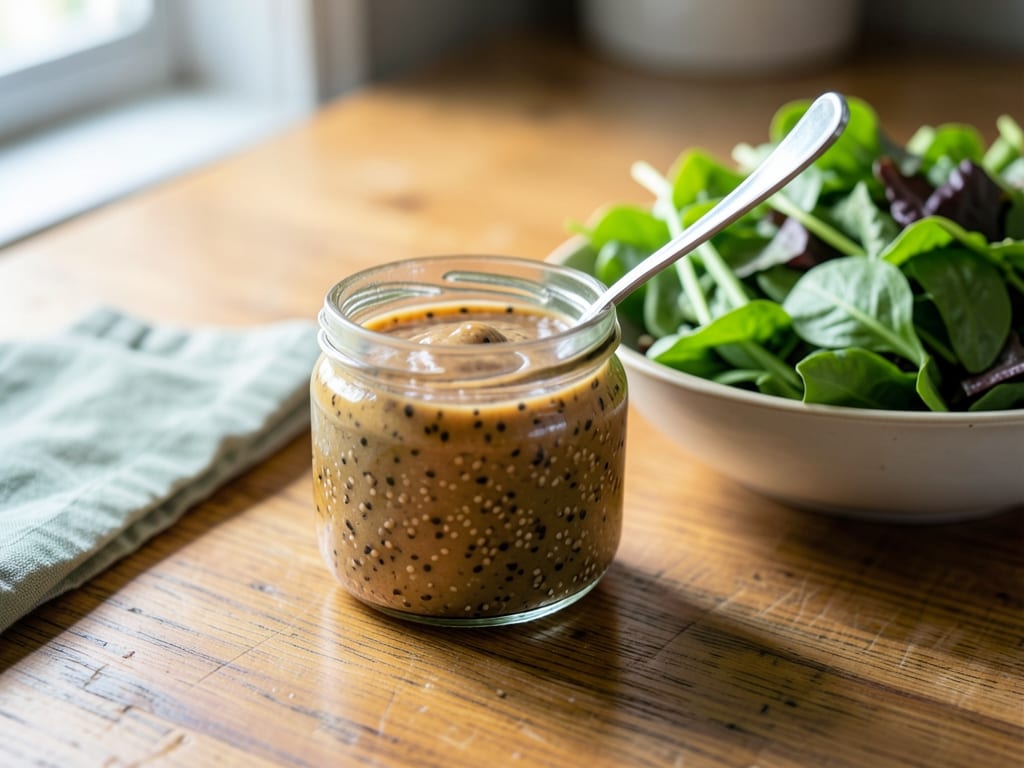
- The dressing should be creamy and pale with visible flecks of ginger but no large chunks of scallion.
+ Show details− Hide details
Ready when: Dressing is smooth, creamy, and emulsified with no large chunks of scallion or ginger visible
Tip: If the dressing is too thick, add 1 teaspoon of water at a time and blend again. It will thicken slightly as it cools.
Season and taste
- Pour the dressing into a bowl or jar and taste it.
- Add a small pinch of kosher salt and a crack of white pepper, then stir or shake well.
- Taste again and adjust the seasoning—it should be balanced between savory (soy sauce), acidic (vinegar), nutty (sesame oil), and slightly sweet (honey).
- Add more salt or vinegar as needed for your preference.
+ Show details− Hide details
Ready when: Dressing is well-seasoned and balanced in flavor
Tip: Start with just a pinch of salt—soy sauce is already salty, and you can always add more. White pepper dissolves seamlessly; black pepper specks can look gritty in a smooth dressing.
Good to know
Tips
- For extra depth, add ¼ teaspoon of white miso paste (dissolved in 1 tablespoon warm water) before blending to boost umami.
- This dressing is versatile: use it on Asian noodle salads, over steamed bok choy, as a marinade for tofu or grilled chicken, or drizzled on roasted root vegetables.
- If you don't have a blender, finely mince the charred scallions and ginger by hand, then whisk together with the remaining ingredients. The texture will be chunkier but still flavorful.
- The neutral oil in the skillet is crucial for high-heat charring without the risk of burning sesame oil, which has a lower smoke point.
Make ahead
Prepare up to 3 days ahead. Store in an airtight container in the refrigerator. The flavor deepens as it sits; shake or stir before using.
Storage & reheating
Room temperature (max 2 hours before serving): Store in an airtight container. Refrigerator: Up to 3 days in an airtight container. Freezer: Not recommended; the emulsion breaks when thawed. To reheat: Bring to room temperature and whisk or shake well before using.
Substitutions
- fresh ginger → ½ teaspoon ground ginger mixed with 1 tablespoon fresh lemon juice. Use if fresh ginger is unavailable. Ground ginger is more potent, so start with this amount and taste before adding more.
- toasted sesame oil → Walnut oil or extra-virgin olive oil. The dressing will lose its nutty, toasted depth, but will still be delicious and work well on greens and vegetables.
- rice vinegar → Champagne vinegar or white wine vinegar. Champagne vinegar is milder and slightly fruity; white wine vinegar is more acidic. Start with 2½ tablespoons and taste.
- honey or agave nectar → Maple syrup or brown sugar (1 teaspoon). Maple adds warmth and depth; brown sugar dissolves easily. Agave nectar also works and is more neutral.