Cantonese Soy Sauce Pan-Fried Noodles
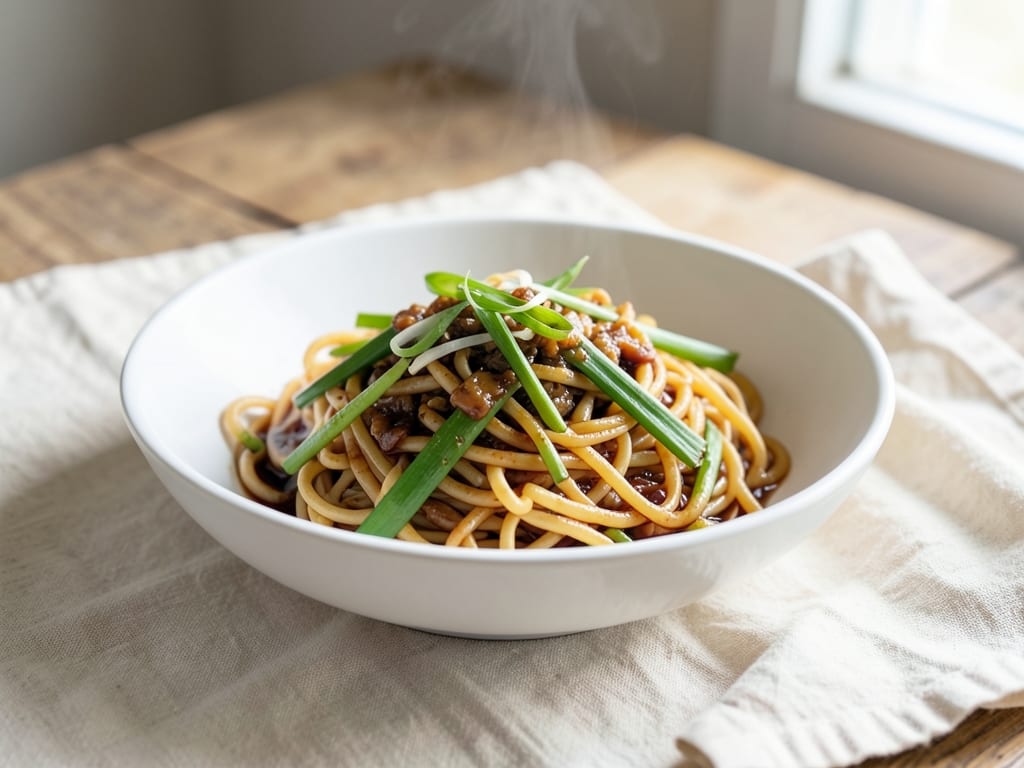
Thin egg noodles are fried in a hot skillet until golden and crisp at the edges, then tossed with a savory-sweet soy sauce, crunchy bean sprouts and scallions. It's a classic Cantonese noodle dish that comes together in about 30 minutes.
- Prep
- 15 min
- Cook
- 15 min
- Wait
- 5 min
- Total
- 35 min
- Makes
- 2 main servings (or 3–4 side servings)
Steps
Before you start
- Use thin fresh Hong Kong-style egg noodles (or dried thin egg noodles). Fresh noodles from the refrigerated section need only a brief loosening in hot water.
- Pat the bean sprouts and cooked noodles very dry. Surface water causes steaming instead of crisping.
- Have everything chopped and the sauce mixed before you turn on the heat; the stir-frying goes fast.
- Use a large 12-inch (30 cm) nonstick or well-seasoned carbon steel skillet or wok so the noodles can spread out.
Mix the sauce
- In a small bowl, stir together the light soy sauce, dark soy sauce, oyster sauce, sugar, sesame oil, white pepper and water until the sugar dissolves.
- Set it next to the stove.
+ Show details− Hide details
Ready when: Sugar is fully dissolved and the sauce looks uniformly dark brown.
Prep the vegetables
- Rinse the bean sprouts in a colander and shake off all water, then spread on a towel to dry.
- Cut the scallions into 2-inch (5 cm) lengths, halving the thick white parts lengthwise.
- Cut the ginger, if using, into thin matchsticks.
+ Show details− Hide details
Ready when: Sprouts feel dry to the touch, not dripping.
Tip: Wet sprouts release water in the pan and make the noodles soggy.
Boil the noodles
- Bring a large pot of water to a boil.
- Add the noodles and loosen them with chopsticks.
- Cook fresh noodles for 30–60 seconds, or dried noodles according to the package minus 1 minute, so they are just tender with a slight bite.
- Drain, rinse briefly under cold water to stop the cooking, and shake well.
+ Show details− Hide details
Ready when: Noodles are separated, flexible, and still slightly firm in the center.
Tip: Do not overcook; they cook again in the pan and will turn mushy.
Dry the noodles
- Spread the drained noodles on a clean towel or a few layers of paper towels and pat the top dry.
- Let them air-dry for 5 minutes, fluffing once with chopsticks.
+ Show details− Hide details
Ready when: Noodle surface looks matte and feels tacky rather than wet.
Tip: Dry noodles are the key to golden, crisp edges.
Crisp the first side
- Heat a 12-inch (30 cm) skillet over medium-high heat for 1 minute.
- Add 2 tablespoons (30 ml) of the oil and swirl to coat.
- Add the noodles, spreading them into an even layer about 1 inch (2.5 cm) thick.
- Press gently with a spatula and cook without stirring for 3–4 minutes.
+ Show details− Hide details
Ready when: Underside is deep golden brown and the noodles hold together as a cake when you lift an edge.
Tip: Resist stirring; the browning only happens with steady contact.
Flip and crisp
- Slide a wide spatula under the noodle cake and flip it in sections if it is too large to flip whole.
- Drizzle the remaining 1 tablespoon (15 ml) of the noodle oil around the edge.
- Cook another 3 minutes, then transfer the noodles to a plate.
+ Show details− Hide details
Ready when: Both sides are golden brown with some darker crisp spots.
Tip: If the noodles are browning too fast, reduce heat to medium.
Stir-fry the vegetables
- Return the pan to high heat and add the remaining 1 tablespoon (15 ml) of oil.
- Add the ginger, if using, and the white scallion pieces and stir-fry for 15 seconds until fragrant.
- Add the bean sprouts and green scallions and toss for 45–60 seconds.
+ Show details− Hide details
Ready when: Sprouts are glossy and slightly softened but still crunchy; scallion greens are bright.
Tip: Keep everything moving so the sprouts do not release water.
Sauce and toss
- Return the noodles to the pan, loosening them into pieces with the spatula.
- Pour the sauce evenly over the noodles and toss with tongs or chopsticks for 1 minute, until the sauce is absorbed and no wet pools remain in the pan.
+ Show details− Hide details
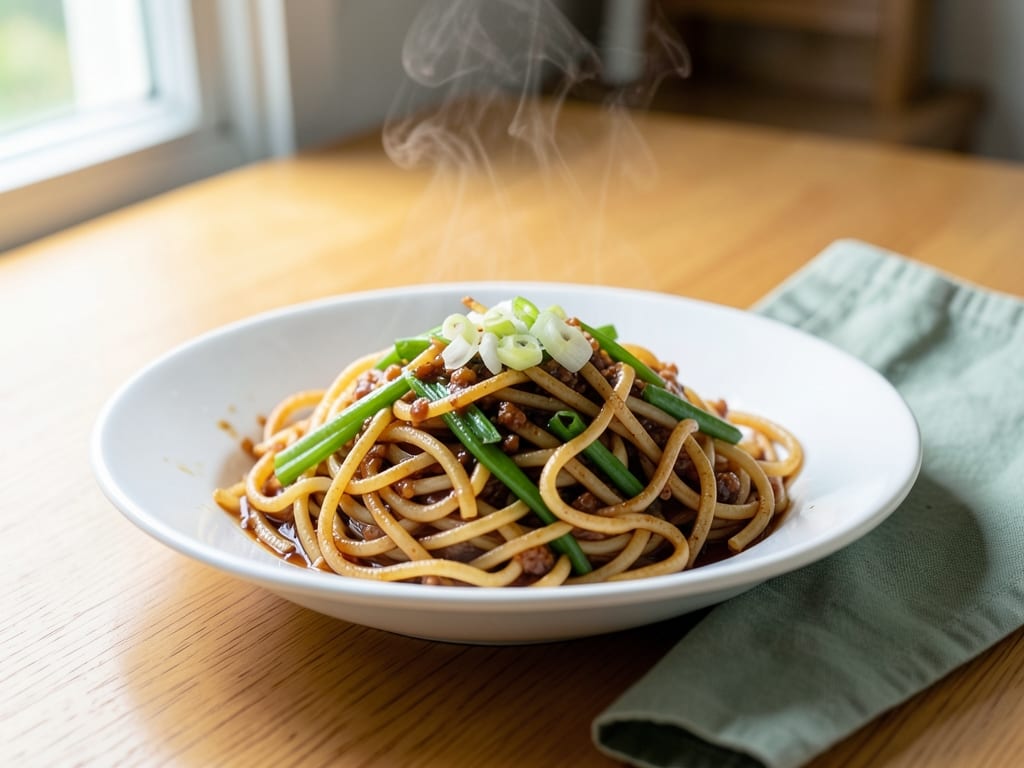
Ready when: Noodles are evenly glossy dark brown, with the sauce absorbed and fragrant steam rising.
Tip: Taste a noodle; add a splash of light soy if you want it saltier.
Serve right away
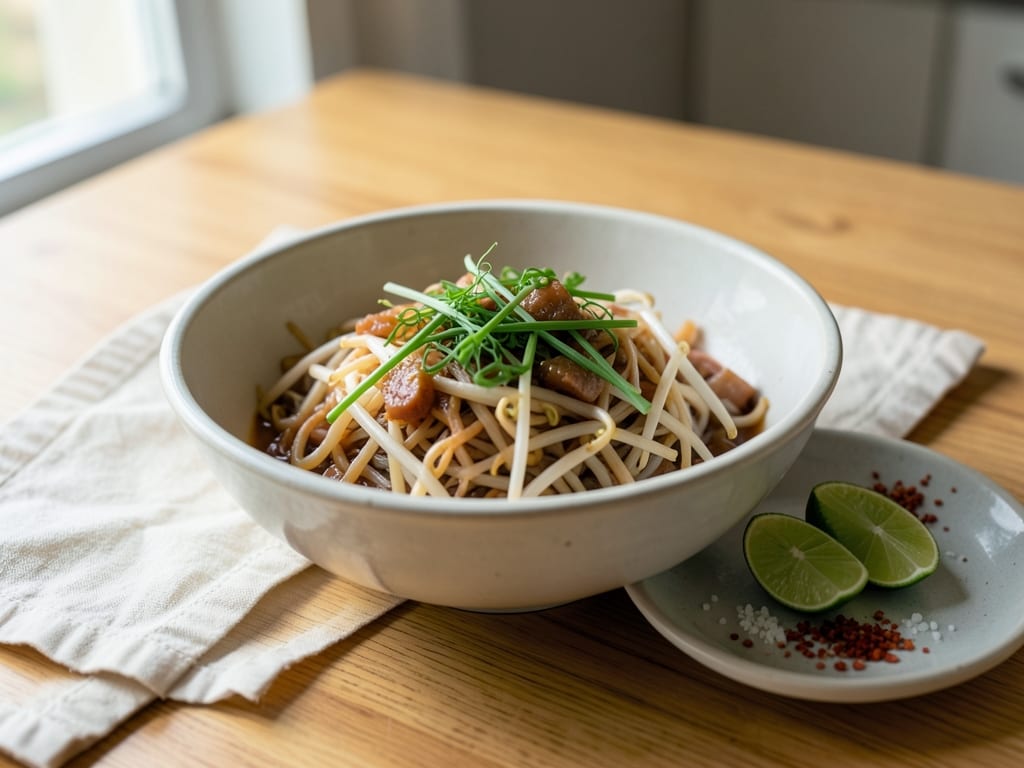
- Divide the noodles between two warm plates, piling the vegetables on top.
- Serve immediately while the edges are still crisp.
+ Show details− Hide details
Ready when: Edges are still crisp and the dish is steaming hot.
Good to know
Tips
- Dry noodles and a properly hot pan are what give the crisp, golden edges; do not skip the air-dry step.
- Add the sauce at the very end to keep the noodles from softening.
- Cook in a single batch for two servings; doubling in the same pan crowds the noodles and prevents crisping. Cook in two batches instead.
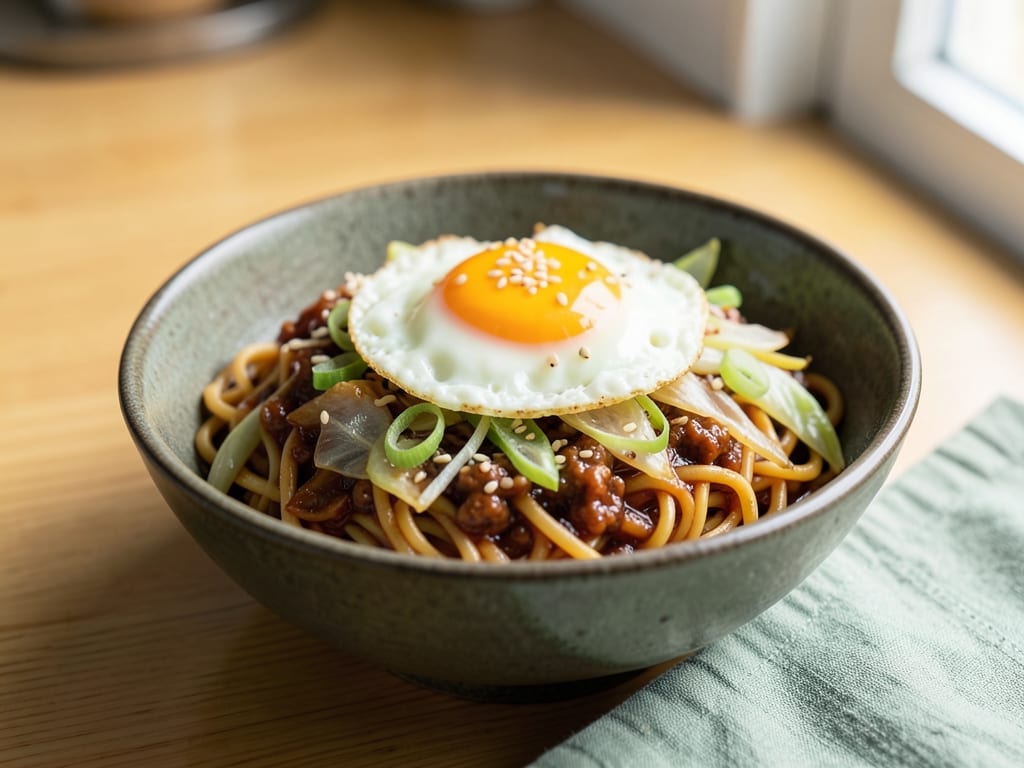
- For a heartier meal, top with a fried egg or add sliced cooked chicken or char siu in the final toss.
Make ahead
"Boil, rinse, and dry the noodles up to 1 day ahead; toss with 1 teaspoon oil and refrigerate in an airtight container. Mix the sauce up to 3 days ahead and refrigerate."
Storage & reheating
"Best eaten immediately. Refrigerate leftovers in an airtight container up to 3 days. Do not leave at room temperature more than 2 hours. Freezing is not recommended because the sprouts turn limp. Reheat in a hot skillet with 1 teaspoon oil and a splash of water for 2–3 minutes, stirring, until steaming hot."
Substitutions
- thin fresh Hong Kong-style egg noodles → Dried chow mein noodles or thin spaghetti. Thin spaghetti works in a pinch; cook it 1 minute less than the package directs. Texture will be less springy.
- dark soy sauce → Extra light soy sauce plus 1/2 teaspoon molasses or brown sugar. Provides color and mild sweetness, but it will be a bit less deep.
- oyster sauce → Vegetarian mushroom oyster sauce. Makes the dish vegetarian-friendly with similar savory depth.
- neutral oil such as peanut or vegetable oil → Any high-heat oil such as canola or avocado oil. Avoid olive oil, which burns at this heat.