
Budget Orange and Olive Oil Cookies
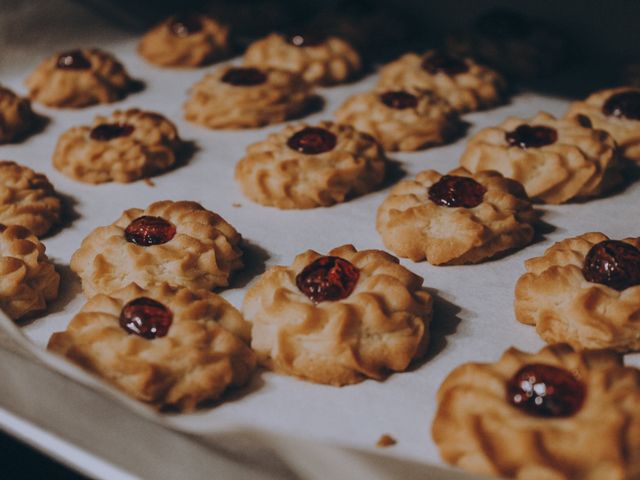
Tender, citrus-brightened cookies made with fruity olive oil instead of butter, delivering rich flavor at a fraction of the cost. These Mediterranean-style treats feature warm orange zest and a hint of honey, creating a naturally sweetened cookie that's both affordable and sophisticated. Perfect for afternoon tea or a light dessert.
Steps
Before you start
- Preheat your oven to 375°F (190°C)
- Line two large baking sheets with parchment paper
- Zest the oranges before juicing—you need fresh zest for the best flavor
Mix wet ingredients
- In a medium bowl, whisk together the olive oil, honey, sugar, orange zest, and orange juice until well combined and smooth.
- The mixture should be emulsified and pale—this takes about 1 minute of whisking.
+ Show details− Hide details
Ready when: mixture is smooth and slightly thick
Tip: Whisking the oil and honey well prevents greasy or dense cookies—good emulsification creates a tender crumb.
Combine dry ingredients
- In a small bowl, whisk together the flour, baking powder, and salt until evenly distributed.
+ Show details− Hide details
Ready when: no lumps visible in the mixture
Fold together dough
- Pour the dry ingredients into the wet ingredients and fold together gently with a wooden spoon until just combined.
- Do not overmix—the dough should be soft, slightly sticky, and loosely cohesive.
- Stop as soon as no dry flour streaks remain.
+ Show details− Hide details
Ready when: no visible dry flour; dough is soft and sticky
Tip: Overmixing develops gluten and makes cookies tough. Fold gently and walk away while there are still a few flour streaks if needed.
Portion onto baking sheets
- Drop heaping teaspoons of dough onto the prepared baking sheets, spacing them about 2 inches (5 cm) apart—these cookies spread slightly.
- You should fit about 12 cookies per sheet.
- The dough will be sticky; lightly wet a spoon or your fingers to help release each portion.
+ Show details− Hide details
Ready when: all dough is portioned and spaced evenly
Tip: Wetting your spoon prevents sticking and makes portioning faster. Don't worry about perfect shapes—rustic cookies are part of their charm.
Bake until goldenOven 375°F / 190°C
- Bake at 375°F (190°C) for 10–12 minutes, rotating the baking sheets halfway through baking time.
- The cookies are done when the edges are light golden and the centers feel just set when lightly touched—they should not be dark brown.
+ Show details− Hide details
Ready when: edges light golden, centers set but still tender when pressed
Tip: Don't overbake—these cookies continue to firm as they cool. Remove them while still slightly soft in the center for the best tender texture.
Cool on baking sheets
- Let the cookies cool on the baking sheets for 5 minutes without moving them.
- This allows them to firm up enough to transfer without breaking.
- Then transfer them to a wire rack to cool completely.
+ Show details− Hide details
Ready when: cookies are set enough to lift with a spatula
Good to know
Tips
- These cookies cost significantly less than butter-based cookies while tasting luxurious—olive oil is often cheaper per cup than butter and brings Mediterranean sophistication.
- The dough is wetter than typical cookie dough; this is intentional and makes the baked cookies tender, not cake-like. Trust the recipe even if it feels loose.
- For crispier cookies, bake 1–2 minutes longer and cool completely before storing. For chewier cookies, remove them slightly earlier and store with a slice of bread in the container.
- Make a double batch and freeze unbaked cookie dough on a baking sheet, then transfer frozen dough to a freezer bag. Bake from frozen, adding 1–2 extra minutes to the baking time.
Storage & reheating
Store in an airtight container at room temperature for up to 5 days. These cookies stay tender thanks to the olive oil. You can also freeze baked cookies in a sealed freezer bag for up to 2 months and thaw at room temperature for 30 minutes before serving.
Substitutions
- extra-virgin olive oil → light olive oil or neutral vegetable oil. Extra-virgin has more flavor; light oil works but the cookies will be less distinctive. Avoid refined olive oil with strong peppery notes that clash with orange.
- honey → agave nectar or light corn syrup. Use the same amount. Honey adds depth; agave is more neutral but cookies will be slightly less complex.
- fresh orange zest → lemon zest or 1 tablespoon dried orange peel, finely crumbled. Lemon brings sharper citrus; dried peel concentrates the flavor and works well if you add it to the wet mixture 30 seconds early.
- fresh orange juice → lemon juice or water. Juice adds moisture and flavor; water keeps the recipe budget-friendly but omit any lemon zest if you substitute.
More cookies
See all →
Find more like this
- Meal
- Dessert
- Cuisine
- Mediterranean
- Method
- Oven