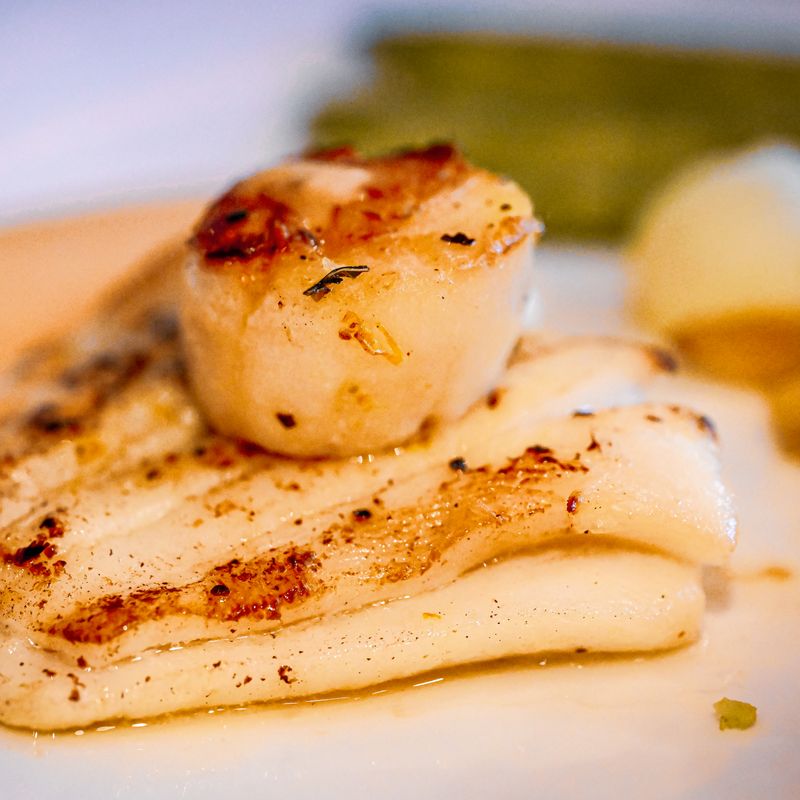
Belizean Hudut: Pan-Seared Snapper with Pearl Couscous and Coconut Broth
Hudut is a beloved Belizean seafood dish combining tender pan-seared snapper fillets with pearl couscous simmered in a silky coconut broth infused with tomatoes, cilantro, and garlic. Crispy fried plantain dumplings (the traditional "hudut" element) crown each bowl. This stovetop version honors the classic while keeping preparation manageable for home cooks. The result is a warm, aromatic one-pot meal with contrasting textures and tropical flavors.
- Prep
- 25 min
- Cook
- 35 min
- Wait
- 10 min
- Total
- 1 hr 10 min
- Makes
- 4 servings (1 snapper fillet and 1 plantain dumpling per person)
Steps
Before you start
- Pat snapper fillets dry and bring to room temperature 15 minutes before cooking
- Peel and cut plantains ahead of time
- Have all ingredients measured and within arm's reach—the broth cooks quickly once you start
Fry plantain dumplingsOven 350°F / 175°C
- Heat vegetable oil to 350°F (175°C) in a deep pot or Dutch oven.
- Working in batches, carefully lower plantain chunks into the hot oil using a slotted spoon.
- Fry for 4–5 minutes until golden and tender.
- The pieces should yield slightly when pressed with the back of a spoon.
- Remove to a paper-towel-lined plate.
- Once cool enough to handle (about 2 minutes), gently press each piece with the back of a fork to flatten slightly, creating a small disk or patty.
- Set aside on fresh paper towels.
- Do not skip the second frying stage—it gives dumplings their characteristic crispy exterior.
+ Show details− Hide details
Ready when: Plantain pieces are golden brown and tender when pierced with a fork
Tip: Use a thermometer to ensure oil stays at 350°F; hotter oil will darken the outside before the inside is soft.
Build the coconut broth base
- Heat 2 tablespoons (30 ml) olive oil in a large heavy-bottomed pot over medium heat.
- Add diced onion and cook for 3–4 minutes, stirring occasionally, until softened and translucent.
- Add minced garlic and cook for 1 minute more until fragrant.
- Stir in ground cumin and allspice and cook for 30 seconds until the spices bloom.
- Add the canned tomatoes (or fresh diced tomatoes) and stir well, breaking up any large pieces.
- Cook for 2 minutes.
- Pour in the coconut milk and fish stock, stirring to combine.
- Bring the broth to a gentle simmer over medium heat.
+ Show details− Hide details
Ready when: Broth is simmering gently with small bubbles breaking the surface
Tip: Don't let the broth boil aggressively; a gentle simmer keeps the flavors refined and the texture silky.
Cook pearl couscous
- Stir pearl couscous into the simmering broth.
- Reduce heat to medium-low and simmer uncovered for 8–10 minutes, stirring occasionally, until the couscous is tender and has absorbed most of the liquid.
- The broth should still be slightly soupy, not completely dry—aim for a consistency where the couscous swims a little in the liquid.
- Taste and adjust seasoning with salt and pepper as needed.
+ Show details− Hide details
Ready when: Couscous is tender and the broth has slightly thickened but remains soupy
Tip: Stir the couscous now and then to prevent sticking; pearl couscous is heartier than regular couscous and won't overcook easily.
Season and sear snapper
- While couscous cooks, pat the snapper fillets dry with paper towels.
- Season both sides generously with 1 teaspoon kosher salt and ¾ teaspoon black pepper.
- Heat remaining 1 tablespoon (15 ml) olive oil in a large skillet over medium-high heat until shimmering.
- Carefully lay snapper fillets skin-side up in the skillet and sear for 4–5 minutes without moving them.
- The bottoms should turn opaque and golden.
- Flip gently and cook the other side for 2–3 minutes until just cooked through (the flesh should flake easily with a fork and reach 145°F/63°C internally if using a thermometer).
- Transfer to a clean plate.
+ Show details− Hide details
Ready when: Fish is opaque throughout and flakes easily with a fork; internal temperature reaches 145°F (63°C)
Tip: Don't move the fillets while they sear—letting them sit undisturbed creates a golden crust and prevents sticking.
Finish and serve
- Ladle the warm couscous and coconut broth into four deep bowls, dividing evenly.
- Top each bowl with one seared snapper fillet.
- Place one crispy plantain dumpling on top or to the side of each fillet.
- Scatter fresh cilantro over the top of each bowl.
- Serve immediately with lime wedges on the side for squeezing.
+ Show details− Hide details
Tip: Serve the bowls hot—the warmth brings out the aromatics of cilantro and coconut broth.
Good to know
Tips
- Toast the cumin and allspice in a dry pan for 30 seconds before adding them to the onion for deeper, more complex spice flavor—a Belizean cooking technique.
- For extra heat and authenticity, add a Scotch bonnet or habanero pepper to the broth simmering stage (remove before serving), or pass hot sauce at the table.
- Freshly squeezed lime juice is essential; bottled lime juice lacks the bright acidity that balances the richness of coconut. Always finish each bowl with a squeeze of fresh lime.
- If snapper is difficult to find, check with your fishmonger or specialty market; many source it fresh. Ask for the thickest fillets available so they sear evenly without overcooking the thinner edges.
Make ahead
Plantain dumplings can be fried up to 4 hours ahead and stored at room temperature in an airtight container. Reheat in a 300°F (150°C) oven for 5–7 minutes before serving. The broth base (onion, garlic, tomato, coconut milk, and stock) can be made 1 day ahead, chilled, and reheated gently before adding couscous.
Storage & reheating
Store leftover snapper and broth together in an airtight container in the refrigerator for up to 2 days. Reheat gently on the stovetop over low heat until warmed through (do not boil, as fish can become tough). Plantain dumplings soften over time; store separately in an airtight container at room temperature for up to 1 day or freeze for up to 1 month, then reheat in a 300°F (150°C) oven. The dish does not freeze well as a complete meal due to texture changes in the couscous.
Substitutions
- red snapper or mahi-mahi fillets, skin removed → Grouper, mahi-mahi, or sea bass fillets. All are mild, white-fleshed fish that sear beautifully and hold up well in broth. Adjust cooking time slightly if fillets vary in thickness.
- pearl_couscous → Regular couscous or quinoa. Use the same quantity and cooking method; regular couscous will be softer and more delicate, while quinoa will have a nuttier texture.
- green plantains, peeled → Malanga (taro root) or cassava. These starchy root vegetables fry similarly to plantains and create the same crispy dumpling texture. Peel and cut into the same-sized chunks.
- fish or chicken stock → Vegetable broth or additional chicken stock. Fish stock adds depth, but vegetable or chicken broth will still produce a delicious broth. The coconut milk carries enough richness either way.
More quinoa & couscous
See all →


Find more like this
- Meal
- Dinner
- Cuisine
- Caribbean
- Method
- StovetopGrill & BBQ
- Quick & Easy
- One-Pot