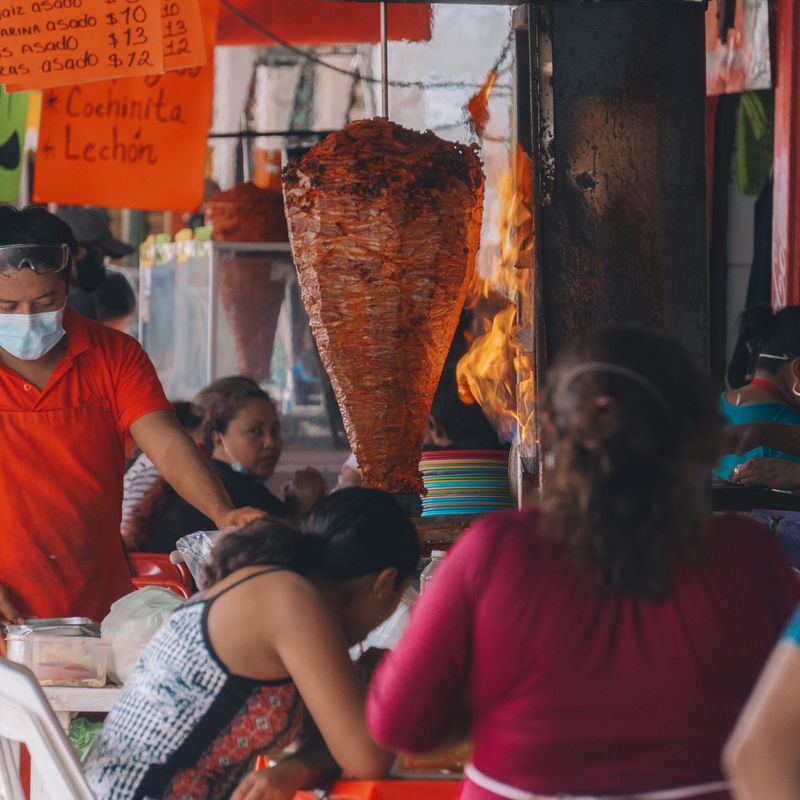
Belize Orange Walk Recado Pork Shawarma
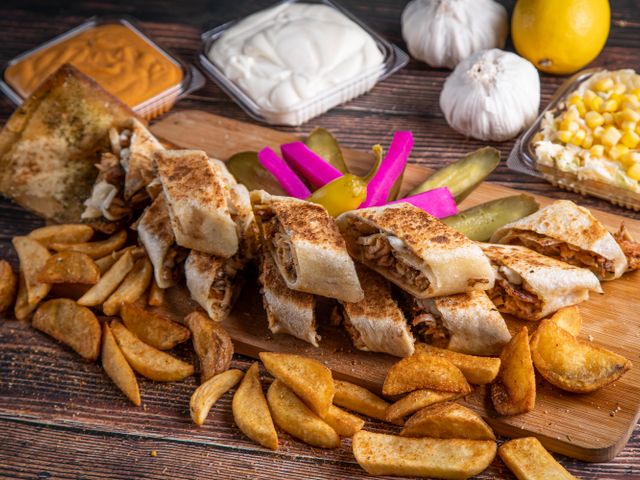
A Caribbean-Middle Eastern fusion shawarma marrying Belizean recado (annatto, cumin, garlic, and citrus spice paste) with vertical-spit technique. Succulent pork shoulder is coated in this vibrant, earthy marinade and slow-roasted until deeply caramelized at the edges, then shaved and served with warm pita, cilantro-lime crema, and pickled onions. The result is tender, complex-spiced meat with smoky-sweet notes and a hint of orange brightness.
- Prep
- 30 min
- Cook
- 4 hr
- Wait
- 8 hr
- Total
- 12 hr 30 min
- Makes
- 8 shawarma wraps (1 lb/450 g cooked pork per wrap)
Steps
Before you start
- Pork shoulder must marinate at least 8 hours or up to 24 hours ahead
- Preheat oven to 325°F (163°C) for the final roasting
- Set up a vertical spit, rotisserie, or heavy skewer if available; a covered roasting pan works too
- Have pita bread, crema, and pickled onions ready when the meat finishes cooking
Bloom spices, make paste
- In a small dry skillet over medium heat, toast the cumin seeds, cloves, and peppercorns for 1–2 minutes, stirring often, until fragrant.
- Do not burn.
- Transfer to a food processor.
- Add the achiote paste (or annatto seeds), garlic cloves, oregano, salt, and cilantro.
- Pulse until a rough paste forms.
- Stream in the orange juice, lime juice, and olive oil while pulsing until you have a smooth, pourable marinade the consistency of wet sand.
- Taste and adjust salt or citrus as needed.
+ Show details− Hide details
Ready when: Paste is smooth, fragrant, and the color of burnt orange
Tip: If using whole achiote seeds, soak them in the orange juice for 5 minutes before blending to soften them.
Coat pork with recado
- Pat the pork shoulder strips dry with paper towels.
- Transfer them to a large mixing bowl.
- Pour the recado marinade over the pork and, using your hands or two spoons, coat every piece thoroughly, working the marinade into any crevices.
- Cover the bowl tightly with plastic wrap and refrigerate for at least 8 hours, preferably 12–24 hours.
- The longer the pork sits, the deeper the flavor and color penetrate.
+ Show details− Hide details
Ready when: Pork is evenly coated and has absorbed color; marinade should cling to the meat
Tip: Marinate in the coldest part of your refrigerator, preferably below 40°F (4°C), to prevent bacterial growth.
Build the spit stack
- Remove the marinated pork from the refrigerator 30 minutes before cooking to take the chill off.
- If using a vertical spit, rotisserie, or heavy metal skewer, thread the pork strips onto it by piercing them lengthwise so they form a tall, compact cone or stack.
- If you do not have a spit, arrange the strips standing upright or leaning at an angle in a foil-lined roasting pan (13×9 inches or larger), propping them with crumpled foil or additional pork scraps so they stand at least 4–5 inches tall and don't touch the pan bottom.
- This vertical arrangement allows hot air to circulate and caramelize all sides evenly.
+ Show details− Hide details
Ready when: Pork is securely stacked and balanced on the spit or propped upright in the pan
Tip: If your pork strips vary greatly in thickness, place thicker pieces toward the center and thinner pieces on the outside so everything cooks evenly.
Roast until caramelized exteriorOven 325°F / 165°C
- Preheat your oven to 325°F (163°C).
- Place the spit-roasted pork (or the roasting pan) in the center rack.
- Roast for 3.5–4 hours, rotating the spit every 20–30 minutes if using a stationary oven (to ensure even browning on all sides), or every 45 minutes if using a roasting pan, turning the stack as you go.
- The meat should begin to caramelize and darken at the edges after the first hour, turning deep mahogany-brown after 2–3 hours.
- If large drops of fat pool, use a bulb baster to remove some, or tent loosely with foil if the edges begin to char too quickly.
- The internal temperature should reach 160°F (71°C) when probed in the thickest part (away from the spit).
+ Show details− Hide details
Ready when: Pork reaches 160°F (71°C) internal temperature; exterior is mahogany-brown and slightly crispy at the edges; meat shreds easily when tested with a fork
Tip: Use an instant-read thermometer; residual heat will bring the temperature up another 2–3 degrees after removal. Do not exceed 165°F (74°C) or the meat will dry out.
Rest and shave meatOven 200°F / 95°C
- Remove the spit-roasted pork from the oven and let it rest for 10–15 minutes on a cutting board or in its roasting pan.
- This allows juices to redistribute and makes slicing cleaner.
- Using a sharp carving knife or meat slicer, shave thin slices (¼ inch / 6 mm thick) from the crispy exterior toward the center, working all the way around the stack.
- Try to capture some of the caramelized edges with each slice.
- If the pork begins to cool, return the stack to a 200°F (93°C) oven for 10 minutes to warm it again (slicing hot meat is easier).
- Alternatively, if you have a proper shawarma vertical roaster with a rotating knife, use it as directed.
+ Show details− Hide details
Ready when: Sliced pork is tender and still warm (130–140°F / 54–60°C), with crispy, caramelized edges and juicy interior
Tip: If slicing is difficult, chill the pork slightly (5 minutes in the freezer) so the exterior firms up, making clean, thin cuts easier.
Warm pitas and assembleOven 300°F / 150°C
- Just before serving, warm the pita bread.
- Wrap them in foil and place in a 300°F (149°C) oven for 3–5 minutes, or hold them directly over a gas flame for a few seconds per side until soft and pliable.
- Lay each warm pita on a plate or in your hand.
- Spoon a small dollop of lime crema down the center.
- Layer 2–3 oz (55–85 g) of warm shawarma pork onto the crema, then top with a spoonful of pickled red onions.
- Add sliced tomato and cucumber if desired.
- Fold or roll the pita, tucking in the sides.
+ Show details− Hide details
Ready when: Pita is warm, soft, and slightly steamed; crema is creamy, and all fillings are in place and ready to eat
Tip: Warm pitas just before assembly so they stay supple; cold pita will crack and tear when you try to fold or roll it.
Good to know
Tips
- If you don't have a vertical spit or rotisserie, a standing oven-safe meat thermometer can act as a makeshift spit. Alternatively, roast the pork horizontally in a covered braising pan at 325°F (163°C) for 4–5 hours, stirring every hour, until the meat is fall-apart tender and develops a caramelized crust. You'll miss the traditional vertical-spit texture, but the flavor will be excellent.
- The recado marinade develops deeper color and flavor in the cold; don't skip the long marinating time. The orange and lime juice will begin to cure the pork slightly, resulting in better texture.
- Buy pork from a reliable source and handle it safely: marinate below 40°F (4°C), and ensure the internal temperature reaches 160°F (71°C) for food safety.
- Recado is a cornerstone of Belizean cooking; fresh cilantro and citrus are essential—don't substitute dried cilantro or bottled juice for this recipe, as it will taste flat and inauthentic.
Make ahead
Pork can be marinated up to 24 hours ahead; the longer it sits, the deeper the spice flavor. The roasted pork stack (fully cooked) can be held in a 200°F (93°C) oven for up to 2 hours without drying out if you keep it covered loosely with foil. Pickled onions can be made 1–2 days ahead and stored in the refrigerator. Lime crema can be mixed up to 4 hours ahead and refrigerated.
Storage & reheating
Leftover cooked, sliced pork keeps refrigerated in an airtight container for 3–4 days. Reheat gently in a 300°F (149°C) oven (wrapped in foil) for 10–15 minutes until warmed through. Do not microwave, as it will dry out the meat. Shaved pork can be frozen for up to 3 months in an airtight freezer bag; thaw in the refrigerator overnight and reheat as above. Pita bread, crema, and pickled onions do not freeze well.
Substitutions
- achiote paste (or annatto seeds) → 1 tbsp (5 g) smoked paprika + 1 tbsp (5 g) cayenne pepper. This will lack the earthy annatto flavor but will provide color and spice. Reduce the salt slightly if using cayenne alone.
- fresh orange juice, strained → ¾ cup (180 ml) fresh grapefruit juice mixed with 1 tbsp orange zest. Grapefruit is more tart; reduce lime juice to 2 tbsp to balance acidity. The result will be slightly more bitter but still authentic-tasting.
- crema or sour cream mixed with lime juice and cilantro → Plain Greek yogurt (1 cup / 240 ml) mixed with 3 tbsp lime juice and 3 tbsp fresh cilantro, plus a pinch of salt. Greek yogurt is tangier and lower in fat than crema or sour cream; the result will be lighter but less creamy.
- pita bread or flatbread → Large flour tortillas (8-inch / 20 cm) or naan bread, warmed. Both work well as a wrap; naan will be thicker and fluffier, tortillas thinner and more pliable.
More shawarma & gyros
See all →


Find more like this
- Meal
- Dinner
- Cuisine
- Caribbean
- Main ingredient
- Pork Shoulder
- Diet
- Sugar-Free
- Method
- OvenGrill & BBQ