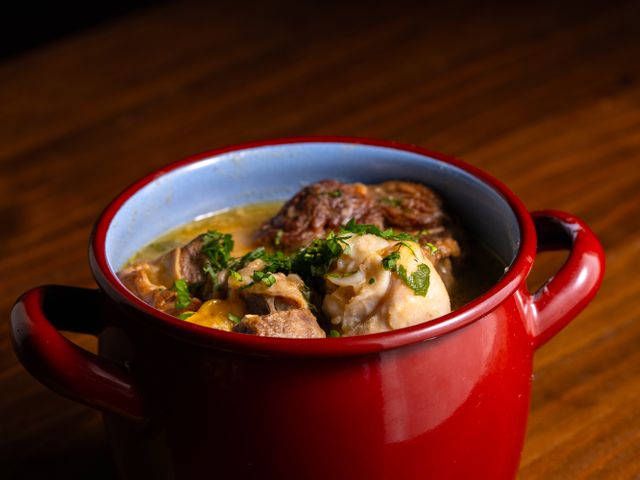
Barbados Pigeon Pea Stew
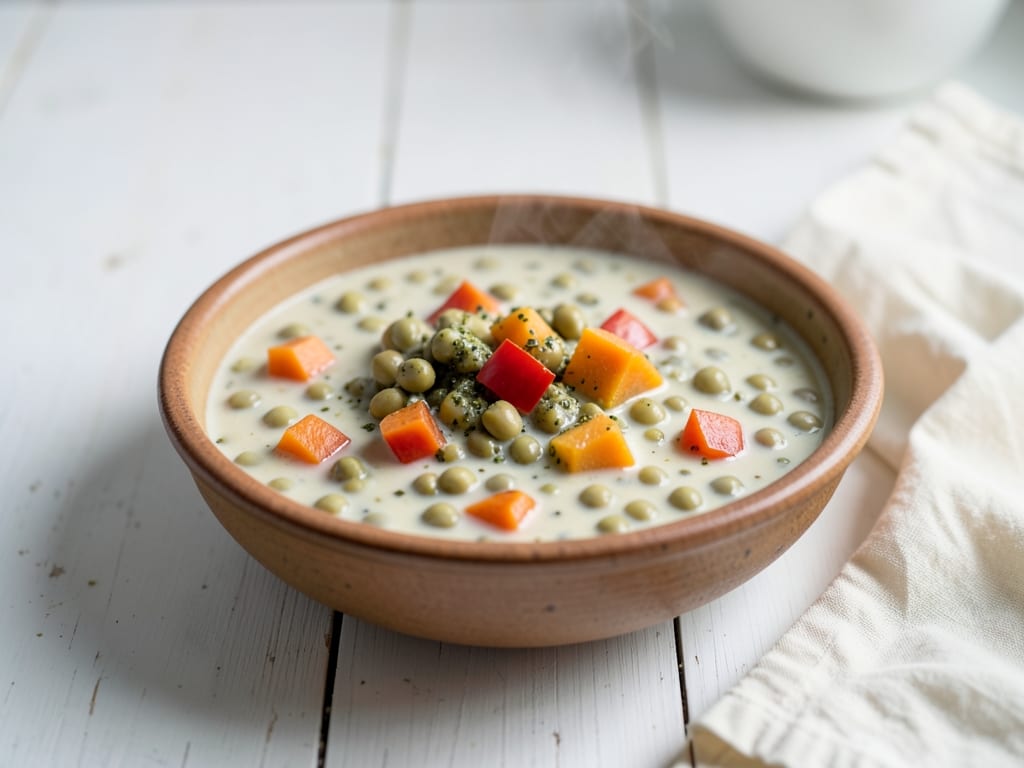
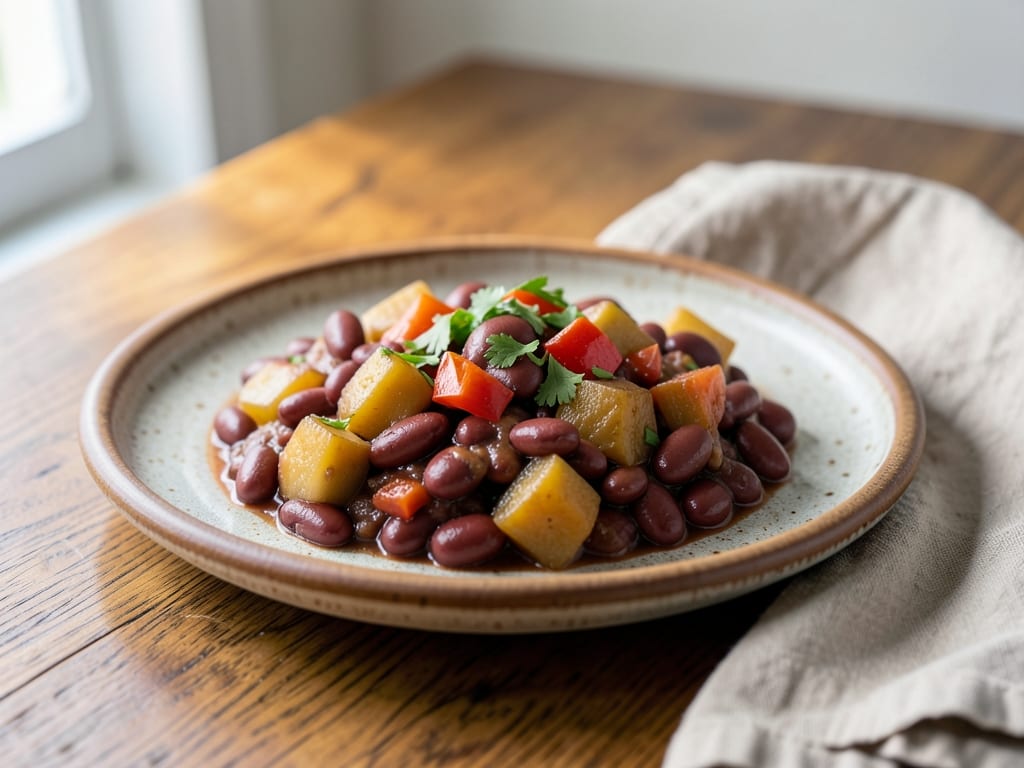
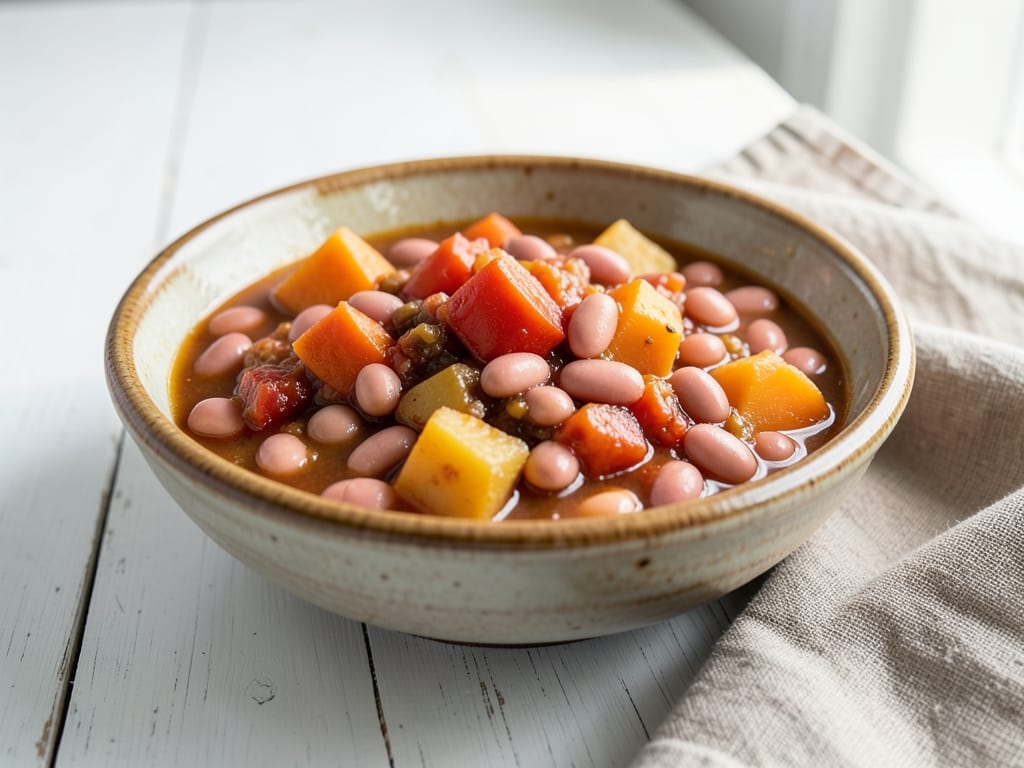
A warming, deeply flavored Barbadian stew built on soft pigeon peas and okra in a broth infused with garlic, thyme, and scotch bonnet heat. Fluffy dumplings cook right in the pot, soaking up all the savory spices. This is comfort food that reflects generations of Caribbean home cooking—hearty enough to stand alone, or served alongside rice and a fresh salad.
- Prep
- 25 min
- Cook
- 55 min
- Wait
- 10 min
- Total
- 1 hr 30 min
- Makes
- 6 servings (about 8 cups)
Steps
Before you start
- If using dried pigeon peas, soak overnight or boil for 10 minutes then soak 1 hour before cooking
- Trim okra just before use to prevent excess sliminess
- Have all aromatics prepped and near the stove—this cooks quickly once the broth starts
Sauté the aromatics
- Heat the oil in a large pot over medium heat.
- Add the diced onion and cook for 3 minutes, stirring occasionally, until softened and fragrant.
- Stir in the minced garlic and cook for 1 minute more until the raw garlic smell fades.
+ Show details− Hide details
Ready when: Garlic is golden and fragrant, onion is translucent
Tip: Don't let the garlic brown—it will taste bitter and harsh the whole stew.
Build the broth
- Pour in the stock.
- Add the thyme sprigs, scotch bonnet pepper (if using), salt, and black pepper.
- Stir well.
- Bring to a simmer over medium-high heat, then reduce to medium and let it bubble gently.
+ Show details− Hide details
Ready when: Broth is simmering with gentle rolling bubbles
Tip: If using a scotch bonnet, leave it whole so it flavors the stew without overwhelming it; fish it out before serving.
Add pigeon peas
- Stir in the drained pigeon peas.
- Bring the mixture back to a gentle simmer and cook for 8–10 minutes to warm them through and meld the flavors.
- Taste and adjust seasoning as needed.
+ Show details− Hide details
Ready when: Pigeon peas are heated through, broth smells rich and spiced
Tip: If using dried peas, they should already be tender; if still firm, simmer longer until they soften.
Make the dumpling dough
- While the stew simmers, combine the flour, salt, and butter in a small bowl.
- Add the cold water a little at a time, mixing with a fork or your fingers until a soft, barely sticky dough forms.
- You may not need all the water, or you may need slightly more—the dough should hold together when pinched but not be wet.
+ Show details− Hide details
Ready when: Dough is soft, slightly sticky, and holds together when squeezed
Tip: Add water slowly—you want moist dough, not a batter. Overworking the dough makes tough dumplings.
Add okra
- Stir the trimmed okra pieces into the simmering stew.
- Cook for 3 minutes, stirring gently to distribute them evenly.
+ Show details− Hide details
Ready when: Okra pieces are slightly tender but still holding their shape
Tip: Don't overcook okra or it becomes too slimy; 3 minutes is enough to take the raw edge off.
Form and drop dumplings
- Bring the stew to a gentle boil.
- Using two teaspoons or wet fingers, pinch off pieces of dough about the size of a grape and gently drop them into the simmering broth.
- Work in batches to avoid crowding; you should have about 16–20 small dumplings.
- Stir the pot gently once or twice after adding them to keep them from sticking to the bottom.
+ Show details− Hide details
Ready when: All dumplings are in the pot
Tip: Wet dough tends to stick; wet your fingers between pieces so they slip off easily without stretching the dough.
Simmer until dumplings cook through
- Once all dumplings are in, maintain a gentle simmer for 8–10 minutes.
- The dumplings will first sink, then float to the surface as they become light and fluffy.
- They're done when they're no longer dense and gummy in the center—break one open to test; the interior should be cooked through and light.
+ Show details− Hide details
Ready when: Dumplings float and a test dumpling is light and fluffy throughout
Tip: Don't boil hard or the dumplings will break apart. A gentle simmer keeps them intact and fluffy.
Finish and rest
- Remove from heat.
- If the scotch bonnet pepper is in the pot, carefully fish it out and discard.
- Taste the stew one final time and adjust salt and pepper as needed.
- Let it rest for 5 minutes off the heat so the flavors settle and the dumplings firm up slightly.
+ Show details− Hide details
Ready when: Stew has rested, flavors are balanced, dumplings are set
Tip: Removing the scotch bonnet now prevents accidental bites of intense heat; the flavor is already in the broth.
Good to know
Tips
- Dried pigeon peas: if starting from dried, soak overnight in water, then drain well before using. They take about 45 minutes to cook in simmering water; canned saves time and works beautifully.
- Dumpling tips: for extra tender dumplings, let the broth come to a full boil before dropping them in. Small, uniform pieces cook evenly—don't make them too large or the inside stays gummy.
- Scotch bonnet heat: these peppers are very hot (100,000–350,000 Scoville units). Leaving it whole keeps the stew flavored but mild; piercing it once releases more heat. Remove it before serving unless your guests enjoy very spicy food.
- Flavor depth: if the stew tastes thin after adding peas, simmer uncovered for 5 minutes to reduce slightly and concentrate the broth. Caribbean home cooks often add a crushed garlic clove or pinch of ground clove for extra warmth.
Make ahead
You can prepare the dumpling dough up to 4 hours ahead; wrap it in plastic and refrigerate. The stew base (through step 3, before okra) can be made 1 day ahead, cooled, and reheated gently before continuing. Add okra and dumplings fresh on serving day.
Storage & reheating
Store in an airtight container in the refrigerator for up to 3 days. The dumplings will soften slightly over time but the stew is still delicious. Reheat gently over medium heat with a splash of stock or water to loosen, stirring occasionally. Freeze in portions for up to 2 months; thaw overnight in the fridge before reheating.
Substitutions
- pigeon peas, canned (or cooked dried) → Black-eyed peas or kidney beans. Use the same quantity; they cook similarly and have a comparable earthiness, though the stew will taste slightly different.
- fresh okra → Calabash squash or additional pigeon peas. If fresh okra is unavailable, calabash (or other Caribbean squash) adds body, or use extra peas for heartier texture.
- scotch bonnet pepper, whole → Habanero pepper or hot pepper flakes (¼ teaspoon). Habanero is similar in heat; flakes give spice but less nuanced flavor. Start with less and taste before adding more.
- fresh thyme sprigs → Caribbean culinary thyme or culinary oregano (1 teaspoon dried). Caribbean thyme is more intense; regular thyme works fine. Oregano will shift the flavor toward Italian, so use less.