
30-Minute Thai Green Curry Broth
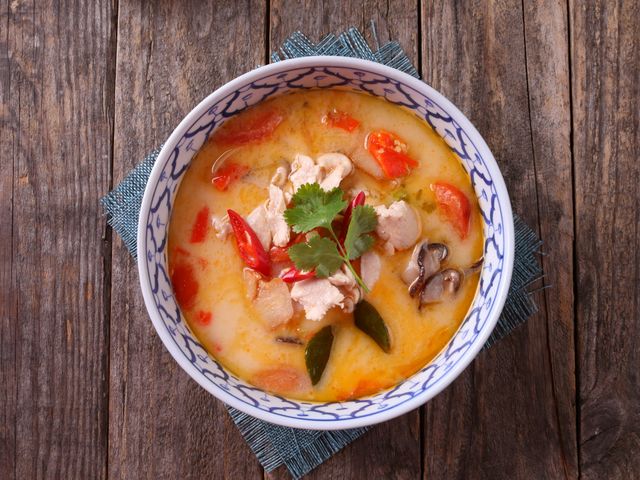
A vibrant, fragrant broth built on simmered chicken thighs infused with green curry paste, coconut milk, and fresh Thai aromatics. Ready in half an hour, it's a soul-warming bowl that balances spicy, creamy, and herbaceous flavors. Serve on its own as a light meal or pour over rice and vegetables.
- Prep
- 10 min
- Cook
- 25 min
- Total
- 35 min
- Makes
- 4 servings (about 8 cups / 2 liters broth with chicken)
Steps
Before you start
- Have all ingredients prepped and measured before you start (mise en place)—the cooking happens quickly once the broth simmers
- If using whole lime leaves, gently bruise them between your fingers to release their oils
- Use boneless, skinless chicken thighs for the fastest cooking; bone-in thighs will take 30–35 minutes total
Bloom the curry paste
- Heat a large pot (5–6 quart / 4.5–5.7 liter) over medium-high heat.
- Add the green curry paste and cook, stirring constantly with a wooden spoon, for 1–2 minutes.
- The paste should darken slightly and become fragrant; this step blooms the spices and removes the raw, grassy edge.
+ Show details− Hide details
Ready when: Paste darkens and smells fragrant (curried, earthy)
Tip: Don't skip this step—blooming the paste concentrates its flavors and prevents a raw, muddled taste in the finished broth
Add coconut milk and broth
- Pour the coconut milk (1 can, 13.5 oz / 400 ml) and chicken broth (4.5 cups / 1100 ml) into the pot.
- Stir well to combine with the curry paste, scraping up any browned bits from the bottom.
- The mixture should be smooth and begin to bubble gently.
+ Show details− Hide details
Ready when: Broth simmers gently, coconut milk fully incorporated
Tip: Use unsalted broth so you can control the salt with fish sauce; canned broth tends to be salty enough on its own
Add chicken and aromatics
- Add the chicken thigh pieces (1.25 lb / 560 g) and bruised lime leaves (6 leaves) to the simmering broth.
- Stir well and return to a gentle boil.
- Reduce heat to medium and maintain a steady simmer (not a rolling boil, which will toughen the chicken).
+ Show details− Hide details
Ready when: Chicken is opaque and cooked through (internal temp 165°F / 74°C); a piece breaks apart easily when pressed with a spoon
Tip: Keep the heat moderate; a vigorous boil will cloud the broth with dissolved proteins and make the chicken stringy
Season and finish
- After the chicken is cooked (about 15 minutes), add the fish sauce (1.5 tbsp / 22 ml), palm sugar (1 tsp / 5 g), and lime juice (2 tbsp / 30 ml).
- Stir to dissolve the sugar completely.
- Taste and adjust: add more fish sauce for umami depth, more lime juice for brightness, or more sugar if the spice feels overwhelming.
- Simmer for 2 more minutes to meld the flavors.
+ Show details− Hide details
Ready when: Sugar is dissolved, broth tastes balanced: spicy, salty, sour, and slightly sweet
Tip: Add lime juice last so its fresh brightness doesn't fade; you can always add more at the end if needed
Stir in Thai basil
- Remove the pot from heat.
- Tear or gently bruise the Thai basil leaves (0.5 cup / 15 g) and stir them into the broth.
- Let the broth sit for 1 minute to allow the basil to soften and release its anise-like flavor.
- Do not let the leaves simmer—they'll turn dark and bitter if overcooked.
+ Show details− Hide details
Ready when: Basil is fragrant and just wilted, still bright green
Tip: Thai basil has a peppery-anise flavor that is delicate; add it at the very end so it stays vibrant and doesn't become bitter
Optional: add shallots
- If desired, add the sliced shallots (2 medium / 60 g) to the hot broth just before serving.
- They will soften slightly from the residual heat, adding a subtle sweetness and texture.
- Alternatively, fry them separately in oil until golden and crispy, then scatter on top for textural contrast.
+ Show details− Hide details
Ready when: Shallots are softer and translucent if cooked in the broth, or golden-brown and crispy if fried separately
Tip: Raw or lightly cooked shallots add a fresh bite; crisped shallots add richness and garnish appeal
Good to know
Tips
- For a lighter broth, use half coconut milk and replace the other half with extra chicken broth or a splash of water. This reduces richness while keeping the curry flavor intact.
- Blooming the curry paste is key: it transforms the raw spice flavor into something rounded and mature. Don't skip that first 1–2 minutes of cooking.
- If the broth tastes too spicy, a pinch of sugar or a squeeze of lime juice helps tame the heat. Conversely, a dash more fish sauce deepens savory flavors.
- Serve the broth on its own for a light meal, or ladle it over steamed jasmine rice, rice noodles, or roasted vegetables to make a more substantial bowl.
Storage & reheating
Store in an airtight container in the refrigerator for up to 3 days. The broth will taste even better the next day as flavors deepen. Reheat gently over medium heat until steaming; do not boil, which can separate the coconut milk. Freeze for up to 2 months in ice cube trays or freezer-safe containers; thaw overnight in the refrigerator and reheat gently.
Substitutions
- Thai green curry paste → Red curry paste. Use the same amount (3 tbsp / 50 g); the broth will be slightly less herbaceous and a touch more fruity-spicy. The cooking time and method remain the same.
- fresh lime leaves (kaffir lime leaves) → Lime zest (finely grated zest of 1 lime) added at the end with the basil. Fresh lime zest lacks the depth of whole lime leaves but adds bright citrus. Add it in the final step instead of simmering.
- fresh Thai basil → Fresh cilantro (0.5 cup / 15 g) or regular basil. Cilantro is grassy and clean; regular basil is sweeter. Both should be added at the very end off the heat to preserve flavor and color.
- fish sauce → Soy sauce (use 2 tbsp / 30 ml instead). Soy sauce is less pungent; use slightly more and taste as you go. The broth will be deeper and less aggressively savory.
More broths
See all →

Find more like this
- Meal
- Dinner
- Cuisine
- Thai
- Main ingredient
- Chicken Thighs
- Method
- Stovetop