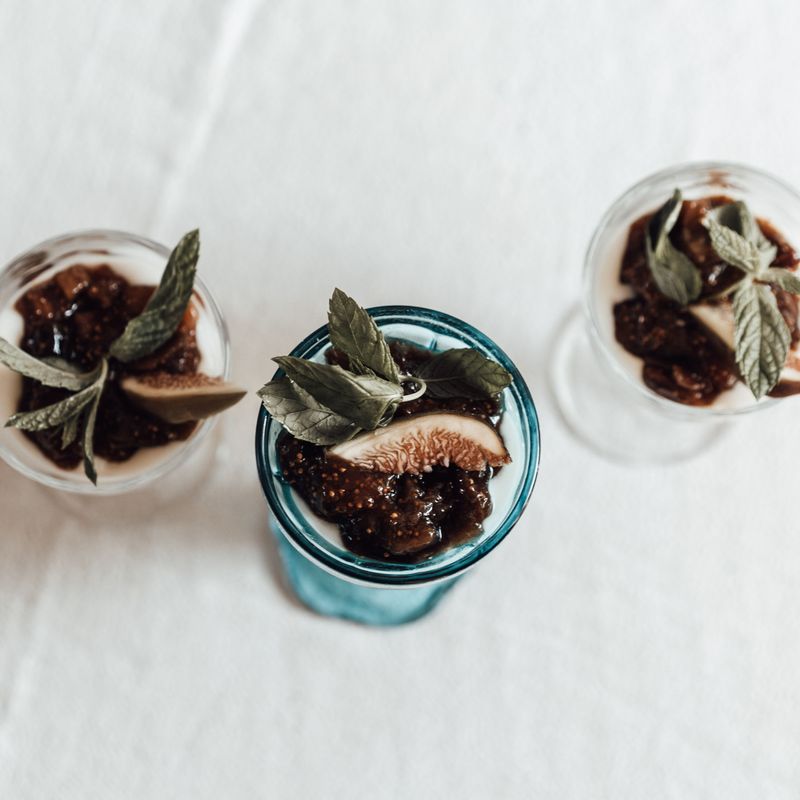
Yogurt Fig Muffins
Tender, moist muffins made with tangy Greek yogurt and tender dried figs. Sweetened with honey and topped with a light glaze, these Mediterranean-inspired treats strike a balance between wholesome and indulgent. Perfect for breakfast or a mid-morning snack.
Steps
Before you start
- Preheat your oven to 400°F (200°C) and line a 12-cup muffin tin with paper liners
- Bring eggs to room temperature (about 30 minutes)
- Have all ingredients measured and ready
Soften the figs
- Place the chopped dried figs in a small saucepan and pour the boiling water over them.
- Set aside for 5 minutes to soften.
- This plumps the figs and makes them more moist and tender in the finished muffins.
+ Show details− Hide details
Ready when: Figs are visibly plump and soft
Tip: Don't skip this step—it ensures tender figs throughout rather than hard, chewy pieces.
Mix dry ingredients
- In a large bowl, whisk together the all-purpose flour, baking powder, baking soda, and kosher salt until evenly combined.
+ Show details− Hide details
Ready when: No lumps of baking powder or soda visible; mixture is uniform and light
Tip: Whisking aerates the dry mixture and ensures even leavening.
Combine wet ingredients
- In a medium bowl, whisk together the Greek yogurt, honey, eggs, vanilla extract, and olive oil until well blended and smooth.
- The mixture should be pale and slightly frothy.
+ Show details− Hide details
Ready when: No streaks of honey visible; eggs fully incorporated
Tip: Room-temperature eggs and yogurt blend more smoothly and create a more cohesive batter.
Combine wet and dry
- Drain the figs, reserving any liquid.
- Pour the wet ingredient mixture into the bowl of dry ingredients and fold gently with a rubber spatula until just combined.
- Add the drained figs and fold 4–5 more times until evenly distributed.
- The batter should be thick and lumpy; do not overmix.
+ Show details− Hide details
Ready when: No streaks of dry flour visible, figs distributed throughout
Tip: Overmixing develops gluten and toughens the muffins. Stop as soon as you don't see flour streaks.
Fill the muffin tin
- Divide the batter evenly among the 12 lined muffin cups, filling each about three-quarters full.
- A standard muffin cup holds about 3 tablespoons (45 ml) at this level.
+ Show details− Hide details
Ready when: All cups filled to consistent level
Tip: Use an ice cream scoop or two spoons to fill cups evenly so all muffins bake at the same rate.
Bake the muffinsOven 400°F / 205°C
- Place the muffin tin in a preheated 400°F (200°C) oven and bake for 20–22 minutes, until a toothpick inserted into the center of a muffin comes out with just a few moist crumbs (not wet batter).
+ Show details− Hide details
Ready when: Muffins are golden brown on top and spring back when lightly pressed; toothpick shows moist crumbs, not wet batter
Tip: Rotate the tin halfway through baking if your oven has hot spots. Don't overbake, as the residual heat will continue cooking the muffins as they cool.
Cool the muffins
- Remove the tin from the oven and let the muffins rest in the tin for 10 minutes.
- This firms them up so they don't fall apart when removed.
- Transfer the muffins (still in their liners) to a wire rack to cool completely, about 5 minutes more.
+ Show details− Hide details
Ready when: Muffins are set and release easily from the tin
Tip: Remove muffins too early and they'll crumble; wait too long and steam will make them soggy.
Make the glaze
- While the muffins cool, whisk together the honey, Greek yogurt, and lemon zest (if using) in a small bowl until smooth and pourable.
- The glaze should be thick but thin enough to drizzle.
+ Show details− Hide details
Ready when: Glaze is smooth, uniform, and drizzles off a spoon in a thin ribbon
Tip: If the glaze is too thick, whisk in 1 teaspoon of water at a time until you reach the right consistency.
Glaze the muffins
- Drizzle the honey-yogurt glaze over the cooled muffins, letting it pool slightly on top.
- Serve immediately or store.
+ Show details− Hide details
Ready when: Glaze is evenly distributed and has set slightly
Tip: Glaze while muffins are warm so it soaks in slightly for better flavor integration.
Good to know
Tips
- Greek yogurt adds moisture and a subtle tang that balances the sweetness of honey and figs. Full-fat yogurt produces the most tender muffins.
- Soaking dried figs in hot water before adding them to the batter ensures they remain plump and tender rather than hard and chewy.
- Do not open the oven door during the first 15 minutes of baking. Sudden temperature changes can deflate the muffins.
- The glaze is optional but recommended—it adds sweetness and a silky finish. Lemon zest brightens the Mediterranean flavor profile.
Make ahead
Bake the muffins up to 2 days ahead. Store unfrosted in an airtight container at room temperature, then glaze just before serving for best texture and appearance.
Storage & reheating
Room temperature: 2 days in an airtight container. Refrigerator: up to 4 days in an airtight container. Freezer: up to 3 months in a freezer bag (unfrosted). Thaw at room temperature for 2–3 hours and glaze before serving. Do not microwave; reheat in a 300°F (150°C) oven for 5 minutes if desired.
Substitutions
- dried figs, chopped → dried apricots or dried dates, chopped. Use the same weight. Apricots will make the muffins slightly more tart; dates will make them sweeter.
- plain Greek yogurt, full-fat → sour cream or regular yogurt. Use the same weight. Regular yogurt is thinner, so you may need to reduce liquid slightly (use 0.75 cup / 180 ml total instead of 0.5 cup / 120 ml water in the fig soaking step). Sour cream will add tang.
- honey → maple syrup or agave nectar. Use the same weight. Maple syrup will add a distinct flavor; agave is more neutral. Avoid high-heat syrups that may caramelize.
- extra-virgin olive oil → melted coconut oil or neutral vegetable oil. Use the same volume. Coconut oil adds subtle coconut flavor; vegetable oil is neutral.
More muffins
See all →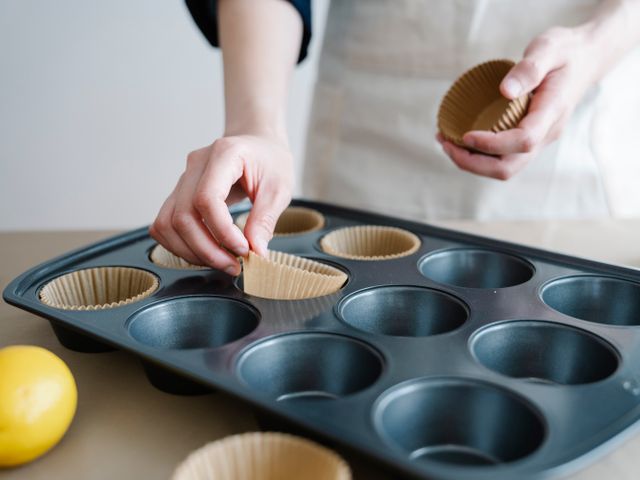


Find more like this
- Meal
- Breakfast
- Cuisine
- Mediterranean
- Diet
- VegetarianHalal
- Method
- Oven
- Quick & Easy
- Easy