
Vinegar-Based Hot Sauce
A tangy, bright hot sauce built on a foundation of vinegar, fresh red peppers, and garlic. The heat comes from red chile peppers balanced by a touch of sugar and acid, creating a versatile condiment that works on eggs, tacos, grilled meats, or anything needing a kick of flavor. The blending method yields a smooth, pourable consistency perfect for bottling or serving fresh.
Steps
Before you start
- Wear gloves when handling hot peppers to avoid oil on your hands burning your face
- Have a blender ready and ensure it's clean and dry
- If you have sensitive skin, wash hands thoroughly after prep
Prep the peppers
- Remove the stem from each hot pepper and red bell pepper.
- For the bell peppers, cut them in half, scoop out the core and seeds, then discard.
- Leave the seeds and white membranes in the hot peppers intact—they contain most of the capsaicin for heat.
- Roughly chop all peppers into 1- to 2-inch (2.5–5 cm) pieces so they fit easily into your blender.
+ Show details− Hide details
Ready when: All peppers roughly chopped and ready to blend
Tip: Wear food-safe gloves while handling hot peppers to protect your skin from the oils.
Blend the sauce base
- Add the chopped red peppers, bell peppers, peeled garlic cloves, vinegar, kosher salt, and sugar to your blender.
- Blend on high speed for 2–3 minutes until smooth and uniform in color.
- If you prefer a thinner sauce, add an extra 2–4 tablespoons (30–60 ml) of vinegar or water and blend again for 10–15 seconds.
- If you like a thicker sauce, reduce the blending time.
+ Show details− Hide details
Ready when: Sauce is completely smooth with no visible pepper pieces, bright red or deep orange color throughout
Tip: Secure the blender lid with your hand or a kitchen towel while blending hot peppers—the heat can build steam inside.
Strain for smoothness (optional)
- For a silkier, more refined hot sauce, pour the blended mixture through a fine-mesh strainer into a clean bowl, pressing gently with the back of a spoon to extract the liquid while leaving behind any bits of pepper skin.
- This step is optional; skipping it leaves a more rustic, textured sauce with slightly more body.
+ Show details− Hide details
Ready when: Sauce passes through the strainer as a smooth liquid, catching only solids
Tip: Don't skip this step if you're bottling the sauce for gifts—straining makes it look more polished.
Taste and adjust
- Pour the finished sauce into a small tasting dish.
- Taste a small amount on the tip of a spoon.
- If you want more heat, you didn't remove enough seeds from the hot peppers—this sauce has reached its peak.
- If you want more sweetness, stir in ½–1 tablespoon (6–12 g) of sugar.
- If you want more acidity or thinness, add ¼–½ cup (60–120 ml) more vinegar and stir well.
+ Show details− Hide details
Ready when: Sauce tastes balanced to your preference—hot, tangy, and slightly sweet
Tip: Taste only a tiny amount; the heat can sneak up on your palate after a second or two.
Good to know
Tips
- To control heat level, remove seeds and white membranes from the hot peppers before blending for a milder sauce, or leave them in for maximum heat.
- Fresh is best—make this sauce within a few hours of buying your peppers for the brightest, most vibrant flavor.
- If you don't have a blender, use a food processor and blend in short pulses (5–10 seconds at a time) to avoid overheating the motor.
- This sauce works beautifully on scrambled eggs, tacos, grilled fish, fried chicken, french fries, or as a condiment for pizza.
Storage & reheating
Room temperature: Store in an airtight jar or bottle out of direct sunlight for up to 1 week. Refrigerator: Keeps in a sealed glass jar or bottle for 2–3 weeks without any separation or flavor loss. Freezer: Pour into ice cube trays, freeze for 3–4 hours, then transfer cubes to a freezer bag and freeze for up to 3 months. Thaw at room temperature or in the refrigerator before using. No reheating needed—serve fresh or thawed.
Substitutions
- distilled white vinegar → Apple cider vinegar. Adds a slightly sweeter, more mellow tang. Use the same amount; start with a taste test as cider vinegar can be mellower than distilled white vinegar.
- fresh red cayenne or jalapeño peppers → Dried red chiles (like arbol or guajillo). Rehydrate dried chiles in hot water for 5 minutes, then drain and blend with the bell peppers and garlic. Skip straining if using dried chiles, as they don't have as much pulp. This creates a deeper, more complex heat.
- granulated sugar → Honey or agave nectar. Use ¾–1 tablespoon (about 15 ml) honey or agave for the same sweetness. Blends smoothly and adds subtle floral or caramel notes.
- kosher salt → Sea salt. Use the same amount by weight (9 g); sea salt's flavor is similar and dissolves just as well in the vinegar.
More sauces
See all →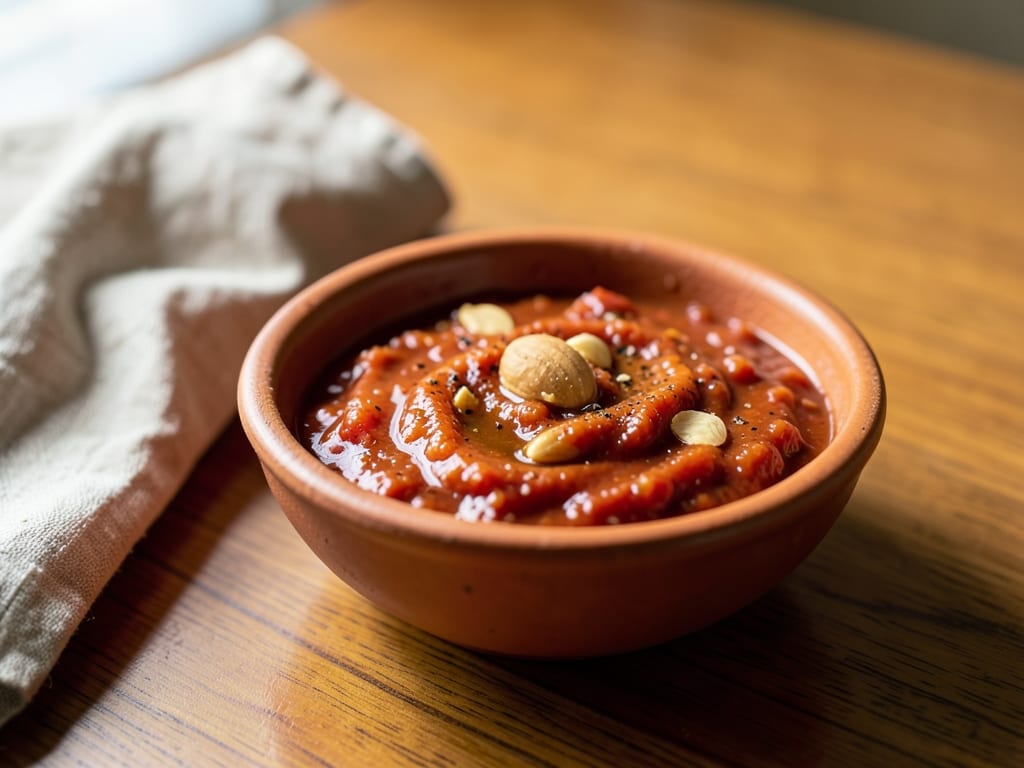


Find more like this
- Meal
- Snack
- Main ingredient
- Bell Peppers
- Method
- No-Cook