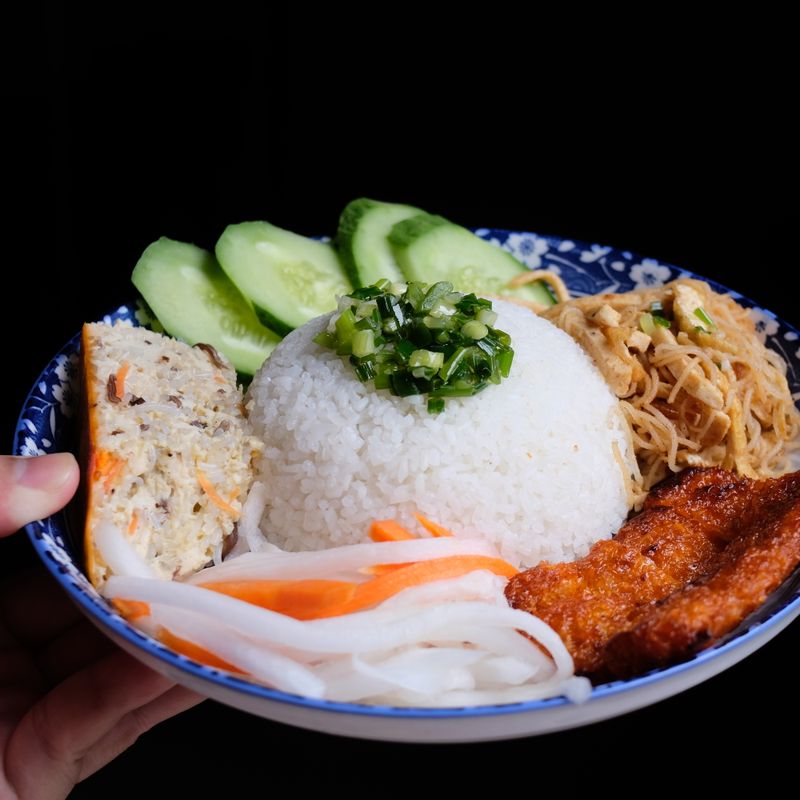
Vietnamese Crispy Shallot Rice with Black Garlic
A fragrant, umami-rich jasmine rice infused with the complex sweetness of black garlic and crowned with crispy golden shallots. This Vietnamese-inspired side dish transforms simple ingredients through high-heat cooking and the fermented depth of black garlic, making it an elegant accompaniment to grilled meats, fish, or stir-fries.
- Prep
- 15 min
- Cook
- 12 min
- Total
- 27 min
- Makes
- 4 servings (about 3 cups cooked)
Steps
Before you start
- Use leftover cooked jasmine rice (day-old, refrigerated) for best results—fresh hot rice will clump.
- Have all ingredients prepped and measured before you begin frying—the process happens quickly.
- Black garlic cloves are soft; handle gently when adding to avoid breaking them apart.
Crisp the shallots
- Heat the vegetable oil in a small 8-inch (20 cm) skillet over medium-high heat until it shimmers (about 2 minutes).
- Add the sliced shallots in a single layer and fry, stirring occasionally, for 5–7 minutes until they turn golden brown and crispy.
- Watch carefully—they can burn quickly once they start to brown.
- When golden, remove the shallots with a slotted spoon and drain on paper towels.
- Season with a pinch of salt.
- Reserve the shallot oil in the skillet.
+ Show details− Hide details
Ready when: shallots are golden brown and crispy, oil has darkened slightly
Tip: Don't walk away—shallots brown suddenly and can go from golden to burnt in seconds. Lower the heat slightly if they're browning too fast.
Heat the wok
- Pour the reserved shallot oil into a 14-inch (36 cm) wok or large skillet and heat over high heat until the oil just begins to smoke slightly (about 1 minute).
- The wok should be very hot—this is crucial for creating the characteristic fried rice texture with separate, slightly toasted grains.
+ Show details− Hide details
Ready when: oil is shimmering and just starting to smoke
Tip: A properly heated wok prevents the rice from sticking and steaming rather than frying.
Fry the rice
- Add the chilled jasmine rice to the hot wok, breaking up any clumps gently with a wooden spatula as you add it.
- Stir-fry continuously for 3–4 minutes, pressing the rice against the wok to create contact with the hot surface.
- The grains should begin to separate and toast slightly, with a faint nutty aroma.
- Ensure all rice is heated through.
+ Show details− Hide details
Ready when: rice grains are separated, heated through, and faintly toasted
Tip: Keep the rice moving to prevent sticking. Cold rice releases moisture slowly, which prevents clumping and helps it fry rather than steam.
Add black garlic and seasonings
- Reduce heat to medium.
- Add the black garlic cloves, sesame oil, white pepper, fish sauce, and sea salt to the rice.
- Toss gently but thoroughly for about 1 minute, distributing the seasonings evenly and infusing the rice with the sweet, umami-rich flavor of the black garlic.
- The rice should smell fragrant and the oil should coat the grains.
+ Show details− Hide details
Ready when: rice is fragrant, seasonings are evenly distributed, black garlic is heated through
Tip: Lower the heat to avoid scorching the sesame oil and black garlic. Both have delicate, nutty flavors that can turn bitter if exposed to very high heat.
Finish and serve
- Transfer the rice to a serving dish or plates.
- Scatter the crispy fried shallots over the top and garnish with the dark green sliced scallions.
- Serve immediately while the shallots are still crunchy and the rice is warm.
- The contrast of warm, fragrant rice with crispy shallots and black garlic creates both textural and flavor depth.
+ Show details− Hide details
Ready when: dish is plated and ready to serve
Tip: Add the crispy shallots at the very end so they remain crispy rather than absorbing moisture from the warm rice.
Good to know
Tips
- Black garlic is fermented garlic that's aged at high heat and humidity for weeks. Its dark color and soft texture develop complex sweet and slightly tangy notes. It's available at Asian markets, specialty stores, or online. Once opened, store it in an airtight container in a cool place for up to a month.
- Fried rice always tastes better with day-old, chilled rice because freshly cooked rice is too moist and will steam rather than fry. If you only have fresh rice, spread it on a tray, refrigerate it for at least 2 hours, then break it up gently before cooking.
- Toast your sesame oil briefly with the rice to deepen its nutty flavor, but don't overheat it—sesame oil has a lower smoke point and can turn bitter if allowed to smoke.
- This dish pairs beautifully with grilled fish, stir-fried vegetables, or roasted meats. The black garlic's umami complements rich proteins especially well.
Make ahead
The shallots can be fried and cooled up to 2 hours ahead and stored in an airtight container at room temperature. Fry the rice fresh just before serving for the best flavor and texture. Black garlic cloves can be prepped (halved if preferred) up to 4 hours ahead and stored in an airtight container.
Storage & reheating
Best served fresh. Leftovers keep in an airtight container in the refrigerator for up to 3 days. The shallots will soften, but the rice can be reheated in a wok with a splash of sesame oil over medium-high heat for 2 minutes, stirring gently. The crispy texture will diminish—add fresh fried shallots if desired before serving again.
Substitutions
- black garlic cloves → minced fresh garlic (2 teaspoons) or regular fermented black garlic paste (1 tablespoon). Fresh garlic will lack the deep, sweet complexity of black garlic but will still provide aromatic flavor. Adjust to taste. Black garlic paste will be less textural but more convenient.
- toasted sesame oil → walnut oil or a neutral oil infused with 1 tablespoon roasted sesame seeds. Sesame oil's toasted, nutty flavor is distinctive; walnut oil offers a different nut profile. The sesame seed infusion approximates the flavor.
- fish sauce → soy sauce or tamari (1 teaspoon) or omit for a vegetarian version. Fish sauce adds umami depth specific to Vietnamese cooking. Soy sauce provides umami but is less pungent. Omitting will lighten the overall flavor.
- jasmine rice, cooked and chilled (day-old) → cooked short-grain white rice or sushi rice. Jasmine rice's delicate floral aroma is characteristic. Short-grain rice will be slightly stickier but still work; use less liquid when cooking if preparing fresh.
More fried rice
See all →


Find more like this
- Meal
- Dinner
- Cuisine
- Vietnamese
- Main ingredient
- Rice
- Method
- Stovetop