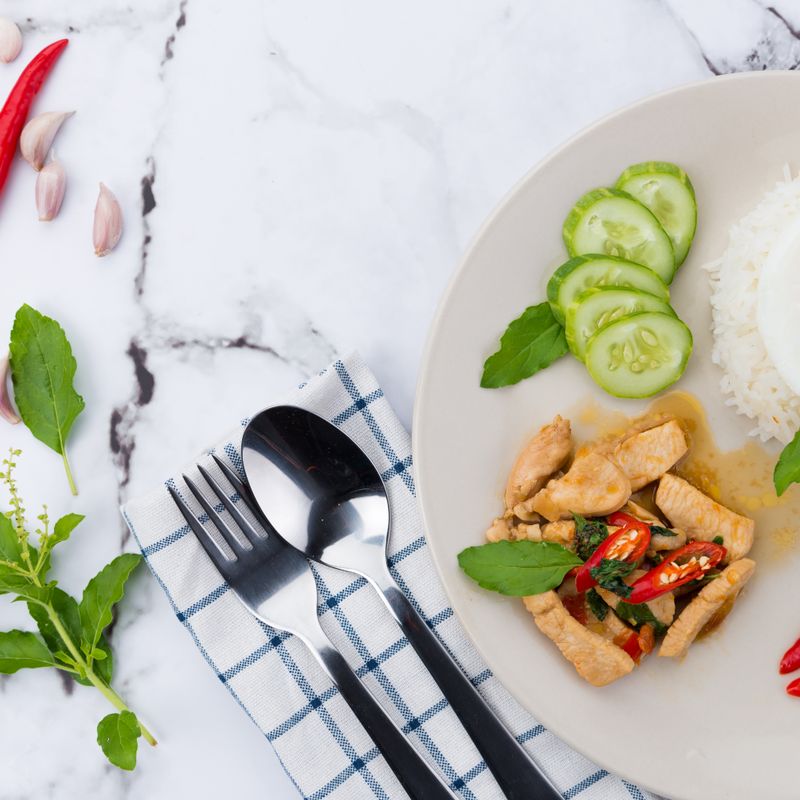
Vegetable Egg Stir-Fry with Rice Vinegar
A quick, vibrant stir-fry where fluffy scrambled eggs and crisp vegetables come together in a gently tangy sauce made bright with rice vinegar and soy sauce. Ready in under 20 minutes, this is weeknight dinner or breakfast for 2–3 people. The eggs stay tender because you add them near the end, while the vegetables keep their bite.
- Prep
- 10 min
- Cook
- 8 min
- Total
- 18 min
- Makes
- 3 servings (about 1½ cups per person)
Steps
Before you start
- Have all ingredients prepped and measured before you start cooking—the stir-fry moves fast
- Use a 12-inch (30 cm) skillet or wok so vegetables have room to cook quickly without crowding
- Keep the heat high once you begin; this ensures vegetables stay crisp and eggs cook through properly
Mix the sauce
- In a small bowl, whisk together the rice vinegar, soy sauce, and sesame oil (if using).
- Set aside.
- This sauce is the flavor base for the stir-fry—mixing it ahead prevents scrambling when it hits the hot pan.
+ Show details− Hide details
Ready when: Liquid looks uniform and well combined
Tip: Do not skip this step; adding the liquid components separately to the hot pan can cause splattering
Beat the eggs
- In another small bowl, lightly beat the 6 eggs with a pinch of salt until the yolks and whites are just combined and no streaks remain.
- Overbeating makes eggs tough, so stop as soon as it looks uniform.
+ Show details− Hide details
Ready when: Eggs are pale and uniform, yolks fully incorporated
Tip: Lightly beaten eggs will have bigger, softer curds than overworked ones
Heat the skillet
- Place a 12-inch (30 cm) skillet or wok over medium-high heat.
- Add the 2 tablespoons (30 ml) of neutral oil and let it heat for about 30 seconds, until it shimmers and moves easily across the pan.
+ Show details− Hide details
Ready when: Oil shimmers and moves fluidly across the pan
Tip: If the oil smokes, the heat is too high—lower it slightly; oil that's not hot enough won't cook vegetables quickly
Cook the hardest vegetables first
- Add the carrot matchsticks and the minced garlic (and ginger if using) to the hot oil.
- Stir constantly for 2 minutes, making sure the carrots get exposed to the hot pan.
- The garlic will become fragrant and the carrots will start to soften slightly at the edges.
+ Show details− Hide details
Ready when: Carrots begin to soften at the edges; garlic is golden and fragrant
Tip: Keep stirring so garlic doesn't burn; burned garlic tastes bitter and will ruin the dish
Add remaining vegetables
- Add the bell pepper pieces and snap peas to the skillet.
- Stir constantly for 2 minutes.
- These vegetables should stay crisp-tender, not soft, so timing here is important.
- You want to hear them sizzle against the pan.
+ Show details− Hide details
Ready when: Bell pepper pieces and snap peas are bright and tender-crisp; a bit of caramelization on the edges is good
Tip: Do not walk away; the vegetables cook fast at this heat, and you want to catch them before they become too soft
Push vegetables aside and add eggs
- Push all the cooked vegetables to one side of the skillet, creating an empty space on the other side.
- Pour the beaten eggs into that empty space.
- Let them sit untouched for 5–10 seconds so they start to set, then gently scramble them with a wooden spoon or spatula, breaking them into small curds as they cook.
- This takes about 1–1.5 minutes.
- The eggs should not be fully cooked yet—they will continue cooking when the sauce is added.
+ Show details− Hide details
Ready when: Eggs are mostly set into soft curds but still have a little shine and moisture; they look slightly underdone
Tip: Undercooked-looking eggs are what you want at this stage—carryover heat and the sauce will finish them without making them rubbery
Combine and finish
- Pour the prepared sauce over the eggs and vegetables.
- Stir everything together gently but thoroughly for 30 seconds, coating all the ingredients evenly.
- The heat of the pan will finish cooking the eggs while the sauce reduces slightly and coats everything.
+ Show details− Hide details
Ready when: Sauce is absorbed into the stir-fry and eggs are fully cooked but still soft and moist; no liquid pools at the bottom
Tip: Stir gently to keep the eggs from breaking into tiny pieces—you want soft curds, not an omelet scramble
Taste and season
- Taste the stir-fry.
- Add a pinch of white pepper if you like, and a few of the scallion white parts for a gentle onion note.
- Toss once more to distribute.
+ Show details− Hide details
Ready when: Seasoning is balanced; you taste the vinegar tang, umami from the soy, and egg and vegetable flavors equally
Tip: White pepper is traditional in Chinese egg dishes and adds warmth without the visible black specks of black pepper
Serve
- Transfer to a serving bowl or plates immediately.
- Top with the reserved dark green scallion tops (if using) for color and a fresh bite.
- Serve right away over steamed white rice, brown rice, or rice noodles if desired.
+ Show details− Hide details
Ready when: Stir-fry is plated and hot
Tip: Egg stir-fry cools down quickly, so serve immediately; reheating makes eggs tough
Good to know
Tips
- Have all ingredients prepped and within arm's reach before you start—stir-frying is fast and leaves no time for chopping mid-cook
- The texture of the final dish depends on nailing the vegetable timing: carrots in first (they're hardest), bell pepper and snap peas second (they stay bright and crisp), eggs last (so they don't overcook while everything else finishes)
- Rice vinegar is key to this dish's flavor; it adds a gentle tang and slight sweetness that soy sauce alone cannot provide. Don't skip it
- Serve immediately over rice or with rice noodles to soak up any extra sauce and make the meal more filling
Storage & reheating
Refrigerate leftovers in an airtight container for up to 2 days. Reheat gently in a skillet over medium heat, stirring often, for 1–2 minutes, or in the microwave in 30-second intervals until warm. The eggs will firm up as they cool and may become slightly rubbery when reheated; this dish is best eaten fresh.
Substitutions
- fresh snap peas → Fresh broccoli florets, cut small, or snow peas. Cook for the same time as snap peas. Broccoli may need an extra 30 seconds to become tender-crisp.
- red or yellow bell pepper → Zucchini or summer squash, cut into quarter-moons. Cook for the same duration. Squash releases moisture, so don't stir too vigorously or it will break apart.
- rice vinegar → White vinegar (use 1 tablespoon/15 ml) or apple cider vinegar. White vinegar is sharper; reduce the amount slightly. Apple cider vinegar is milder and works well at the same quantity.
- sesame oil → Omit entirely, or replace with a bit more soy sauce for umami depth. The dish will be slightly less aromatic but still delicious. If you prefer more soy flavor, add ½ teaspoon (7.5 ml) soy sauce instead of sesame oil.
More stir-fries
See all →
Find more like this
- Meal
- Breakfast
- Main ingredient
- CarrotsEggsBell Peppers
- Method
- Stovetop