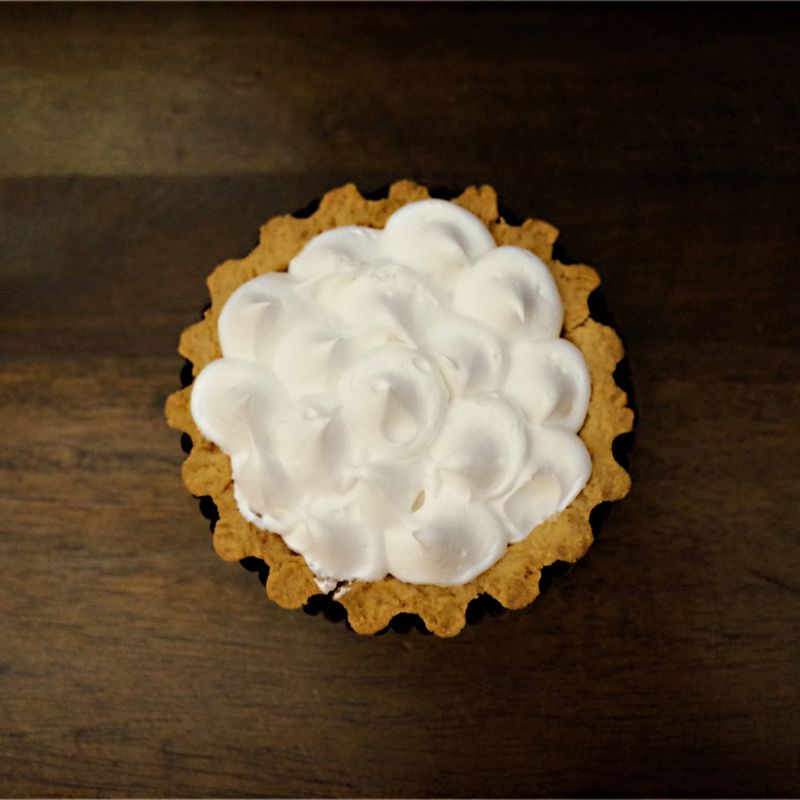
Vegan Aquafaba Meringue Lemon Pie
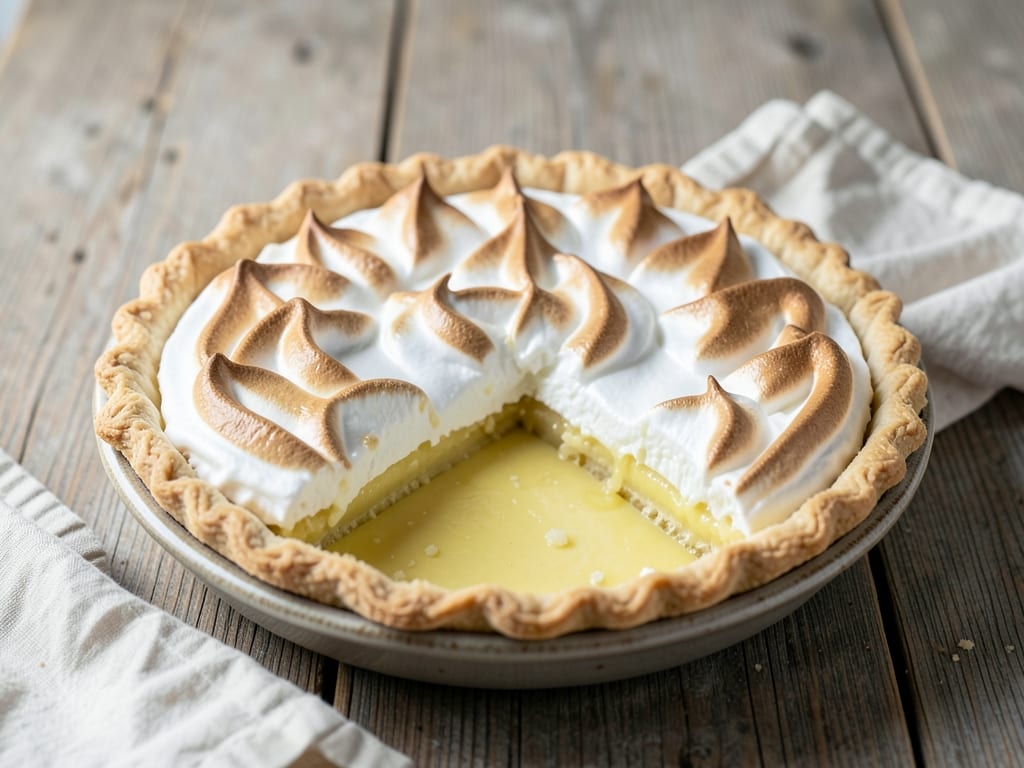
A stunning vegan take on the classic lemon meringue pie, with a buttery pastry crust, silky lemon curd filling made with coconut cream, and a light, peaked aquafaba meringue topping that browns beautifully in the oven. The meringue is whipped from the liquid drained from canned chickpeas, creating an airy, stable topping that rivals traditional egg meringue.
- Prep
- 30 min
- Cook
- 1 hr
- Wait
- 3 hr
- Total
- 4 hr 30 min
- Makes
- 1 pie (8 slices)
Steps
Before you start
- Preheat oven to 375°F (190°C) 15 minutes before baking the crust
- Drain and reserve aquafaba liquid from the chickpeas at least 30 minutes before whipping—chilled aquafaba whips faster and more stably
- Have all filling ingredients measured and ready; the lemon curd must cool slightly before adding to the crust
- Use a stand mixer or electric hand mixer with clean, dry beaters for the aquafaba meringue—even a tiny drop of oil will prevent whipping
Blind bake the crustOven 375°F / 190°C
- Line the 9-inch pie dish with the thawed pie crust, trimming and crimping the edges as needed.
- Prick the bottom with a fork.
- Line the crust with parchment paper and fill with pie weights or dried beans.
- Brush the exposed rim with melted vegan butter.
- Bake at 375°F (190°C) for 12–15 minutes until light golden and set.
- Remove weights and parchment.
- If the bottom is very pale, return to the oven for 2–3 minutes.
- Let cool slightly, about 5 minutes.
+ Show details− Hide details
Ready when: Crust is light golden and sides are set; bottom is beginning to firm
Tip: Prick the bottom to prevent puffing. Pie weights prevent the bottom from rising; dried beans work just as well.
Make the lemon curd filling
- In a medium saucepan, combine the water, cornstarch, sugar, lemon zest, and salt.
- Whisk until the cornstarch is fully dissolved and there are no lumps.
- Place over medium heat and bring to a simmer, stirring constantly, about 3–4 minutes.
- Once simmering, continue stirring for 1 minute, then remove from heat.
- Pour the lemon juice into a separate bowl.
- Slowly whisk the hot cornstarch mixture into the lemon juice until smooth and combined.
- Return the mixture to the saucepan and place over medium heat.
- Cook, stirring frequently, for 2–3 minutes until it thickens and comes to a gentle bubble.
- Remove from heat and stir in the coconut cream until fully incorporated and smooth.
- Let cool to room temperature, about 15–20 minutes, stirring occasionally.
+ Show details− Hide details
Ready when: Curd is thick, glossy, and coats the back of a spoon; no heat needed, fully cooled
Tip: Keep the heat at medium to avoid scorching the curd. The mixture will thicken more as it cools, so don't overreduce it on the stove.
Fill the crust
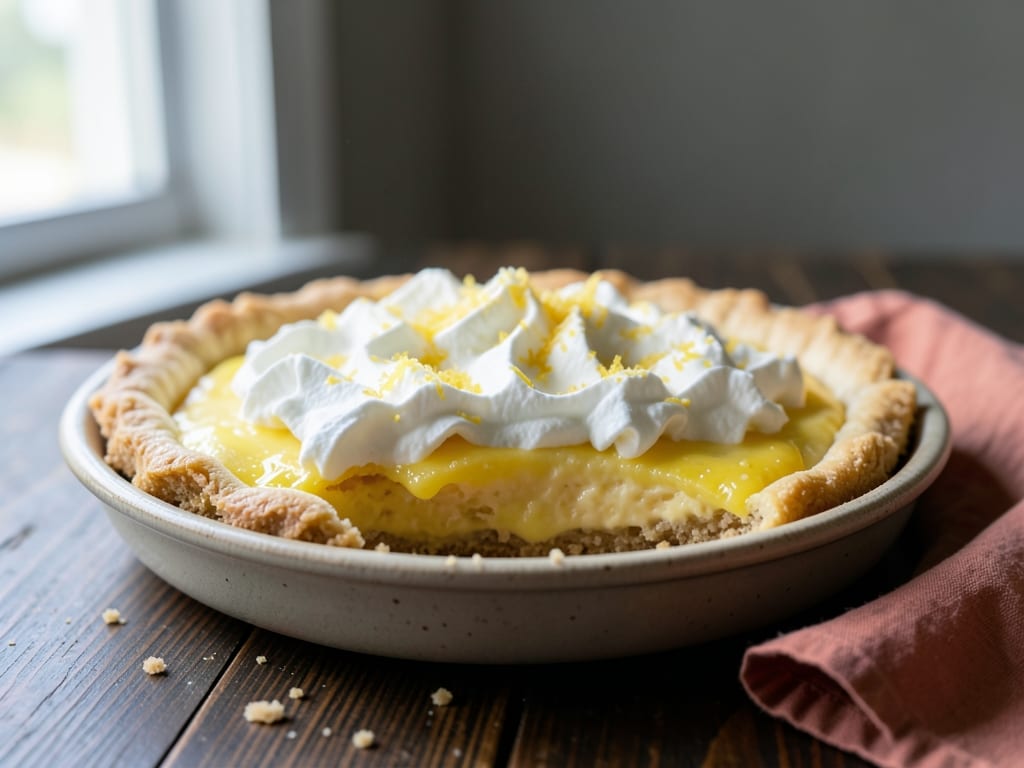
- Once the lemon curd has cooled to room temperature, pour it into the partially baked pie crust, spreading it in an even layer.
- Set aside while you prepare the meringue.
+ Show details− Hide details
Ready when: Filling is smooth and level in the crust
Tip: Pour the filling while it's still slightly warm so it spreads easily. If it has firmed up too much, briefly warm it over low heat.
Whip the aquafaba meringue
- In the bowl of a stand mixer fitted with the whip attachment (or using a clean, dry electric hand mixer), combine the chilled aquafaba and cream of tartar.
- Beat on medium-high speed for 2–3 minutes until the aquafaba becomes foamy and pale.
- With the mixer running, slowly add the sugar, 1 tablespoon at a time, over the course of 3–4 minutes.
- Once all the sugar is incorporated, add the vanilla extract and continue beating on high speed for 3–5 minutes more, until stiff, glossy peaks form.
- The meringue should be thick enough that you can turn the bowl upside down without it sliding.
+ Show details− Hide details
Ready when: Meringue forms stiff, glossy peaks that hold their shape; meringue is thick and stable
Tip: Use absolutely clean, dry equipment—any trace of oil or egg (if making other dishes) will prevent the aquafaba from whipping. If you have access to aquafaba with added guar gum or xanthan gum, it will whip faster and more reliably.
Top with meringue
- Spoon the meringue over the lemon filling, starting from the edges and working toward the center.
- Use the back of a spoon or an offset spatula to create soft, peaked mounds across the surface.
- Make sure the meringue touches the inner rim of the crust on all sides (this prevents shrinking).
- The peaks and swirls will brown beautifully.
+ Show details− Hide details
Ready when: Meringue completely covers the filling with attractive, rustic peaks
Tip: Make sure the meringue touches the crust all the way around; this creates a seal and prevents shrinking during baking.
Bake the meringueOven 350°F / 175°C
- Transfer the pie to a 350°F (175°C) oven and bake for 12–15 minutes until the meringue is light golden brown on the peaks and edges, with the valleys remaining slightly paler.
- The meringue should feel set but still have a slight give when lightly touched.
- Do not overbake, or the meringue will become dry.
+ Show details− Hide details
Ready when: Meringue is light golden on the peaks and feels set to the touch but not hard or dry
Tip: Lower the oven temperature slightly compared to traditional egg meringue to prevent the meringue from crisping too much. Aquafaba meringue is more delicate than egg.
Cool completely
- Remove the pie from the oven and let it cool at room temperature for at least 2 hours.
- The pie must cool completely before refrigerating so the filling and meringue set properly.
- Do not slice until fully chilled and set, or the filling will be too soft and will run.
+ Show details− Hide details
Ready when: Pie is completely cool to the touch and feels firm when gently pressed
Tip: Patience is essential here. Cutting into a warm pie will result in a runny filling. If you're short on time, refrigerate for at least 1 additional hour before serving.
Chill and serve
- Once cooled, transfer the pie to the refrigerator and chill for at least 1 hour (or up to 24 hours ahead).
- This allows the filling to firm up completely.
- Slice with a sharp, wet knife, wiping clean between cuts for clean slices.
- Serve chilled.
+ Show details− Hide details
Ready when: Pie is cold to the touch and filling is completely set
Tip: A warm, wet knife makes clean slices through the meringue; dip it in hot water and wipe dry between each slice.
Good to know
Tips
- Aquafaba whipping is most reliable when the liquid is chilled and has adequate time to stabilize. Aquafaba from chickpeas with added guar gum or xanthan gum whips faster and more stably than plain liquid.
- Lemon juice is acidic and helps the aquafaba whip better, but since all the acid is in the filling (and filling and meringue are separate components), we recommend having a backup plan: if your aquafaba doesn't whip after 5 minutes, add 1 teaspoon of apple cider vinegar or lemon juice and try again.
- The meringue is delicate, so use a gentle hand when topping the pie. Swirl it softly without pressing or flattening it, which will deflate the air you worked to whip in.
- This pie is best served the day it's made or the next day. The meringue may begin to weep (release moisture) after 24 hours, which is normal and does not affect the flavor, only the appearance and slight texture change.
Make ahead
The pie can be assembled and baked up to 2 days in advance. Keep covered loosely with plastic wrap in the refrigerator. Do not cover the meringue tightly, as the moisture will soften it. The pie is best served within 24 hours of baking, but the crust and filling remain excellent for up to 2 days. The meringue may weep slightly after 24 hours.
Storage & reheating
Store the cooled pie loosely covered in the refrigerator for up to 2 days. The crust stays crisp and the filling stays firm when chilled. Do not freeze the assembled pie, as the meringue texture breaks down. However, you can freeze the unfilled, blind-baked crust for up to 1 month; reheat at 350°F (175°C) for 5 minutes before filling. Leftover slices can be stored in an airtight container in the refrigerator for 1 day; serve cold.
Substitutions
- full-fat coconut cream → cashew cream (1 cup raw cashews soaked 2 hours, then blended with ½ cup water) or oat cream. Cashew cream creates a richer mouthfeel; oat cream is lighter. Both work well, though coconut cream provides the most authentic flavor and silky texture.
- vegan butter → olive oil or coconut oil. Use 1 tablespoon of oil in place of the butter for brushing the crust edges. The pie will bake similarly.
- cornstarch → tapioca starch or arrowroot powder. Use the same amount by weight. Both create a smooth, clear filling with excellent texture.
- vegan pie crust, store-bought or homemade → store-bought all-butter pie crust (not vegan) or a homemade all-purpose flour and butter crust. If not strictly vegan, traditional pie crusts work beautifully. The aquafaba meringue remains the vegan highlight of the dessert.