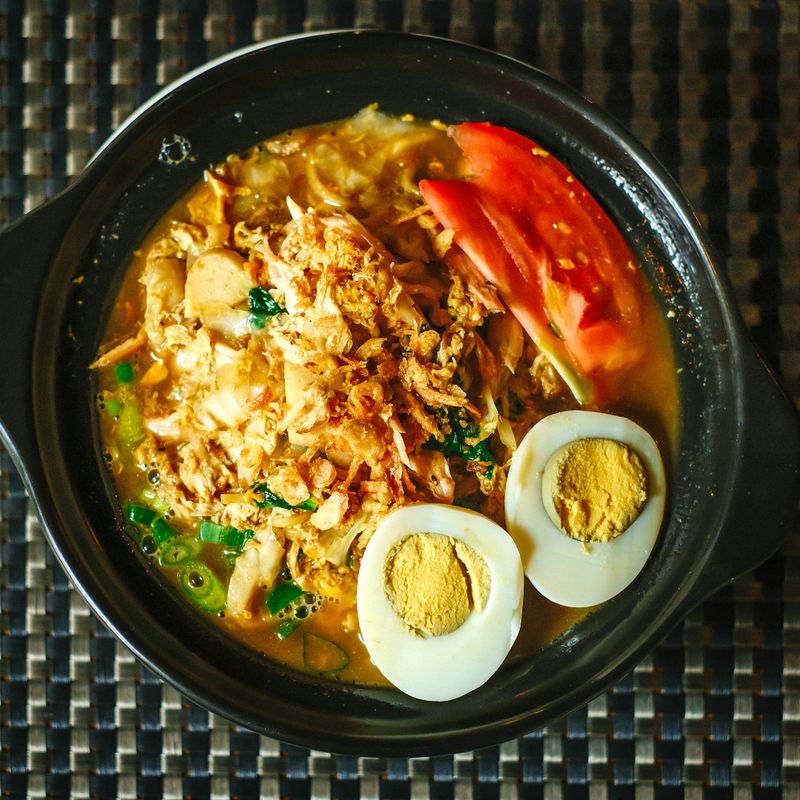
Tunisian Ramadan Lentil Soup with Harissa and Eggs
A hearty, warming Tunisian lentil soup that balances earthy brown lentils, smoky harissa, and tender poached eggs in a rich tomato broth. Traditionally served during Ramadan iftar, this one-pot meal is both humble and deeply satisfying—the kind of dish that feels like home and comfort in a bowl.
- Prep
- 15 min
- Cook
- 45 min
- Total
- 1 hr
- Makes
- 6 servings (about 2 cups each)
Steps
Before you start
- Have all ingredients measured and prepped before you start—the cooking happens quickly once the lentils go in
- Taste and adjust the harissa: some pastes are much spicier than others
- Use eggs at room temperature so they poach evenly without the whites overcooking
Sauté onion and garlic
- Heat the olive oil in a large pot over medium heat.
- Add the diced onion and cook, stirring occasionally, until softened and lightly golden, about 5 minutes.
- Add the minced garlic and cook for 1 minute more until fragrant.
+ Show details− Hide details
Ready when: Onion is soft and light golden; garlic is fragrant
Tip: Don't let the garlic brown—it will turn bitter and affect the whole pot.
Add harissa and tomatoes
- Stir in the harissa paste until it coats the onion and garlic, cooking for 30 seconds to bloom its spices.
- Pour in the crushed tomatoes (including liquid) and stir well to combine.
+ Show details− Hide details
Ready when: Harissa is fully mixed in and the tomatoes are well combined
Tip: Blooming the harissa in the oil and onion releases its smoky, complex flavors.
Add lentils and broth
- Add the rinsed brown lentils and chicken broth (or water).
- Stir in the caraway seeds if using.
- Bring the soup to a boil over medium-high heat, then reduce to medium-low and simmer uncovered for 25–30 minutes, stirring occasionally, until the lentils are tender but not falling apart.
+ Show details− Hide details
Ready when: Lentils are soft enough to break between your tongue and the roof of your mouth, but still hold their shape
Tip: Brown lentils should stay intact; don't overcook or they'll turn to mush.
Season the soup
- Taste the soup and season with kosher salt and freshly ground black pepper.
- Start with ½ teaspoon of salt and adjust from there—harissa is often salty, so go gradually.
- The soup should be savory and warm with a gentle heat.
+ Show details− Hide details
Ready when: Soup is well balanced with no harsh edges
Tip: Taste before the eggs go in—it's harder to adjust seasoning once they're poaching.
Poach the eggs
- Using a slotted spoon, create 6 gentle swirls in the simmering soup, spacing them around the pot.
- Crack an egg into each swirl and let it sink into the broth.
- Maintain a gentle simmer (not a rolling boil) and cook for 3–4 minutes until the egg whites are set but the yolks remain runny.
- The eggs should be tender and barely jiggly.
+ Show details− Hide details
Ready when: Egg whites are opaque and set; yolk is still soft and moves slightly when you gently shake the pot
Tip: If the broth is boiling hard, the eggs will break apart. Keep the heat gentle and steady.
Finish and serve
- Gently ladle the soup into warm bowls, making sure each bowl gets one egg.
- Drizzle with a touch more olive oil if desired and scatter fresh cilantro on top.
- Serve immediately while the soup is piping hot.
+ Show details− Hide details
Tip: Have bowls warming in a low oven before serving—this soup cools quickly and is best eaten hot.
Good to know
Tips
- This soup is traditionally served during Ramadan iftar because the combination of lentils (protein), eggs (more protein and nutrients), and warming broth is nourishing after fasting. It's comfort food designed to ease the stomach back into eating.
- If your harissa paste is very spicy or you're sensitive to heat, start with 1 tablespoon and taste before adding more. Harissa brands vary widely in heat level.
- The caraway seeds are optional but traditional—they add a subtle, earthy warmth that echoes North African spice markets. Toast them for 15 seconds in the pan before adding the harissa for extra flavor.
- Serve with warm crusty bread or dates to round out the iftar meal. In Tunisia, this soup is often followed by sweet pastries and fresh fruit.
Make ahead
You can prepare the soup base (through step 3) up to 2 days ahead and refrigerate it. Reheat gently over medium heat before poaching the eggs in step 5.
Storage & reheating
Refrigerate the cooled soup (without eggs) in an airtight container for up to 4 days. Reheat gently over medium heat. The soup can be frozen for up to 3 months; thaw overnight in the fridge before reheating. Poach fresh eggs when you serve. Do not freeze after eggs are poached.
Substitutions
- brown lentils → Green lentils or red lentils. Green lentils hold their shape better like brown lentils; red lentils will break down into a purée and change the texture. Use the same weight.
- harissa paste → 1 tablespoon tomato paste mixed with 1 teaspoon cayenne pepper and ½ teaspoon smoked paprika. Harissa is essential for authentic flavor, but this blend mimics its heat and depth if you can't find it. Adjust spice to taste.
- chicken broth or water → Vegetable broth or water. Water will give a lighter broth; vegetable broth adds a gentler richness. The result will be slightly less deep but still delicious.
- fresh cilantro → Fresh parsley or a pinch of mint. Cilantro is traditional, but parsley is a good substitute if you're cilantro-averse. Mint adds an unexpected but pleasant North African note.