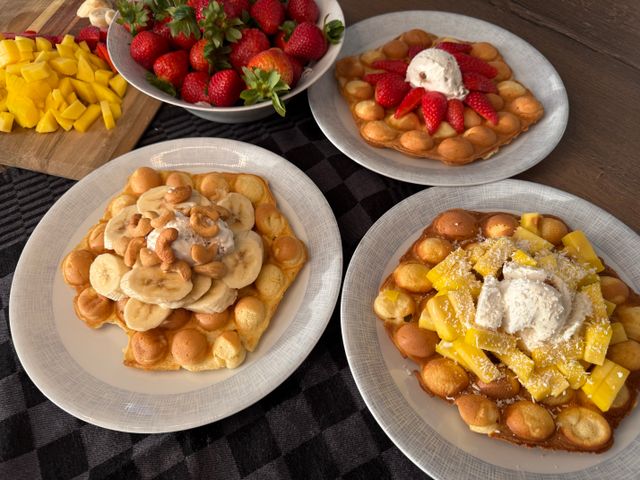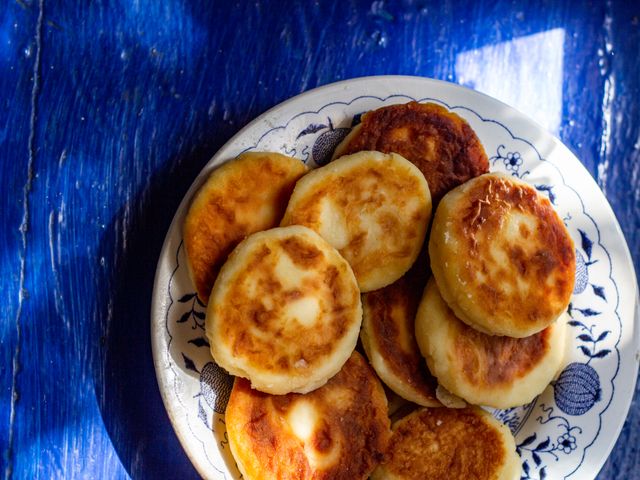
Thai Mango Sticky Rice Pancakes with Coconut Syrup
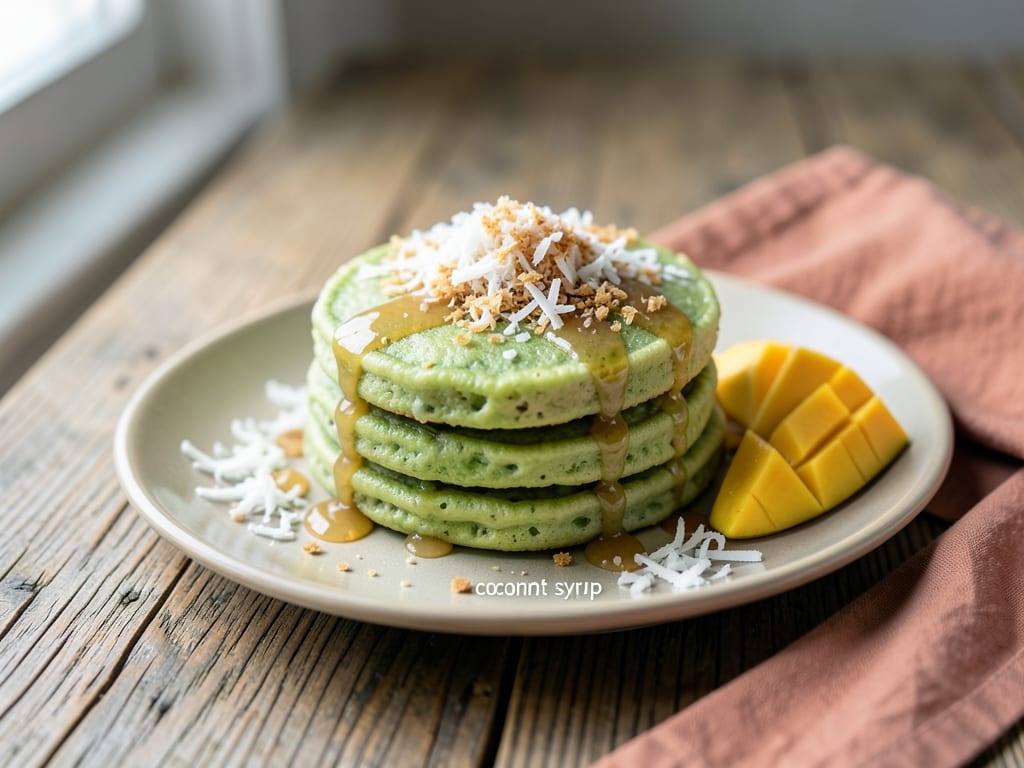
Fluffy pancakes infused with sticky rice flour and coconut milk, topped with fresh mango slices and drizzled with a warm palm sugar and coconut syrup. These combine the beloved flavors of Thailand's classic mango sticky rice dessert in an easy stovetop breakfast or brunch dish. Sweet, creamy, and aromatic—perfect for a special morning.
- Prep
- 15 min
- Cook
- 20 min
- Wait
- 5 min
- Total
- 40 min
- Makes
- 8 pancakes (2 per serving)
Steps
Before you start
- Have all ingredients at room temperature
- If using fresh mango, select one that is ripe but still firm so it slices cleanly
- Preheat a large nonstick skillet or griddle over medium heat for 1 minute before cooking
- Read through the batter-resting step—this allows the rice flour to hydrate fully for tender pancakes
Mix dry ingredients
- In a large mixing bowl, whisk together sticky rice flour, all-purpose flour, baking powder, salt, and palm sugar.
- Break up any clumps of palm sugar with the whisk or your fingers as you mix.
- Set aside.
+ Show details− Hide details
Ready when: mixture is evenly combined with no visible clumps of sugar
Tip: Breaking up palm sugar ensures even sweetness throughout the batter; using finely grated sugar is easier than chunks
Combine wet ingredients
- In a medium mixing bowl, whisk together lightly beaten eggs, coconut milk, coconut extract, vanilla extract, and melted butter.
- Whisk until the mixture is smooth and emulsified.
- Make sure no butter has pooled at the bottom.
+ Show details− Hide details
Ready when: mixture is uniform, smooth, and slightly pale
Tip: Melted butter must be slightly cooled before adding—hot butter can scramble the eggs. Test by letting a drop cool on your finger
Combine and rest the batter
- Pour the wet ingredients into the dry ingredients.
- Using a whisk, gently fold and stir until just combined—the batter should look slightly lumpy and thick, almost like soft cookie dough.
- Do not overmix.
- Let the batter rest on the counter for 5 minutes.
- This rest allows the sticky rice flour to fully hydrate, making the pancakes tender and pillowy.
+ Show details− Hide details
Ready when: batter is lumpy and thick, not smooth
Tip: Overmixing develops gluten and toughens the pancakes—stop as soon as you see no white flour streaks
Make the coconut syrup
- While the batter rests, combine palm sugar, coconut milk, and salt in a small saucepan.
- Place over medium heat and stir frequently until the sugar dissolves completely, about 3–4 minutes.
- The syrup will remain pourable and glossy.
- Remove from heat and let cool for a minute.
- This syrup keeps warm on the stovetop at low heat while you cook the pancakes.
+ Show details− Hide details
Ready when: sugar is fully dissolved and syrup is smooth and glossy
Tip: Stir regularly to prevent the bottom from burning; if the syrup thickens too much, add 1–2 tbsp coconut milk and reheat gently
Heat the skillet
- Place a large nonstick skillet or griddle over medium heat.
- Add 1 tbsp of butter and let it melt and coat the surface evenly.
- The skillet is ready when the butter foams and smells fragrant, about 1 minute.
+ Show details− Hide details
Ready when: butter is foamy and fragrant, no longer fizzing aggressively
Tip: Medium heat prevents burning the outside before the inside cooks; too low and pancakes will be dense and pale
Cook the first batch of pancakes
- Using a ¼-cup measuring cup or small ladle, scoop batter onto the hot skillet, leaving about 2 inches between pancakes.
- You should fit 2–3 pancakes per batch depending on skillet size.
- Cook undisturbed for 2–3 minutes, until the bottoms are deep golden brown and small bubbles form on the surface.
- Flip carefully and cook the other side for 1½–2 minutes until golden and a toothpick inserted into the thickest part comes out moist but with no raw batter.
+ Show details− Hide details
Ready when: pancakes are deep golden brown on both sides and a toothpick shows moist crumb without raw batter
Tip: Resist the urge to flip early—let the first side brown fully for structure, or they may fall apart. Sticky rice flour pancakes are more delicate than wheat flour pancakes
Cook remaining pancakes
- Transfer the first batch to a warm plate.
- If needed, add a small pinch of butter to the skillet and repeat with the remaining batter.
- You should have 8 pancakes total (2 per serving).
+ Show details− Hide details
Ready when: all pancakes are cooked through and golden
Tip: Keep finished pancakes on a warm plate; they stay soft and warm for several minutes
Slice and arrange
- While the pancakes are still warm, peel, pit, and slice the fresh mango lengthwise into ¼-inch strips.
- Arrange 2 warm pancakes on each serving plate.
- Top with overlapping mango slices.
+ Show details− Hide details
Ready when: mango is neatly sliced and arranged
Tip: If mango is too ripe and soft, chill it briefly before slicing for cleaner cuts
Finish and serve
- Pour a generous splash of warm coconut syrup (about 3–4 tbsp per serving) over the mango and pancakes.
- Sprinkle with toasted sesame seeds if using.
- Serve immediately while the pancakes are warm and the syrup is still dripping.
+ Show details− Hide details
Ready when: syrup is distributed and sesame seeds are visible
Tip: Warm syrup soaks into the pancakes slightly while staying glossy on top—drizzle just before eating for best texture
Good to know
Tips
- Sticky rice flour has a different hydration and protein profile than regular flour—the 5-minute rest is essential for the best tender texture. Don't skip it.
- Sticky rice flour pancakes are more delicate than wheat pancakes. Use medium heat only and flip gently with a thin, flexible spatula to avoid breakage.
- Make the coconut syrup while the batter rests so it's warm and ready to pour just before serving. A warm syrup soaks into the warm pancakes in the best way.
- Select a mango that gives slightly to gentle pressure but is not mushy. Over-ripe mango will be hard to slice cleanly and may fall apart on the pancakes.
Storage & reheating
Cooked pancakes keep refrigerated in an airtight container for up to 2 days. Reheat gently on a griddle over low heat or in a 300°F (150°C) oven for 3–5 minutes until warmed through. The coconut syrup can be refrigerated separately for up to 4 days; reheat over low heat, stirring occasionally. Mango is best sliced fresh on the day of serving. Freezing is not recommended as the pancakes become gummy when thawed.
Substitutions
- sweet sticky rice flour (also called glutinous rice flour) → equal amount of tapioca flour mixed with all-purpose flour (use ½ cup tapioca flour and reduce all-purpose flour to ¼ cup). Creates a chewier texture closer to traditional sticky rice consistency, though the pancakes will be slightly denser
- palm_sugar → light brown sugar or coconut sugar, same amounts. Coconut sugar adds similar tropical notes; brown sugar is slightly less aromatic but works well
- ripe but firm mango, peeled → peaches, nectarines, or papaya, sliced the same way. Other stone fruits and tropical fruits pair beautifully with coconut and sticky rice flour; use ripe, firm fruit
- coconut extract → ¼ tsp additional vanilla extract plus 1 tbsp sweetened shredded coconut, toasted and mixed into the dry ingredients. Reduces coconut extract dependency while adding toasted coconut flavor from the dry mix