Thai Kaeng Buad Sweet Pumpkin Custard Pastry
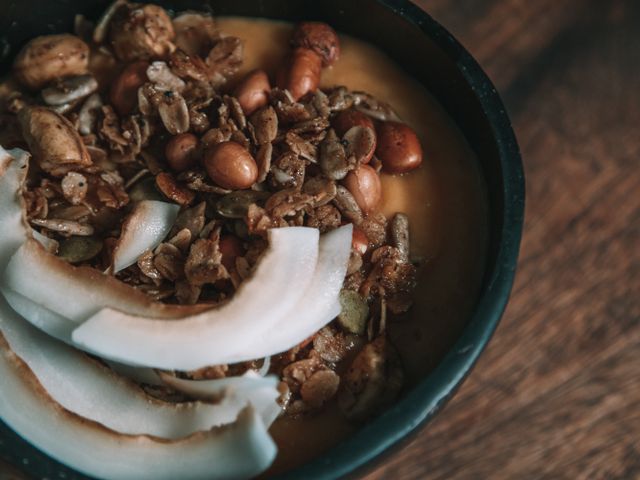
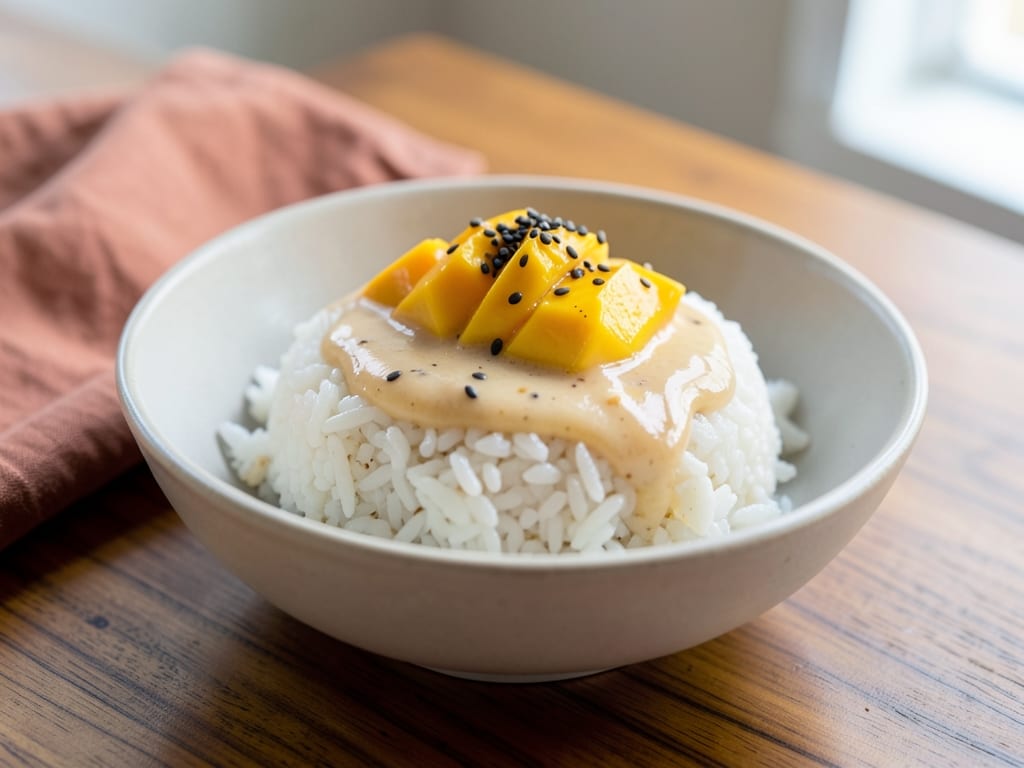
Kaeng buad—meaning "bland curry" or sweet custard—is a delicate Thai dessert featuring a silky pumpkin and coconut custard baked inside crispy puff pastry shells. The custard is subtly flavored with palm sugar, coconut milk, and a whisper of vanilla, then topped with jasmine-scented simple syrup and sesame seeds. Each pastry is individual, elegant, and distinctly Thai in flavor.
- Prep
- 35 min
- Cook
- 50 min
- Wait
- 45 min
- Total
- 2 hr 10 min
- Makes
- 6 pastry cups
Steps
Before you start
- Preheat oven to 400°F (200°C) 15 minutes before baking
- Prepare a 12-cup muffin tin by lightly oiling or lining with parchment cups
- Have pumpkin purée ready (fresh steamed and puréed, or canned)
Shape pastry cups
- Remove thawed puff pastry from packaging and place on a lightly floured surface.
- Using a 3-inch (7.5 cm) round cutter, cut 6 circles.
- Press each circle gently into an oiled muffin cup, letting the edges come slightly above the rim.
- Prick the bottoms with a fork to prevent puffing.
- Brush the exposed pastry edges with the egg wash.
- Place the muffin tin in the freezer while you prepare the custard.
+ Show details− Hide details
Ready when: Pastry edges are golden and slightly puffed
Tip: Keep puff pastry cold; work quickly so it doesn't warm up and become sticky.
Make custard base
- In a medium mixing bowl, whisk together pumpkin purée, coconut milk, cornstarch, vanilla extract, and salt until completely smooth and no lumps remain.
- In a small saucepan over medium-low heat, warm the palm sugar with a splash of the custard mixture (about 2 tablespoons) until the sugar dissolves completely (about 2 minutes).
- Pour this dissolved palm sugar back into the bowl and whisk well to combine.
+ Show details− Hide details
Ready when: Mixture is homogeneous and pale orange, with no visible lumps
Tip: Dissolving the palm sugar first prevents grainy texture in the final custard.
Temper egg yolks
- In a small bowl, lightly whisk the 2 egg yolks.
- Slowly pour 3 tablespoons of the warm pumpkin mixture into the yolks while whisking constantly.
- Once combined, pour this tempered yolk mixture back into the large bowl with the remaining custard, whisking continuously until fully incorporated.
+ Show details− Hide details
Ready when: Mixture is smooth and uniform in color
Tip: Tempering prevents curdling; add the warm mixture slowly and whisk constantly.
Pre-bake pastry shellsOven 400°F / 205°C
- Preheat oven to 400°F (200°C).
- Remove the muffin tin from the freezer.
- Place on a baking sheet for easy handling.
- Bake for 12–14 minutes until the pastry is puffed and just beginning to turn pale golden (not deep golden—it will bake more later).
- Remove from the oven and let cool for 2 minutes.
- Reduce oven temperature to 350°F (175°C).
+ Show details− Hide details
Ready when: Pastry is puffed and pale golden at edges
Tip: Pre-baking prevents soggy bottoms; don't skip this step even though you'll bake again.
Fill pastry cups
- Working quickly while pastry is still warm, use a small spoon to gently press down the center of each pastry cup if it puffed too much, creating a shallow well.
- Divide the custard mixture evenly among the 6 cups, filling each about three-quarters full (use roughly 1/4 cup per cup).
- The custard should reach just below the pastry rim.
+ Show details− Hide details
Ready when: Custard fills each cup evenly and consistently
Tip: Fill gently to avoid breaking the delicate pastry; if the filling seems thin, whisk it gently first to recombine.
Bake custard pastriesOven 350°F / 175°C
- Place the filled muffin tin back on the baking sheet.
- Bake at 350°F (175°C) for 22–26 minutes until the custard is just set but still slightly jiggly in the very center when you gently shake the tin.
- The pastry should be deep golden brown.
- The internal temperature at the center should reach 160°F (71°C).
+ Show details− Hide details
Ready when: Custard is set but trembles slightly in the very center; pastry is deep golden
Tip: Overbaking dries out the custard; the carryover heat will continue cooking as it cools.
Cool pastries
- Remove the muffin tin from the oven and let rest in the tin for 5 minutes.
- Then carefully run a small paring knife around the inside edge of each cup and gently ease the pastries out onto a wire rack.
- Let cool to room temperature, about 20 minutes, before adding the syrup and garnish.
- The pastries will sink slightly as they cool—this is normal.
+ Show details− Hide details
Ready when: Pastries are cool enough to handle and custard is fully set
Tip: Don't remove from the tin while hot or the custard may crack; patience ensures a beautiful presentation.
Prepare jasmine syrup
- While the pastries cool, combine the palm sugar, water, and jasmine flowers (if using) in a small saucepan.
- Bring to a gentle simmer over medium heat, stirring occasionally, until the sugar dissolves completely and the mixture becomes a light, fragrant syrup (about 5 minutes).
- The syrup should be thin and pourable.
- Remove from heat and let cool for 5 minutes; strain out the jasmine flowers if desired, or leave them for visual appeal and texture.
+ Show details− Hide details
Ready when: Syrup is clear, fragrant, and pourable; sugar is fully dissolved
Tip: Keep the syrup warm so it drizzles smoothly; if it thickens too much as it cools, warm it gently before serving.
Finish and serve
- Arrange the cooled pumpkin custard pastries on a serving platter or individual plates.
- Drizzle each pastry with 1–2 tablespoons of the warm or room-temperature jasmine syrup, letting it pool slightly around the base.
- Scatter toasted sesame seeds over the top of each pastry.
- Serve immediately or at room temperature.
- If jasmine flowers remain in the syrup, you can place one or two on top of each pastry for elegance.
+ Show details− Hide details
Ready when: Pastries are plated and garnished
Tip: Serve within a few hours of assembly for the crispest pastry; the custard is delicious at any temperature.
Good to know
Tips
- Toasting sesame seeds yourself by dry-roasting them in a small skillet over medium heat for 2–3 minutes until fragrant brings out their nuttiness far better than pre-toasted seeds.
- This dessert is best served warm or at room temperature on the day it's baked; the pastry is crispest and the custard creamiest within a few hours.
- If you can't find dried jasmine flowers at a specialty or Asian market, omit them or substitute with a fragrant white tea like Silver Needle; the syrup will still be beautiful.
- To make individual presentations even more elegant, you can dust the pastry rim lightly with edible gold or dust a tiny bit of ground cinnamon over the sesame seeds.
Make ahead
The custard filling can be made up to 1 day ahead, covered, and refrigerated. The pastry cups can be pre-baked 4 hours ahead and stored in an airtight container; fill and bake them just before serving. The jasmine syrup keeps refrigerated for up to 1 week and can be made 2 days ahead.
Storage & reheating
Store cooled baked pastries in an airtight container at room temperature for up to 6 hours (pastry will soften slightly). Refrigerate for up to 2 days; reheat gently in a 300°F (150°C) oven for 8–10 minutes before serving to restore crispness. Do not freeze; the custard texture will degrade.
Substitutions
- palm sugar → Light brown sugar or coconut sugar. Use equal weight; brown sugar will add a slightly molasses-forward flavor, while coconut sugar maintains more of the original delicate sweetness.
- dried jasmine flowers → 1 teaspoon jasmine tea leaves or a touch of rose water (0.25 teaspoon). Jasmine tea will steep and infuse similarly; rose water adds floral elegance in a different direction. Omit entirely for a pure pumpkin flavor.
- pumpkin purée → Roasted and puréed butternut squash or kabocha squash. Use the same weight; butternut is slightly more watery and less sweet, so you may want to add 0.5 teaspoon extra vanilla. Kabocha is denser and sweeter—reduce palm sugar by 1 tablespoon.
- cornstarch → Tapioca starch or arrowroot powder. Use the same amount; arrowroot creates a cleaner, more delicate texture, while tapioca adds a subtle chewiness.