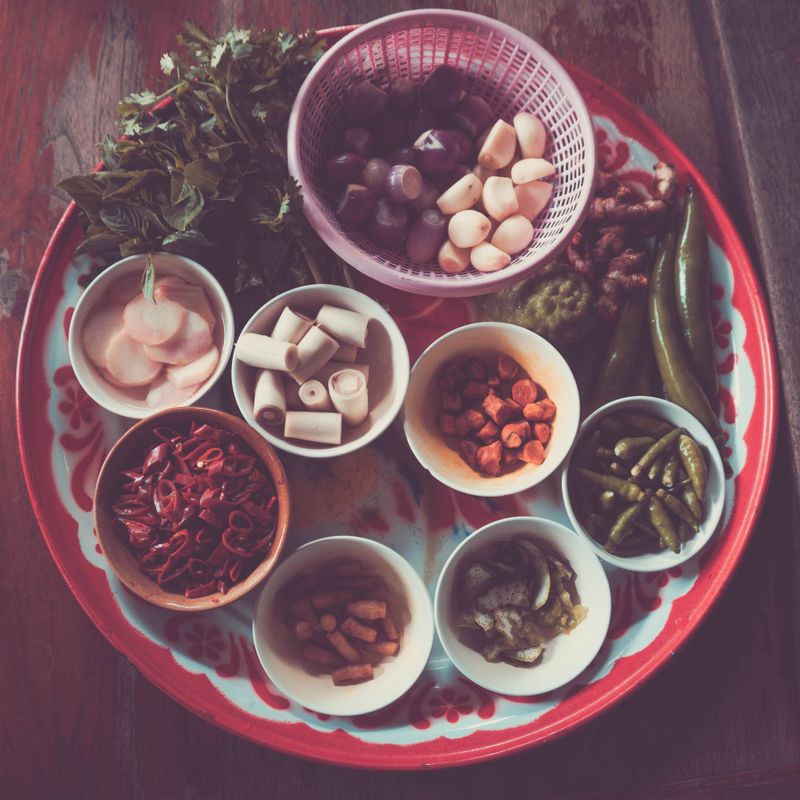
Thai Galangal and Roasted Peanut Red Sticky Rice
Fragrant red glutinous rice infused with coconut milk, studded with crispy roasted peanuts, and perfumed with fresh galangal and aromatic spices. This Thai-inspired sticky rice side delivers nutty richness and subtle warmth, perfect alongside curries, grilled meats, or as a standalone accompaniment to bold Asian flavors.
- Prep
- 15 min
- Cook
- 35 min
- Wait
- 15 min
- Total
- 1 hr 5 min
- Makes
- 4 servings (about 4 cups cooked rice)
Steps
Before you start
- Rinse the red glutinous rice thoroughly until the water runs nearly clear—this removes excess starch without overworking it
- Measure coconut milk and broth ahead and have them at room temperature
- Toast peanuts lightly if using raw ones; if already roasted, you can skip this
- Have all aromatics prepped and within arm's reach of the pot
Toast aromatics in oil
- Heat coconut oil in a medium saucepan (2½- to 3-quart) over medium heat.
- Add sliced shallots and cook for 2–3 minutes, stirring often, until just starting to soften and golden at the edges.
- Add minced garlic and cook for another 30 seconds until fragrant, then add the sliced galangal coins.
- Continue cooking for 1 minute, stirring gently to distribute the aromatic root throughout the oil.
+ Show details− Hide details
Ready when: Shallots are softened and golden; galangal releases its fragrance
Tip: Don't brown the garlic—just bloom it briefly for depth without bitterness
Add rice and toast
- Pour the rinsed red glutinous rice directly into the pan with the aromatics.
- Stir constantly for 1–2 minutes to coat the rice grains lightly with oil and toast them slightly.
- The rice will smell slightly nutty when ready.
+ Show details− Hide details
Ready when: Rice is lightly toasted and coated with oil; faint nutty aroma
Tip: Light toasting brings out subtle flavor but don't overdo it—the rice will cook fully in liquid
Combine liquids and seasonings
- Pour in the coconut milk and broth, then add fish sauce, palm sugar, white pepper, and a small pinch of kosher salt.
- Stir well to dissolve the sugar and distribute seasonings evenly.
- The liquid should come about ½ inch above the rice surface.
+ Show details− Hide details
Ready when: Sugar is dissolved; all ingredients are well incorporated
Tip: Stir thoroughly to ensure even seasoning—the sugar and fish sauce can settle to the bottom
Bring to a boil and cover
- Increase the heat to medium-high and bring the liquid to a boil, stirring occasionally, about 2–3 minutes.
- Once boiling, reduce the heat to medium-low, place the lid tightly on the pan, and let the rice steam gently.
+ Show details− Hide details
Ready when: Liquid is just barely bubbling at the pan edges; rice is no longer standing in visible liquid
Tip: Keep the lid on—lifting it releases steam and extends cooking time. A tight seal is essential for proper steaming
Check doneness and fluff
- After 20 minutes, carefully lift the lid away from you to avoid steam burns.
- Check if the rice is tender and has absorbed nearly all the liquid.
- If liquid remains, replace the lid and cook for another 2–3 minutes.
- Once ready, remove the pan from heat and let it rest covered for 5 minutes.
+ Show details− Hide details
Ready when: Rice is tender, sticky, and no visible liquid remains; grains are plump and slightly translucent
Tip: If liquid remains after 20 minutes, the heat was too high—reduce to low and cover tightly for the remaining time
Fold in peanuts and herbs
- Uncover the rice and use a wooden spoon to gently fold in the chopped roasted peanuts, breaking up any clumps that have formed on top.
- Add most of the fresh cilantro if using, reserving some for garnish.
- Taste a small spoonful and adjust seasoning with a pinch more salt or fish sauce if needed.
+ Show details− Hide details
Ready when: Peanuts are evenly distributed; cilantro is just wilted from residual heat
Tip: Fold gently to avoid breaking the delicate glutinous rice grains and compressing the fluffy texture
Serve warm
- Transfer the rice to a serving bowl or platter.
- Scatter the reserved cilantro and a few extra peanut pieces over the top for garnish and texture contrast.
- Serve warm with lime wedges on the side for squeezing over individual portions.
+ Show details− Hide details
Tip: Lime juice brightens the rich coconut and adds necessary acidity—don't skip it
Good to know
Tips
- Red glutinous rice (also called red sticky rice) has a naturally purple-red bran layer and becomes deeply sticky when cooked—this is not a bug, it's essential to the dish's character
- The galangal coins release flavor as the rice cooks but are not meant to be bitten into whole; remove them if you prefer a cleaner presentation
- For extra textural interest, toast a small handful of peanuts separately in a dry skillet and add them just before serving alongside the folded-in portion
- This rice pairs beautifully with Thai curries, grilled fish, or Southeast Asian lettuce wraps; its richness anchors bold, spiced dishes
Make ahead
Prepare the rice up to 2 hours ahead and keep it covered at room temperature. Warm gently in a saucepan over low heat with a splash of coconut milk if it has firmed up. Add the peanuts and cilantro just before serving for maximum crispness.
Storage & reheating
Store leftovers in an airtight container in the refrigerator for up to 3 days. Reheat in a saucepan over low heat with a tablespoon of water or coconut milk, stirring gently until warmed through. The rice will keep its sticky texture well. Not suitable for freezing as the sticky rice texture deteriorates upon thawing.
Substitutions
- fresh galangal root → 2 tablespoons dried galangal powder, bloomed in 2 tablespoons water for 5 minutes before cooking. Dried galangal is more concentrated; use half the amount and bloom it in the liquid to rehydrate
- roasted unsalted peanuts → roasted cashews or chopped macadamia nuts. Both offer similar crunchy texture and richness; adjust quantity to taste as they have slightly different intensities
- full-fat coconut milk → light coconut milk or heavy cream mixed with chicken broth (1:1). Full-fat coconut milk is best for authentic flavor, but this substitute reduces richness if needed
- fish sauce → soy sauce or tamari. Use the same amount (1 tablespoon) for savory depth, though the flavor profile will be slightly less tropical