Thai Coconut Sticky Rice
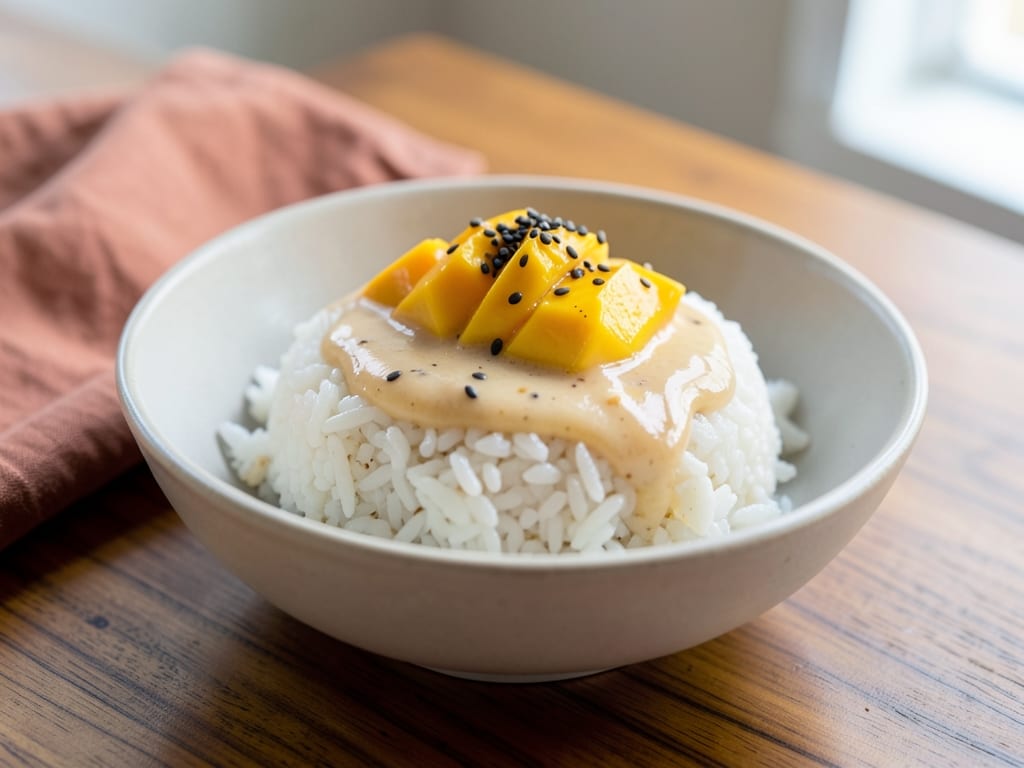
Sweet, creamy sticky rice infused with fragrant coconut milk and palm sugar. This classic Thai dessert has a silky texture and subtle caramel notes from the palm sugar. Served warm, it's the perfect ending to a Thai meal or a comforting snack on its own.
- Prep
- 10 min
- Cook
- 25 min
- Wait
- 45 min
- Total
- 1 hr 20 min
- Makes
- 4 servings (about 3 cups)
Steps
Before you start
- Rinse sticky rice thoroughly under cold running water until the water runs nearly clear—this removes excess starch and prevents mushiness
- Set up a steamer basket or bamboo steamer over boiling water before you begin
- Have all ingredients measured and ready—the sauce comes together quickly once the rice finishes steaming
Fill steamer and start water
- Fill a 2-quart pot with about 2 inches of water.
- Bring to a rolling boil over high heat.
- Set a steamer basket or bamboo steamer over the water—the basket should sit above the waterline, not touching the water.
+ Show details− Hide details
Ready when: Water boils vigorously
Tip: If your steamer is bamboo, soak it in water for 30 minutes beforehand to prevent it from drying out and cracking
Steam the rice
- Pour the rinsed sticky rice into a shallow 8-inch dish that fits inside your steamer.
- Add 1¾ cups (420 ml) of water.
- Stir once, then place the dish on the steamer basket.
- Cover with the steamer lid.
- Steam for 25–30 minutes, until the rice is translucent, tender, and has absorbed all the water.
- The rice should look creamy and stick together when pressed.
+ Show details− Hide details
Ready when: Rice is translucent, tender, and has absorbed all the water; grains stick together easily
Tip: Don't stir the rice while it steams. If you notice the water evaporating too quickly, add a splash more boiling water to the pot below
Make the coconut sauce
- While the rice steams (around the 20-minute mark), pour the 1 cup of coconut milk into a medium saucepan.
- Add the ½ cup finely chopped palm sugar and ¼ tsp salt.
- Heat over medium heat, stirring frequently, for 5–7 minutes, until the sugar dissolves completely and the sauce is smooth and fragrant.
- Do not let it boil hard; keep it at a gentle simmer.
- Remove from heat and let cool slightly for 2–3 minutes.
+ Show details− Hide details
Ready when: Sugar is fully dissolved, sauce is smooth and fragrant
Tip: Stir constantly to ensure the palm sugar dissolves evenly. If you can see grains of sugar or feel grit on your spoon, keep stirring
Combine rice and sauce
- As soon as the rice finishes steaming and the sauce has cooled for a few minutes, transfer the hot rice to a serving bowl or back into the steamer dish.
- Pour the warm coconut sauce over the rice.
- Stir gently and thoroughly with a wooden spoon until the rice is evenly coated and the sauce is fully absorbed—about 1–2 minutes.
- The rice should look creamy and glossy.
+ Show details− Hide details
Ready when: Rice is evenly coated and creamy; sauce is fully absorbed
Tip: Work while both the rice and sauce are warm so they combine seamlessly. If the rice cools too much, the sauce won't absorb properly
Rest and finish
- Cover the rice loosely with a kitchen towel or lid and let it rest at room temperature for 10 minutes.
- This allows the flavors to marry and the rice to become even more tender.
- Divide into serving bowls.
- If desired, sprinkle with toasted sesame seeds and serve alongside fresh mango slices.
- Serve warm.
+ Show details− Hide details
Ready when: Rice has rested and is ready to serve
Tip: If you're serving this with mango, choose a ripe mango that is fragrant and yields slightly to pressure; underripe mango will taste bland
Good to know
Tips
- Rinsing the rice thoroughly is essential—it removes the starchy coating that would otherwise make the rice gummy and clumpy rather than creamy and custard-like
- Palm sugar is worth seeking out in an Asian grocery store or online; it has a distinct caramel flavor that defines this dish. If you can only find it in a round disc, chop or crumble it finely before measuring
- For the most authentic experience, serve this warm, not cold. The creamy texture and fragrance are best when the dish is still warm
- If your rice seems too thick or dry after absorbing the sauce, you can gently stir in 1–2 tablespoons of warm coconut milk to loosen it
Make ahead
You can cook the rice up to 4 hours ahead. Let it cool to room temperature, then cover and set aside at room temperature. When you're ready to serve, gently reheat the rice in a steamer for 5 minutes until warm, then pour over the freshly made warm coconut sauce and stir well.
Storage & reheating
Store leftovers in an airtight container at room temperature for up to 1 day, or in the refrigerator for up to 2 days. The rice will firm up as it cools. To reheat, transfer to a steamer and warm for 5 minutes until soft and fragrant, then pour over a freshly made batch of warm coconut sauce. Do not reheat in the microwave, as it can make the rice tough.
Substitutions
- palm sugar, finely chopped → light brown sugar or white sugar. Palm sugar has a subtle caramel and molasses note that is characteristic of Thai sticky rice, but brown sugar or white sugar will work in the same amount. The flavor will be slightly less complex but still delicious.
- sweet sticky rice (glutinous rice) → glutinous rice or sweet rice (make sure you buy the right variety). All three names refer to the same short-grain, starchy rice used in Thai cooking. Do not use regular long-grain rice, which will not achieve the creamy, sticky texture.
- white sesame seeds, toasted → crushed roasted peanuts or toasted coconut flakes. These add crunch and complement the coconut flavors beautifully.
- fresh ripe mango, peeled and sliced → fresh strawberries, fresh papaya, or fresh pineapple. Any soft, sweet tropical fruit works well as a fresh counterpoint to the rich, creamy rice. Stone fruits like peaches are also excellent.