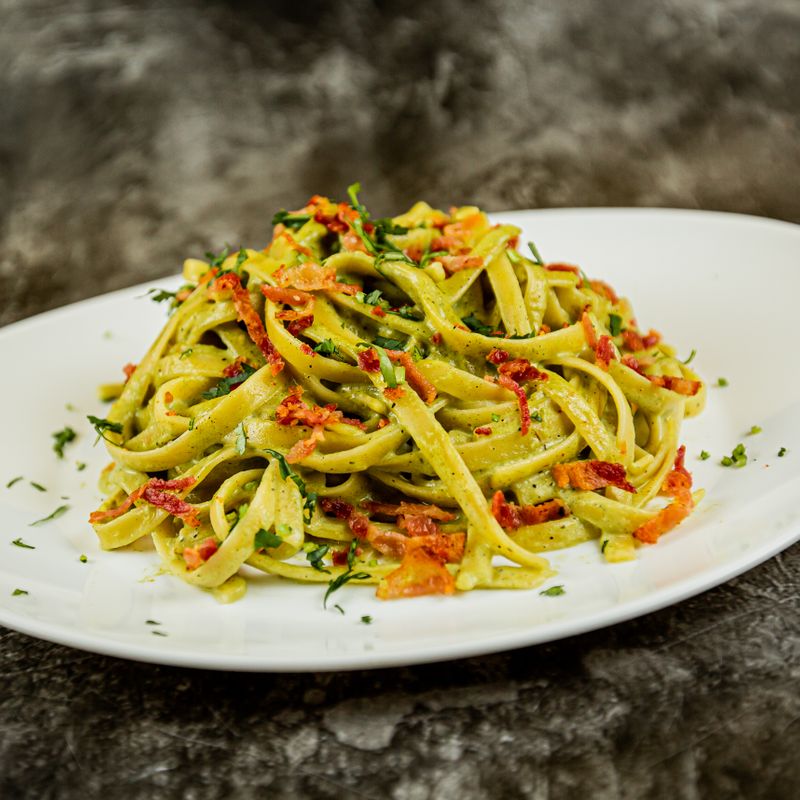
Sun-Dried Tomato and Olive Tapenade Pasta Sauce
A punchy, no-cook pasta sauce made in a food processor from oil-packed sun-dried tomatoes, kalamata olives, capers, garlic and olive oil. It is loosened with hot pasta water so it coats spaghetti in a silky, savory layer in about 20 minutes.
- Prep
- 15 min
- Cook
- 12 min
- Total
- 27 min
- Makes
- About 1¼ cups (300 g) sauce, enough to coat 1 pound (450 g) pasta (4 servings)
Steps
Before you start
- Pit the olives if they aren't already pitted, and check each one for stray pit fragments, which can damage a food processor blade or a tooth.
- Drain the sun-dried tomatoes well. If they are the dry, leathery kind rather than oil-packed, soak them in boiling water for 10 minutes first, then drain.
- Taste the olives and capers before you start: brands vary a lot in saltiness, so you will add salt only at the end.
- Start the pasta water while you make the sauce so the pasta is ready right when the sauce is.
Prep the ingredients
- Drain the sun-dried tomatoes over a small bowl, saving 2 tablespoons (30 ml) of their oil.
- Roughly chop the tomatoes into ½-inch (1 cm) pieces.
- Drain the olives, and drain and rinse the capers.
- Peel the garlic.
- Zest the lemon, then juice it.
- Pick the parsley leaves and tender stems.
+ Show details− Hide details
Ready when: Everything is measured and within reach of the food processor.
Tip: Rinsing the capers removes excess brine so the sauce doesn't turn harshly salty.
Boil the water
- Fill a 6-quart (5.5 L) pot with 5 quarts (about 5 L) of water, cover, and bring to a rolling boil over high heat.
- Stir in 2 tablespoons kosher salt once it boils.
+ Show details− Hide details
Ready when: Large bubbles break constantly across the whole surface.
Pulse the base
- In the food processor, combine the tomatoes, olives, capers, garlic and parsley.
- Pulse in 1-second bursts, about 8 to 10 times, scraping down the bowl once, until the mixture is coarsely chopped with pieces about the size of small peas.
+ Show details− Hide details
Ready when: Mixture looks like a chunky, spreadable relish with visible flecks of each ingredient.
Tip: Pulse rather than run the motor, or the sauce turns into a dense paste.
Blend in oil and lemon
- Add the olive oil, the 2 tablespoons reserved tomato oil, the lemon zest, 2 tablespoons lemon juice, black pepper and the red pepper flakes if using.
- Pulse 5 to 6 more times, or run the machine for 5 seconds, until the sauce is thick, spoonable and slightly textured.
- Taste and add a pinch of salt only if needed.
+ Show details− Hide details
Ready when: Sauce is glossy and coarse, holding together on a spoon but not dry or crumbly.
Tip: Olives and capers are already salty, so many batches need no extra salt.
Cook the pasta
- Add the spaghetti to the boiling water and stir for the first 30 seconds to prevent sticking.
- Cook, stirring occasionally, according to package directions minus 1 minute, usually 8 to 10 minutes total.
+ Show details− Hide details
Ready when: Pasta is just shy of al dente: flexible, with a thin chalky-white center when you bite a strand.
Tip: The pasta will finish cooking when tossed with the sauce.
Reserve pasta water
- Just before draining, scoop out 1 cup (240 ml) of the starchy pasta water with a liquid measuring cup.
- Drain the pasta in a colander without rinsing.
+ Show details− Hide details
Ready when: Reserved water looks cloudy.
Tip: Set the measuring cup beside the pot before the pasta is done so you don't forget it.
Toss with the sauce
- Scrape all of the tapenade into a large, warmed bowl.
- Add ½ cup (120 ml) of the hot pasta water and stir to loosen into a creamy sauce.
- Add the hot drained pasta and toss with tongs for 1 minute, adding more pasta water 2 tablespoons at a time (usually ¼ cup / 60 ml more) until every strand is glossy and evenly coated.
+ Show details− Hide details
Ready when: Sauce clings to the noodles in a glossy coat with no pooling oil or dry clumps.
Tip: Never heat the tapenade on the stove; the hot pasta and water warm it enough, and heat dulls the fresh flavors.
Season and serve
- Taste and adjust with a squeeze of lemon, a pinch of salt or more black pepper.
- Divide among four warm bowls, drizzle with a little extra olive oil, and top with grated Parmesan if using.
- Serve right away.
+ Show details− Hide details
Ready when: Pasta is hot, glossy and bright with lemon aroma.
Good to know
Tips
- Pulse instead of blending continuously so the tapenade keeps a rustic texture that clings to pasta.
- Pasta water is the key: its starch emulsifies the oil into a creamy sauce, so add it gradually until the pasta looks glossy.
- Use the tomato packing oil if it tastes clean; it adds extra flavor. Discard it if it's heavily seasoned or bitter.
- For extra richness, stir in 4 ounces (115 g) crumbled feta or torn burrata after tossing.
Make ahead
"The tapenade sauce can be made up to 5 days ahead. Pack it into a jar, press plastic wrap or a thin layer of olive oil over the surface, and refrigerate. Bring to room temperature for 20 minutes before tossing with hot pasta."
Storage & reheating
"Sauce alone: refrigerate in an airtight jar under a thin film of olive oil for up to 5 days, or freeze in ice cube trays for up to 3 months (thaw overnight in the fridge). Dressed pasta: keep at room temperature no more than 2 hours, refrigerate up to 3 days, and reheat in a skillet over medium-low heat with a splash of water, stirring until hot, about 3 to 4 minutes."
Substitutions
- pitted kalamata olives → Castelvetrano or black oil-cured olives. Castelvetrano gives a milder, buttery sauce; oil-cured olives are stronger and saltier, so skip added salt.
- capers → Chopped cornichons or green olives. Use 2 tablespoons for a similar briny tang.
- Parmesan cheese → Toasted breadcrumbs or nutritional yeast. Makes the dish dairy-free; use ¼ cup (30 g) toasted breadcrumbs for crunch.
- dried spaghetti or linguine → Penne, rigatoni or gluten-free pasta. Short shapes catch the chunky sauce well; cook per package directions.