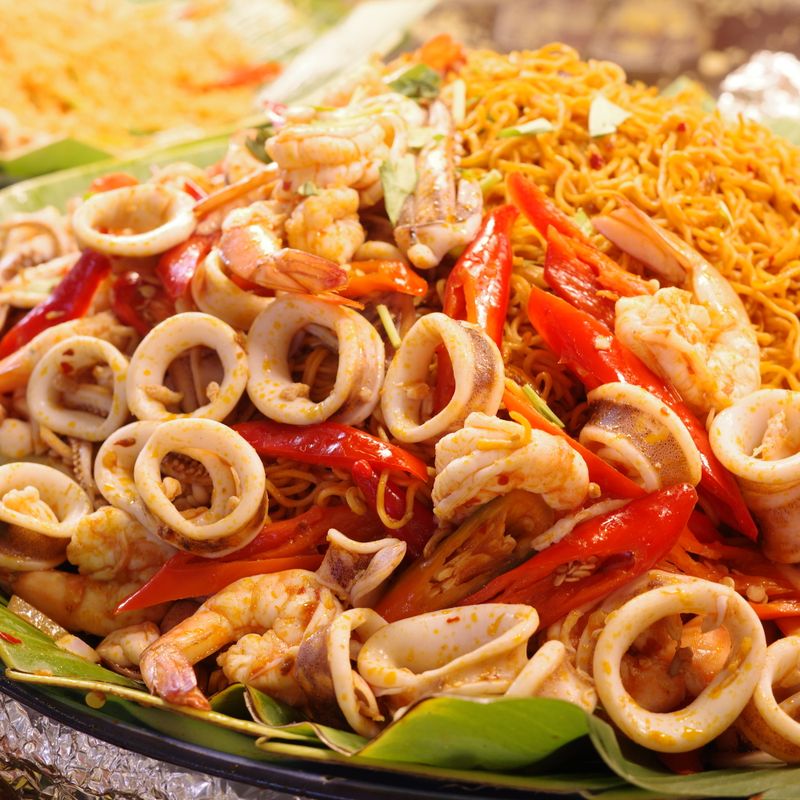
Sumac Shrimp and Cucumber Stir-Fried Noodles
A bright, tangy stir-fried noodle dish with pan-seared shrimp, crisp cucumber, and fresh parsley, all brought together with sumac's distinctive lemony warmth. Quick enough for weeknight dinner, elegant enough for company, with a Middle Eastern accent that transforms simple ingredients into something memorable.
- Prep
- 15 min
- Cook
- 12 min
- Wait
- 5 min
- Total
- 32 min
- Makes
- 4 servings (about 1½ cups per serving)
Steps
Before you start
- Pat shrimp completely dry with paper towels to ensure good browning
- Cook rice noodles according to package directions, drain, and set aside
- Have all ingredients prepped and within arm's reach before you start cooking—stir-frying moves fast
Prepare the sauce
- In a small bowl, whisk together lemon juice, soy sauce, fish sauce, and red pepper flakes (if using).
- Set aside.
- This bright, balanced sauce is the backbone of the dish.
+ Show details− Hide details
Tip: Mix this while the noodles cook to save time in the final stir-fry.
Sear the shrimp
- Heat 1½ tbsp (22 ml) of olive oil in a large skillet over medium-high heat until it shimmers, about 1 minute.
- Season the shrimp with salt and black pepper.
- Working in a single layer, add half the shrimp and sear without moving them for 2 minutes until the underside is deep pink and caramelized.
- Flip and cook the other side for 1–2 minutes until they're pink throughout and just cooked through.
- Transfer to a plate.
- Repeat with the remaining ½ tbsp (7 ml) oil and shrimp.
+ Show details− Hide details
Ready when: Shrimp are opaque pink and register 165°F (74°C) at the thickest part
Tip: Don't crowd the pan—cook in batches so the shrimp sear rather than steam. A dry surface is essential for browning.
Flavor the pan
- Reduce heat to medium.
- Add the remaining 1 tbsp (15 ml) of olive oil to the same skillet.
- Add the minced garlic and cook for 30 seconds, stirring, until fragrant but not browned.
+ Show details− Hide details
Ready when: Garlic is fragrant and just starting to color
Tip: Keep heat at medium to prevent garlic from burning—it'll taste bitter if blackened.
Toast and bloom the sumac
- Add 1 tsp (2.5 g) of the sumac to the garlic and stir constantly for 20 seconds.
- The sumac will toast slightly and release its tart, citrus notes into the oil.
+ Show details− Hide details
Ready when: Sumac smells bright and slightly caramelized
Tip: Blooming sumac in oil amplifies its flavor—don't skip this step or you'll lose its distinctive character.
Add noodles and sauce
- Add the cooked rice noodles to the skillet along with the prepared sauce.
- Toss continuously for 2 minutes, breaking up any clumps as you go, until the noodles are well coated and heated through.
+ Show details− Hide details
Ready when: Noodles are evenly coated, heated through, and glistening
Tip: Use two tools (tongs and a spoon, or two forks) to toss—it's easier to distribute the sauce evenly than stirring alone.
Combine everything
- Return the seared shrimp to the skillet.
- Add the cucumber slices and half the parsley (about ½ cup / 10 g).
- Toss gently for 30 seconds just to combine and warm the cucumber slightly—you want it to stay crisp.
+ Show details− Hide details
Ready when: All components are combined and warm
Tip: Add the cucumber at the end to preserve its crisp texture—it will soften if cooked longer.
Finish and serve
- Divide the noodles among bowls.
- Drizzle each serving with a small splash of sesame oil if desired, and sprinkle with the remaining fresh parsley and the remaining 1 tsp (2.5 g) of sumac.
- Taste and adjust seasoning with salt and black pepper.
- Serve immediately while the shrimp are still warm and the noodles are at their best.
+ Show details− Hide details
Tip: Adding sumac twice—once bloomed in oil and again fresh at the end—gives you layers of tangy flavor without overdoing it.
Good to know
Tips
- Buy the freshest shrimp you can find—look for a clean smell and firm, springy texture. Thaw frozen shrimp thoroughly and pat very dry so they develop a golden crust when seared.
- Sumac is the star of this dish. Buy it from a well-stocked grocery store's spice aisle or Middle Eastern market, and store it in a cool, dark place. It loses brightness within 6 months, so taste it first—older sumac is duller.
- If your pan isn't large enough to fit all components comfortably in the last step, use a large shallow bowl instead of serving bowls, toss everything together one more time in the skillet with the heat off, then plate. This prevents the noodles from cooling too quickly.
Make ahead
You can cook the noodles and prep all vegetables and the sauce up to 4 hours ahead. Store noodles in an airtight container at room temperature, and vegetables in separate containers in the refrigerator. The shrimp must be cooked fresh, but you can prep them (peel, devein, pat dry) and refrigerate up to 8 hours ahead.
Storage & reheating
Best served immediately. Leftover noodles can be refrigerated in an airtight container for up to 2 days. The cucumber will become soft and the noodles may stick together. Reheat gently in a skillet over medium heat with a splash of water or broth, then taste and re-season. Do not freeze.
Substitutions
- English cucumber → regular cucumber or zucchini, cut into thin half-moons. Zucchini will be slightly less refreshing but works well if you want less water content. If using regular cucumber, scoop out seeds as with the English variety to avoid excess moisture.
- ground sumac → 2 tbsp (30 ml) fresh lemon zest mixed with 1 tsp (5 ml) lime juice. You'll lose sumac's subtle earthiness, but the citrus tang will remain. Mix with a pinch of salt to bloom the flavors.
- fish sauce → 1 tsp (5 ml) soy sauce or leave out entirely. Fish sauce adds umami depth; without it the sauce will be brighter but less savory. A small pinch of salt can help balance.
- rice noodles (⅛-inch / 3 mm width) → thin egg noodles, ramen noodles, or spaghetti. Any thin pasta works; adjust cooking time according to package directions. Rice noodles' delicate texture is ideal, but others absorb the sauce differently—taste as you go.
More stir-fried noodles
See all →



Find more like this
- Meal
- Dinner
- Cuisine
- Middle Eastern
- Main ingredient
- Shrimp
- Method
- Stovetop