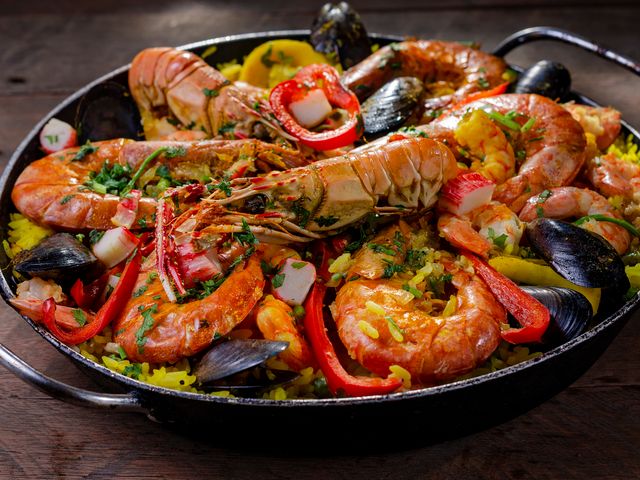
Spanish Pulpo a la Gallega with Smoked Paprika Couscous
A refined take on the Galician classic: tender boiled octopus seasoned with smoked paprika, fleur de sel, and fruity olive oil, served over fluffy couscous infused with garlic and more paprika. The octopus becomes silky and tender through gentle boiling, while the couscous soaks up a savory broth, creating a complete, restaurant-worthy dish that's deceptively simple to execute.
- Prep
- 15 min
- Cook
- 55 min
- Wait
- 15 min
- Total
- 1 hr 25 min
- Makes
- 4 servings (about 6 oz octopus and 1 cup couscous per plate)
Steps
Before you start
- Bring octopus to room temperature if frozen (thaw in refrigerator overnight)
- Have a sharp knife and cutting board ready for portioning octopus
- Measure out couscous, broth, and seasonings before you begin cooking
- Fill a large pot (6–8 quart) with water for boiling octopus
Prepare boiling liquid
- Fill a large 6–8 quart pot with 5 quarts (4.7 L) of water.
- Add the halved onion, 3 smashed garlic cloves, bay leaf, peppercorns, and 2 tablespoons (36 g) kosher salt.
- Bring to a rolling boil over high heat, then reduce to medium-high so that it maintains a steady, gentle boil—not a vigorous rolling boil, which toughens the octopus.
+ Show details− Hide details
Ready when: Water is at a steady, gentle boil with small bubbles breaking the surface
Tip: A gentle boil, not a rolling boil, keeps the octopus tender; vigorous heat causes the flesh to become rubbery.
Boil the octopus
- Carefully place the cleaned octopus into the simmering liquid, tentacles first.
- The octopus should be fully submerged.
- Maintain a medium-high heat so the liquid stays at a gentle boil.
- Cook uncovered for 45–50 minutes.
- The octopus is done when the thickest part of the tentacle (at the base) pierces easily with a fork and the flesh is tender and slightly soft, not rubbery.
+ Show details− Hide details
Ready when: Fork pierces tentacle base easily; flesh is soft and tender, pale purple-pink
Tip: Do not skip the boiling liquid aromatics (onion, garlic, bay, pepper)—they infuse the octopus with subtle flavor and help tenderize it.
Prepare couscous base
- While the octopus cooks, pour 1.5 cups (300 g) of pearl couscous into a medium saucepan.
- Add 2.25 cups (540 ml) of warm broth, 4 minced garlic cloves, 4 tablespoons (60 ml) of extra-virgin olive oil, 1.5 teaspoons (3 g) smoked paprika, and 0.75 teaspoon (4.5 g) kosher salt.
- Stir well to combine and bring to a boil over medium-high heat.
+ Show details− Hide details
Ready when: Mixture comes to a boil with steam rising
Tip: Using warm broth reduces cooking time; cold broth will cool the mixture and extend cooking.
Cook and rest couscous
- Once the couscous mixture reaches a boil, stir once, then reduce heat to low, cover with a tight-fitting lid, and remove from heat.
- Let sit, covered and undisturbed, for 10–12 minutes.
- The couscous will absorb the liquid and become fluffy.
- Do not stir during this resting period.
+ Show details− Hide details
Ready when: Couscous is tender, fluffy, and has absorbed all liquid; grains are separate
Tip: Covering the pot tightly ensures even steam absorption; lifting the lid releases steam and leaves couscous undercooked.
Remove and cool octopus
- When the octopus is tender, remove it from the boiling liquid using tongs and place it on a clean cutting board.
- Set aside to cool for 5 minutes until it's cool enough to handle.
- Reserve the cooking liquid if you wish to use it for stock later.
+ Show details− Hide details
Ready when: Octopus is cool enough to touch and handle safely
Tip: A 5-minute rest makes the octopus easier to portion without burning your fingers and allows the flesh to firm up slightly.
Portion and prepare octopus
- Using a sharp knife, cut the cooled octopus into 2-inch (5 cm) pieces.
- Separate the tentacles from the head and body, then cut each tentacle into bite-sized segments.
- Discard the head and any tough portions.
- You should have roughly 1.5 pounds (680 g) of usable octopus meat.
+ Show details− Hide details
Ready when: Octopus is neatly portioned into 2-inch pieces; flesh is pale and tender
Tip: Cut against the grain of the muscle fibers (crosswise on the tentacles) for maximum tenderness; pieces that are too large won't heat through properly in the final seasoning step.
Fluff couscous and plate
- After the 10–12 minute rest, uncover the couscous and fluff it gently with a fork, breaking up any clumps.
- Divide the couscous evenly among four shallow bowls or plates, creating a bed for the octopus.
+ Show details− Hide details
Ready when: Couscous is loose, fluffy, and well-separated
Tip: Fluff gently to avoid breaking or mushifying the couscous pearls; rough stirring creates a pasty texture.
Warm and season octopus
- Return the couscous pan to medium heat with the lid off, or gently warm the octopus in a separate small pan or in a microwave-safe bowl (30 seconds at 50% power will warm without cooking further).
- Place the octopus pieces on top of each couscous bed.
- Drizzle each portion with about 1.5 teaspoons (7.5 ml) of extra-virgin olive oil.
- Sprinkle each with a pinch of smoked paprika (about ¼ teaspoon / 0.5 g each) and a small pinch of fleur de sel.
+ Show details− Hide details
Ready when: Octopus is warm to the touch; paprika and oil are evenly distributed over the surface
Tip: Finish with raw extra-virgin olive oil and smoked paprika after plating for the brightest flavor; cooking these ingredients dulls their distinctive character.
Serve and garnish
- Plate immediately while the couscous is still warm.
- If using, scatter the fresh chopped parsley over the top of each portion for color and freshness.
- Serve with lemon wedges on the side for squeezing over the dish.
- Eat while warm.
+ Show details− Hide details
Ready when: Dish is hot, aromatic, and ready to serve
Tip: A squeeze of fresh lemon brightens the earthiness of the smoked paprika and octopus; don't skip it.
Good to know
Tips
- Octopus texture depends entirely on gentle, steady boiling; a rolling boil makes it rubbery. Aim for small bubbles breaking the surface, not a vigorous rolling motion.
- Smoked paprika (pimentón de la Vera) is a cornerstone of authentic Galician pulpo; if you can, source a Spanish brand—the flavor is distinctly different from regular paprika or smoked paprika from other regions.
- The finest touch is the finishing drizzle of fruity extra-virgin olive oil and fleur de sel applied after plating; these last-minute additions provide brightness, creaminess, and a clean, mineral finish.
- Serve this dish as soon as it's plated; the contrast between the warm octopus, fluffy couscous, and the aromatic oil is best enjoyed immediately.
Make ahead
You can boil the octopus up to 1 day ahead: cool it completely, wrap it tightly in plastic wrap, and refrigerate. Reheat gently in simmering water or microwave for 30–45 seconds before portioning and serving. The couscous is best made fresh, but the seasoned broth can be prepared an hour ahead; reheat gently before adding the couscous.
Storage & reheating
Leftover octopus and couscous can be stored in a covered container in the refrigerator for up to 2 days. To reheat, warm gently in a microwave (1–2 minutes, stirring halfway) or on the stovetop over low heat with a splash of water or broth, stirring occasionally. The flavors mellow slightly when chilled but remain pleasant. Freezing is not recommended, as reheated couscous becomes mushy and octopus texture deteriorates.
Substitutions
- pearl couscous (Israeli) → regular (Moroccan) couscous or farro. Regular couscous will cook faster (1–2 minutes after removing from heat); farro requires 15–20 minutes of simmering. Adjust liquid and cooking time accordingly. Both provide a slightly different texture but work well with the octopus.
- chicken or vegetable broth → vegetable broth or reserved octopus cooking liquid. Octopus cooking liquid will give a deeper, more oceanic flavor; vegetable broth is lighter and more neutral. Both require the same amount.
- smoked paprika (pimentón de la Vera) → sweet or hot paprika (not smoked), or omit for a plain couscous. Smoked paprika is essential to the Galician character; if unavailable, sweet paprika provides color but less flavor. Omitting it shifts the dish toward a simpler, less traditional version.
- extra-virgin olive oil, for finishing → any fruity green extra-virgin olive oil. The finishing oil is crucial for flavor; use a good-quality oil with grassy or fruity notes. Avoid neutral oils, which would flatten the dish.